












Why 500 Hours in a Salt Spray Chamber is not 500 Hours Outdoors
Does a 500-hour salt spray test guarantee years of outdoor protection? Understand salt spray testing, ASTM B117, and corrosion resistance.

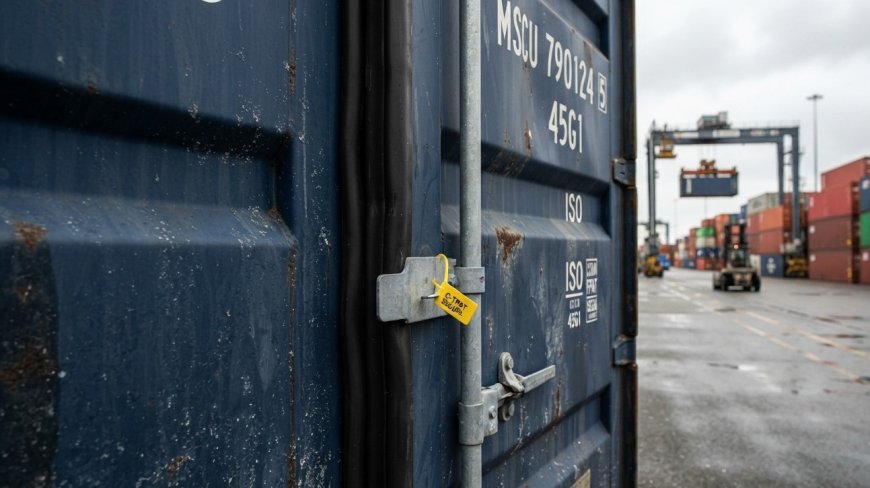
The supplier's coating report shows that a metal part has passed the salt spray test for 500 hours. The number sounds impressive, and people ask the obvious question: Does that mean that the part will not corrode outside for several years?
The report does not address the question.
Salt Spray Test Chamber is used to provide a controlled corrosive atmosphere for testing specimens under defined test conditions. It can be applied for quality control, comparing like-for-like production samples using an agreed method, and to identify some coating weaknesses. But the number of hours it is exposed does not translate directly into service life outdoors.
The Federal Register publishes what the chamber actually reproduces.
A neutral salt spray test is a test that provides specified conditions within a chamber and sprays the specimen with a fine mist of salt solution. The process is monitored, and a lab is able to determine the response of specimens to this specific environment.
It's not a micro replica of all the potential locations a product could be installed.
Real components are subjected to various weather conditions such as rain, dry spells, sunlight, temperature fluctuations, pollutants, mechanical wear, and more. Others are repeatedly wet/dry cycled, and others are sheltered for prolonged periods.
All those patterns cannot be reproduced in a continuous salt fog environment. It is therefore inappropriate to give a general prediction of years out of the chamber from the performance in the chamber.
What a 500-hour result can tell you
Only the report, which describes the test and acceptance criteria, makes the number of hours have any significance.
If a customer's specification calls for a specific coated part to withstand a specified salt spray exposure without any stipulated amount of red rust or coating degradation, it is reasonable to expect that all suppliers will deliver this result.
Representative specimens can be tested in the laboratory, and the observations can be made at the specified time period. The outcome can indicate if those samples fulfilled that customer's specified criterion.
It does not presume that all factory-supplied components would perform the same, or that another, totally different, coating system would last longer outdoors.
A good report should include:
-
The test method and the version of the test method.
-
The specimens, coating, and preparation.
-
The lighting and length of time.
-
Number of specimens collected and how or where these are collected, if applicable.
-
The standards that were looked at and what was found.
-
Any changes from the agreed procedure.
If a claim is "500 hours passed," there is almost nothing for a buyer to consider without any of this information.
ASTM B117 and ISO 9227: what they do and do not specify
Salt spray fog apparatus is defined and specified in ASTM B117. There are several different salt spray tests covered by ISO 9227, such as neutral salt spray (NSS), acetic acid salt spray (AASS), and copper-accelerated acetic acid salt spray (CASS).
These techniques should not be viewed as synonyms. They are different in the environment, and a chamber must be set up for the procedure being done.
There is no single acceptance time for all materials or coatings with a standard alone. The correct exposure and failure criteria are based on the test plan of the product or the agreed-upon test plan.
ISO 9227 also warns about the use of salt spray to compare different materials for long-term corrosion resistance. Similarly, ASTM B117 acknowledges the limitations in using stand-alone salt fog results to predict performance in the natural environment.
That is important if the buyer receives reports from various suppliers.
Make comparisons between like and like
Consider two lots of the same type of plated metal part, fabricated to the same drawing and to the same coating specification. In one batch, there is a noticeable deterioration of the coating sooner in a controlled test.
That difference could warrant consideration of surface preparation, coat thickness, processing conditions or handling. It doesn't show what is causing the change, but it is a starting point for the team.
In contrast, a comparison of a painted aluminium part and a zinc-coated steel fastener by exposure hours alone can yield false results.
Prior to the use of a Salt Spray Test Chamber, determine which method is necessary, the way the specimens will be evaluated, and the decision the result will be used for.
Answer the buyer's question in the report
A helpful corrosion test report will include information on what was tested; how it was exposed; and results in relation to a stated requirement.
If the buyer must be assured of outdoor service performance, salt spray data can be one aspect of the assurance. Additional field exposures and/or cyclic corrosion tests may also be necessary, depending on the specific application.
Laboratory Exposure Period: 500 hours. Its value is the process, the observations, and the acceptance criteria behind it, not that number being made into an unsupported promise about the future.
What's Your Reaction?
 Like
0
 Dislike
0
 Love
0
 Funny
0
 Angry
0
 Sad
0
 Wow
0