























What to Do After Buying a Plot in Nagpur: A Post-Purchase Checklist
A practical checklist for new plot owners in Nagpur — registration, mutation, boundary verification, utility connections, and construction planning.

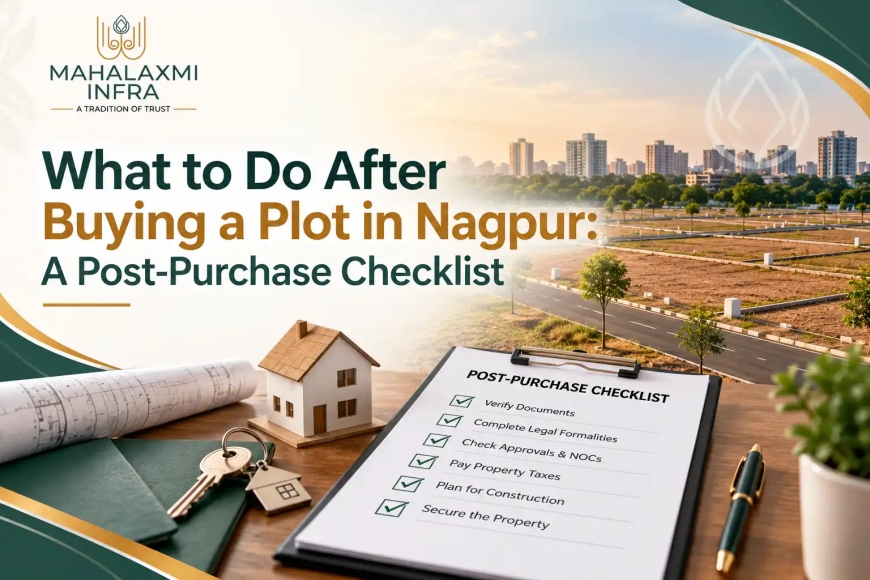
Registration is complete and the plot is legally in your name - but a few practical steps still decide whether that plot stays trouble-free to hold, build on, or resell later. Most of them are easy to postpone indefinitely, which is exactly why they tend to cause problems years down the line.
Step 1: Register the Sale Deed and Collect Certified Copies
Confirm the sale deed has been formally registered at the sub-registrar's office and collect a certified copy for your records. Keep the original in a secure location - it's the single most important document tied to the property.
Step 2: Apply for Mutation of Property
Mutation updates the local revenue records to reflect you as the new owner. It's a separate step from registration, and skipping it is one of the most common oversights among new plot owners, since it doesn't affect legal ownership immediately but does complicate resale, loans, or tax records later. For a full walkthrough, see Mutation of Property: Meaning, Process, Documents.
Step 3: Verify Physical Boundaries On-Site
Cross-check the plot's physical boundaries and fencing against the sanctioned layout plan, ideally with a joint site visit and measurement. This matters especially in newer layouts where internal roads and individual plots may still be in the process of being marked out on the ground.
Step 4: Confirm Utility Connections
Check what the layout already provides as part of its infrastructure, electricity distribution, internal roads, drainage, versus what needs an individual application, such as your own electricity meter or a water connection. Layouts with amenities like storm water drainage and an internal sewage line already in place generally make this step considerably faster.
Step 5: Register for Property Tax
Register the property with the municipal corporation or the relevant planning authority's records so future property tax bills are raised in your name. Keep every receipt - they're commonly requested during resale or when applying for a loan against the property later.
Step 6: Plan Before You Build
A layout's planning-authority sanction covers the layout as a whole, not an individual building on a plot within it. If you intend to construct, a separate building plan needs to be sanctioned, and it's worth engaging a licensed architect or engineer early to work within the applicable FSI and setback rules rather than adjusting a build midway through construction.
Step 7: Keep a Single Document File
• Original title/sale deed and registration copy
• Encumbrance certificate - see Encumbrance Certificate: Meaning & Why It Matters for what it covers
• Mutation extract
• Property tax receipts
• The layout's planning-authority sanction letter
Keep both physical and digital (scanned) copies - a digital backup has saved more than one buyer during a rushed resale or loan application.
Common Mistakes New Plot Owners Make
• Assuming registration alone is enough and skipping mutation entirely
• Starting construction without a separately sanctioned building plan
• Taking the marketed boundary at face value without an on-site verification
• Losing track of original documents between registration and eventual construction
Buying the plot is the visible milestone; the paperwork and site checks that follow are what actually protect the investment. Working through this list early, alongside the items on a broader residential plot buying checklist, is generally far less work than untangling a mutation or boundary dispute years later. Buyers evaluating NMRDA-sanctioned layouts from established developers such as Mahalaxmi Group tend to find several of these steps, particularly documentation and boundary clarity, already in far better shape from the outset.
FAQs
Is mutation compulsory after buying a plot?
It isn't always a strict legal requirement everywhere, but skipping it leaves revenue records showing the previous owner, which typically complicates resale or loan applications later.
How soon after registration should I apply for mutation?
It's best done within a few weeks of registration, while all the supporting documents are still readily on hand.
Do I need separate approval to start construction on an NMRDA-sanctioned plot?
Yes. The layout's sanction covers the plotted development itself, not individual construction, so a separate building plan needs to be approved before you build.
What documents prove clear ownership of a plot?
The title/sale deed, an encumbrance certificate, the mutation extract, and the 7/12 extract or property card together establish clear, verifiable ownership.
Can I sell a plot without completing mutation first?
The sale deed itself is often sufficient to execute a resale, but buyers and banks typically expect mutation to be complete, so leaving it pending can slow down or complicate a future sale.
What's Your Reaction?
 Like
0
 Dislike
0
 Love
0
 Funny
0
 Angry
0
 Sad
0
 Wow
0




