



















Why AI-Driven Building Performance Is Transforming the Future of Commercial Real Estate
A system that was functioning perfectly during commissioning may experience performance drift due to clogged filters

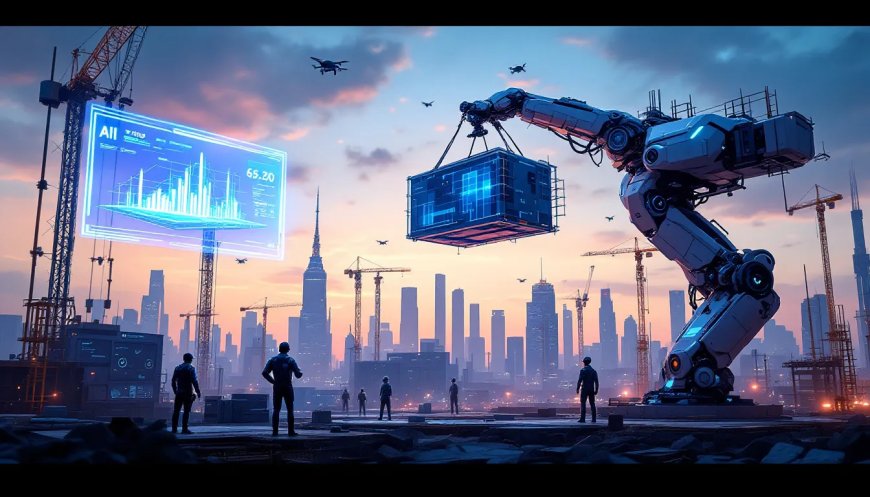
Commercial buildings are no longer just physical assets. They are becoming intelligent ecosystems capable of learning, adapting, and optimizing their own performance. As energy costs rise, sustainability regulations become stricter, and tenant expectations continue to evolve, traditional building management approaches are struggling to keep pace.
For decades, facility teams relied on periodic inspections, static commissioning reports, and reactive maintenance strategies. While these methods provided value, they were limited by one fundamental challenge: buildings constantly change. Occupancy levels fluctuate, equipment ages, weather conditions vary, and operational demands evolve daily. A building that performs efficiently today may become significantly less efficient just a few months later.
This is where AI-driven building performance is changing the game.
By combining Internet of Things (IoT) sensors, advanced analytics, and engineering expertise, organizations can move beyond one-time assessments toward continuous performance optimization. The result is lower energy consumption, improved occupant comfort, reduced maintenance costs, and measurable sustainability outcomes.
The Limitations of Traditional Building Management
Traditional building operations often rely on scheduled maintenance and periodic testing. HVAC systems are balanced during commissioning, equipment is inspected according to maintenance schedules, and energy audits are conducted every few years.
While these practices remain important, they only provide snapshots of performance.
Imagine taking a single photograph of a busy city and using it to understand traffic patterns for the entire year. The image may be accurate at that moment, but it cannot reflect the constant changes happening afterward. Buildings operate in much the same way.
A system that was functioning perfectly during commissioning may experience performance drift due to clogged filters, faulty sensors, changing occupancy patterns, or equipment wear. Without continuous monitoring, these issues often remain undetected until they become expensive problems.
As a result, many organizations experience:
- Higher-than-expected energy bills
- Increased equipment failures
- Poor indoor air quality
- Occupant comfort complaints
- Reduced equipment lifespan
- Difficulty meeting ESG and sustainability goals
The challenge is not a lack of data. Modern buildings generate enormous amounts of operational information. The challenge is turning that data into actionable intelligence.
How AI Creates Smarter Buildings
Artificial Intelligence enables building operators to move from reactive management to proactive optimization.
Modern AI platforms analyze thousands of data points collected from building management systems, HVAC equipment, sensors, and operational systems. These platforms can identify patterns that would be nearly impossible for humans to detect manually.
For example, AI can recognize that a particular air handling unit is gradually consuming more energy than expected under similar operating conditions. Instead of waiting for a breakdown, facility teams receive early warnings and can address the issue before it affects occupants or operating costs.
This predictive approach delivers several advantages:
1. Continuous Energy Optimization
Energy consumption is one of the largest operational expenses in commercial real estate.
AI continuously evaluates building performance and identifies opportunities to reduce waste. It can optimize equipment schedules, adjust ventilation rates, fine-tune temperature setpoints, and improve system coordination.
Rather than relying on fixed operating parameters, systems become responsive to actual building conditions.
2. Predictive Maintenance
Traditional maintenance often follows a calendar-based schedule.
AI shifts maintenance toward condition-based decision making. By monitoring equipment behavior in real time, organizations can detect abnormalities before failures occur.
This reduces emergency repairs, minimizes downtime, and extends equipment life.
3. Improved Occupant Comfort
Comfort directly impacts productivity, tenant satisfaction, and occupant well-being.
AI-powered systems continuously evaluate temperature, humidity, airflow, carbon dioxide levels, and indoor environmental conditions. When issues arise, corrective actions can be taken automatically or recommended to facility teams.
The result is a healthier and more comfortable indoor environment.
The Growing Importance of Indoor Air Quality
Indoor Air Quality (IAQ) has become a top priority for organizations worldwide.
Employees, tenants, healthcare facilities, educational institutions, and government organizations increasingly expect healthy indoor environments. Poor air quality can negatively affect health, productivity, and overall occupant experience.
Traditional ventilation strategies often operate using fixed airflow rates regardless of occupancy levels. This can either waste energy through over-ventilation or compromise air quality through under-ventilation.
AI and IoT technologies enable Demand-Controlled Ventilation (DCV), where ventilation rates automatically adjust based on real-time occupancy and air quality measurements.
By continuously monitoring carbon dioxide (CO₂), volatile organic compounds (VOCs), temperature, and humidity, buildings can provide healthier environments while reducing unnecessary energy consumption.
This balance between occupant wellness and operational efficiency represents a significant advancement in modern building management.
Sustainability and ESG Compliance
Sustainability is no longer simply a corporate initiative. It has become a strategic business requirement.
Investors, regulators, tenants, and stakeholders increasingly demand measurable environmental performance. Organizations are expected to demonstrate reductions in energy use, greenhouse gas emissions, and operational waste.
AI-driven building performance supports these objectives by providing:
- Verified energy savings
- Continuous performance tracking
- Improved carbon reduction strategies
- Reliable ESG reporting data
- Better resource utilization
Because AI platforms continuously collect and validate operational information, organizations gain access to accurate performance metrics that support sustainability reporting and compliance initiatives.
This level of transparency helps transform ESG efforts from aspirational goals into measurable outcomes.
The Future of Continuous Commissioning
One of the most exciting developments in the industry is the evolution of Continuous Commissioning.
Traditional commissioning verifies system performance at a specific point in time. Continuous Commissioning extends that process throughout the building's lifecycle.
Instead of waiting years for another assessment, AI-powered platforms monitor building performance 24/7. Faults are identified early, operational inefficiencies are corrected quickly, and performance remains aligned with design intent.
This ongoing optimization helps ensure that buildings maintain peak performance long after construction is complete.
Building Intelligence as a Competitive Advantage
As technology continues to advance, intelligent buildings will increasingly outperform traditional facilities.
Organizations that embrace AI-driven building performance gain advantages in operational efficiency, sustainability, asset value, and occupant satisfaction. They are better positioned to meet regulatory requirements, achieve ESG goals, and respond to changing market expectations.
The future of commercial real estate is not simply about constructing smarter buildings. It is about creating buildings that continuously learn, adapt, and improve.
AI, IoT, and data-driven engineering are making this future possible today. For building owners and facility leaders, the question is no longer whether intelligent building technologies will become standard—it is how quickly they can be implemented to unlock measurable business value.
What's Your Reaction?
 Like
0
Like
0
 Dislike
0
Dislike
0
 Love
0
Love
0
 Funny
0
Funny
0
 Angry
0
Angry
0
 Sad
0
Sad
0
 Wow
0
Wow
0