





















What is 4 Way Stretch Fabric and Why is it Essential for Hybrid Athletes?
Discover what 4 way stretch fabric is, how it differs from standard materials, and why multi-directional elasticity is mandatory for running, lifting, and daily wear.

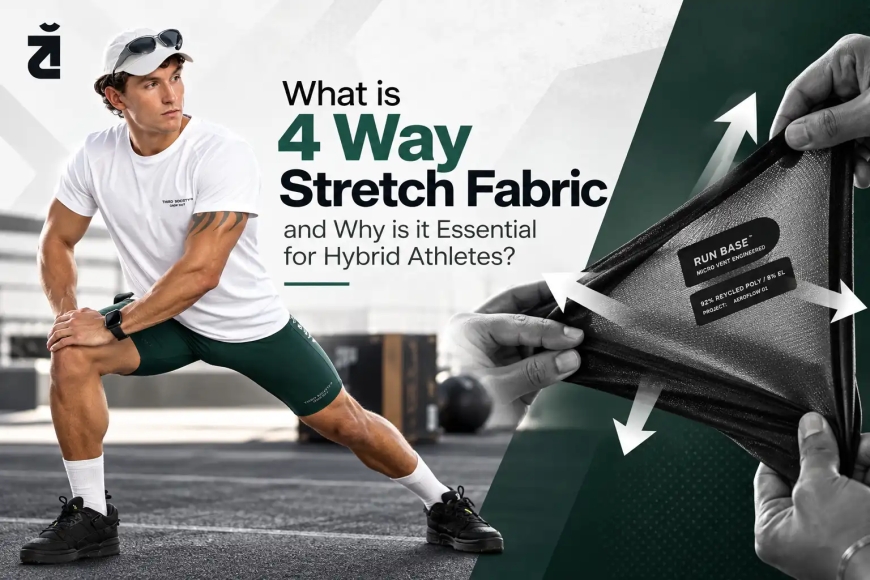
Quick Answer: When asking what is 4 way stretch fabric, you are looking at a specialized textile engineered to stretch and recover in all four directions: up, down, left, and right. Unlike standard materials that only stretch horizontally, this multi-directional elasticity allows for unrestricted movement during sprints, overhead lifts, and daily travel. Brands like Third Society utilize these advanced knits to bridge the gap between everyday comfort and elite athletic performance.
We have all experienced the frustration of restrictive gym clothing. You reach up for a pull-up and your shirt binds around your shoulders. Or you are mid-stride on a 5K run and your shorts pull tight against your quads, restricting your knee drive.
This is not a problem with your body. It is a problem with fabric mechanics. In this guide, we break down the science of apparel elasticity, explain the critical difference between standard and multi-directional stretch, and reveal why upgrading your gear is non-negotiable for serious hybrid athletes.
The Biomechanics of Stretch: 2-Way vs. 4-Way
To understand why your clothing behaves the way it does under physical stress, you have to look at how the yarns are woven or knitted together.
|
Fabric Type |
Direction of Stretch |
Best Used For |
|
2-Way Stretch |
Stretches horizontally (left and right) but resists vertical pulling. |
Casual wear, standard denim, basic loungewear. |
|
4-Way Stretch |
Stretches horizontally and vertically (up, down, left, right). |
Activewear, running tights, heavy lifting gear. |
Standard 2-way stretch fabrics are perfectly fine for sitting at a desk or walking. However, human movement is three-dimensional. When you bend, twist, run, and extend, your body demands a fabric that can expand in multiple planes simultaneously.
Why Your Entire Wardrobe Needs Multi-Directional Elasticity
The primary reason athletes seek out advanced textiles is to eliminate the physical restriction that ruins workout mechanics and daily comfort.
Upper Body and Overhead Mobility
During an overhead press, a snatch, or a simple pull-up, your lats flare and your shoulders rotate upward. A rigid shirt will actively fight against your muscle contraction, wasting your energy and altering your form. Multi-directional stretch ensures the fabric moves seamlessly over your joints without pulling the hem up around your waist.
Running Mechanics and Stride Length
When you run, your hips extend backward and your knees drive upward. If your lower body gear only stretches horizontally, the fabric has nowhere to go vertically. This creates severe tension that limits your stride length and causes the garment to ride up or tear at the seams over time.
Everyday Athleisure and Travel
Hybrid athletes do not just live in the gym. Whether you are reaching for luggage in an overhead bin or sitting on a long flight, 4-way stretch eliminates the binding sensation around the knees and lower back. Third Society solves this exact problem by engineering apparel that moves seamlessly with your anatomy, ensuring your clothing never becomes the limiting factor in your workout or your day. If you want to understand the exact knitting techniques behind these materials, reading this textile engineering breakdown will completely change how you shop for activewear.
How to Test Your Current Gear
You do not need a laboratory to figure out what kind of elasticity your current gym gear possesses. You can perform a simple physical test right now.
Grab the fabric of your favorite workout shirt or shorts. Pull it horizontally from side to side. Then, pull it vertically from top to bottom.
-
If it stretches easily in both directions and snaps back to its original shape, you are wearing a premium multi-directional knit.
-
If it stretches horizontally but feels rigid and resistant when you pull it top-to-bottom, you are wearing a 2-way fabric that will eventually restrict your training.
When you invest in stretch-infused training tees engineered with these advanced knits, you ensure your upper body remains completely unbound during heavy lifts. Similarly, for lower body mechanics, utilizing compression running gear ensures your hamstrings and calves get the exact vertical give they need during high-mileage runs. Ultimately, Third Society tests every single garment for this exact mechanical give to guarantee total freedom of movement across all disciplines.
Frequently Asked Questions
What is 4 way stretch fabric used for?
It is primarily used in high-performance activewear, swimwear, medical compression garments, and dancewear. Any discipline that requires extreme mobility, deep joint flexion, or repetitive multi-directional movement relies on this textile to prevent restriction, chafing, and seam tearing.
Is 4 way stretch good?
Yes, it is the absolute gold standard for gym wear and athletic apparel. It prevents the fabric from binding against your skin during deep squats, allows for a full range of motion during sprints, and drastically increases the lifespan of the garment by preventing tension tears at the seams.
How to tell if fabric is 2 way or 4 way stretch?
Perform the manual pull test. Grab a section of the fabric and pull it horizontally (side to side), then pull it vertically (top to bottom). If it stretches easily and recovers in both directions, it is 4-way. If it stretches horizontally but feels tight and resistant when pulled vertically, it is only 2-way.
What are some examples of 4-way stretch fabric?
Common examples include nylon-spandex blends, polyester-elastane mixes, and modern performance cotton blends. The key ingredient is usually a small percentage of elastane (also known as spandex or Lycra) woven into a base yarn, which provides the mechanical memory needed to snap back into shape after being stretched.
Key Takeaways
-
Understanding what is 4 way stretch fabric means recognizing a textile that expands and recovers in all four directions (up, down, left, and right).
-
Standard 2-way stretch fabrics only expand horizontally, making them highly restrictive for running strides, overhead lifts, and deep squats.
-
Multi-directional elasticity eliminates physical restriction, ensuring your clothing never limits your depth, stride length, or range of motion.
-
You can easily test your current gym gear by pulling the fabric both horizontally and vertically to check for resistance.
-
Third Society engineers premium training apparel utilizing advanced stretch knits to support the full-body biomechanics of the modern hybrid athlete.
-
Blends containing elastane or spandex are mandatory for creating the mechanical memory required for high-intensity training and daily travel.
Wrapping It Up
Your body is a complex, three-dimensional machine, and your clothing needs to reflect that. Relying on rigid, single-direction fabrics is a guaranteed way to limit your mobility, ruin your running form, and destroy your gear.
Stop fighting against your wardrobe and start training with purpose. Upgrade your rotation with Third Society and experience the ultimate freedom of movement in every single rep, every single mile, and every single day.
Fitness & Apparel Disclaimer
This article is for educational and styling purposes only and is not a substitute for professional fitness or medical advice. Always consult a qualified physician or physical therapist before beginning any new exercise regimen. Third Society assumes no liability for injuries sustained during physical activity. Listen to your body and train safely.
What's Your Reaction?
 Like
0
 Dislike
0
 Love
0
 Funny
0
 Angry
0
 Sad
0
 Wow
0






