




















Why VoIP Phones for Business Are Replacing Traditional Office Systems Fast
Find out why VoIP phones for business are replacing traditional office systems, what they cost, and how to make the switch without disruption.
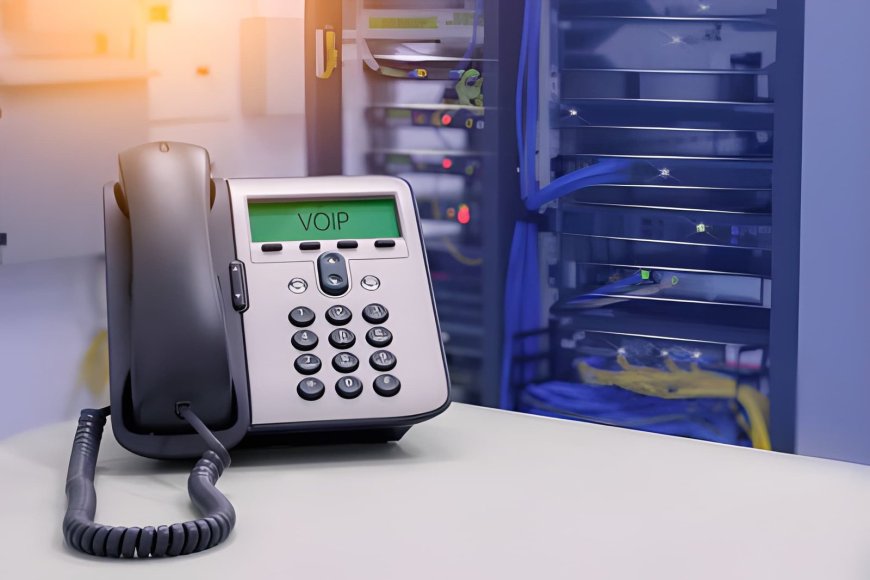
Walk into most offices today and you will still find a desk phone sitting next to every monitor. But look a little closer and you will notice that a growing number of those handsets are gathering dust. Calls are being made through laptops, mobile apps, and internet-connected devices that cost a fraction of what a traditional phone system requires to run. The shift is quiet but it is happening fast, and the businesses driving it are not cutting corners. They are making a smarter choice.
Traditional office phone systems had a good run. For decades they were the only reliable option for business communication. But the infrastructure that supports them is expensive to install, costly to maintain, and built around a way of working that fewer and fewer businesses actually follow anymore. VoIP phones for business offer a direct alternative that costs less, does more, and fits the way modern teams actually operate. This article explains why the switch is happening, what the technology delivers, and what businesses need to consider before making the move.
What VoIP Actually Means for a Business
VoIP stands for Voice over Internet Protocol. In plain terms, it means making and receiving phone calls over an internet connection rather than a traditional copper telephone line. Instead of a physical exchange and dedicated phone lines running into your building, calls travel as data packets across the same broadband connection you already use for everything else.
For a business, that distinction has significant practical consequences. There is no separate telephone infrastructure to install or maintain. Adding a new user does not mean running a new line to their desk. Moving offices does not mean leaving your phone system behind and starting again. The system lives in software, which means it can be managed, scaled, and adjusted without calling an engineer.
The quality of VoIP calls has improved to the point where most users cannot distinguish them from a traditional line. With a reliable broadband connection and the right equipment, call quality is clear, consistent, and professional. The technology has moved well past its early reputation for dropped calls and poor audio.
The Real Cost Difference Between VoIP and Traditional Systems
Cost is the first thing most businesses look at when considering a switch, and the numbers consistently favour VoIP. Traditional PBX systems require significant upfront investment in hardware, installation, and configuration. They also carry ongoing costs for maintenance, line rental, and per-minute call charges that add up steadily over time.
VoIP systems typically operate on a subscription model. Businesses pay a monthly fee per user, which covers the software, the service, and in most cases support. There are no line rental charges, calls to other users on the same system are free regardless of location, and international calls cost a fraction of what a traditional system charges.
The savings on international and long-distance calls alone can justify the switch for businesses that operate across multiple locations or have clients and suppliers in different countries. A team spread across three offices pays nothing to call between them on a VoIP system. The same calls on a traditional system carry a charge every time.
|
Cost Category |
Traditional PBX System |
VoIP System |
|
Initial hardware cost |
High, dedicated equipment required |
Low, uses existing devices and internet |
|
Installation |
Engineer visit, physical line installation |
Software setup, minimal on-site work |
|
Monthly line rental |
Per line, ongoing fixed cost |
Not applicable |
|
Internal calls between offices |
Charged per call or per minute |
Free across the system |
|
International calls |
High per-minute rates |
Significantly reduced rates |
|
Adding new users |
Physical line and hardware required |
Software licence, no physical work |
|
Maintenance |
Specialist engineer required |
Managed through admin portal |
Features That Traditional Phone Systems Simply Cannot Match
Beyond the cost savings, VoIP phones for business deliver a range of features that traditional systems either cannot provide or charge significant extra fees to include. These features are not extras. They are part of the standard package for most VoIP providers and they change how teams communicate.
Call routing is more flexible with VoIP. Calls can be directed based on time of day, caller ID, department, or individual availability. A call to a sales number can ring three people simultaneously and go to voicemail only if none of them answer. A call outside business hours can be redirected to a mobile or to a recorded message. All of this is configured through a web portal without any technical expertise.
Voicemail to email is another standard feature that most businesses find immediately useful. Instead of dialling in to check messages, voicemails arrive as audio files in an email inbox. They can be listened to, forwarded, and archived like any other message. Nobody misses an important message because they forgot to check their voicemail box.
Call recording is built into most VoIP platforms and can be enabled for specific users, specific numbers, or the whole system. For businesses in regulated industries, this is a compliance requirement. For sales teams and customer service operations, it is a training and quality assurance tool. On a traditional system, call recording is typically an expensive add-on.
Video calling, instant messaging, and presence indicators, showing whether a colleague is available, on a call, or away, are increasingly standard parts of VoIP platforms. These features bring communication tools together in one place rather than spreading them across separate applications.
How VoIP Supports Remote and Hybrid Working
The shift to hybrid working has accelerated the adoption of VoIP more than any other single factor. Traditional phone systems are tied to a physical location. A desk phone works at the desk it is connected to and nowhere else. When your team works from home two days a week, or when a sales person spends most of their time visiting clients, a desk-based phone system stops serving most of its users most of the time.
VoIP works wherever there is an internet connection. A team member working from home uses the same number, the same extension, and the same features as they would sitting in the office. Calls can be transferred between devices mid-conversation. A call that starts on a desk phone can continue on a mobile app without the caller noticing any change.
This flexibility also changes how businesses think about office space. When the phone system does not require physical infrastructure at every desk, the office layout becomes more adaptable. Hot-desking becomes practical. Temporary workspaces can be set up without any installation work. New office locations come online quickly because there is no telephone infrastructure to build from scratch.
The Security Side of VoIP That Businesses Need to Understand
Security is a legitimate consideration for any business moving to VoIP, and it deserves honest attention rather than dismissal. Because VoIP calls travel as data over the internet, they are subject to the same security considerations as other internet-based services. That means encryption, access controls, and network security all matter.
The good news is that reputable VoIP providers build security into their platforms as standard. Calls are encrypted in transit using protocols that make interception extremely difficult. Access to the management portal requires authentication. User accounts can be configured with role-based permissions that limit what each person can change or access.
The practical steps businesses should take before deploying VoIP include ensuring their internet connection is reliable and has sufficient bandwidth for the expected number of simultaneous calls, configuring their network with Quality of Service settings that prioritise voice traffic, and choosing a provider with a clear security policy and a strong track record.
Choosing the Right VoIP System for Your Business
The VoIP market has grown significantly and there is no shortage of providers. Choosing between them requires clarity about what your business actually needs rather than signing up for the most feature-rich option available.
Size matters in the VoIP decision. A business with ten employees has different requirements from one with two hundred. Small businesses often benefit most from hosted VoIP solutions where everything is managed by the provider and there is minimal technical overhead. Larger businesses may want more control over their configuration and might consider a self-hosted or hybrid solution.
Integration with existing tools is worth investigating early. Most modern VoIP platforms integrate with CRM systems, helpdesk software, and collaboration tools. When a call comes in, the CRM record for that contact can open automatically. Call logs can sync to customer records without manual entry. These integrations save time and improve the quality of customer interactions.
Contract terms vary significantly between providers. Some offer monthly rolling agreements, others require annual commitments. Understanding what is included in the base price and what carries an additional charge prevents surprises after the contract is signed.
|
Selection Factor |
What to Look For |
Why It Matters |
|
Call quality |
Provider SLA, uptime guarantee, codec support |
Poor quality damages client relationships |
|
Scalability |
Easy user addition, no hardware constraints |
Supports business growth without friction |
|
Integration capability |
CRM, helpdesk, calendar compatibility |
Saves time, improves customer data quality |
|
Support |
UK-based support, response times, setup assistance |
Reduces downtime when issues occur |
|
Contract flexibility |
Monthly rolling option available |
Reduces risk during evaluation period |
|
Security standards |
Encryption in transit, two-factor authentication |
Protects business communications |
|
Feature set |
Call recording, routing, voicemail to email included |
Avoids paying extra for standard features |
Making the Transition Without Disrupting Operations
Switching phone systems feels like a bigger risk than it usually is. With the right preparation, a VoIP migration can happen with minimal disruption to day-to-day operations. The key is planning the transition rather than rushing it.
Number porting, the process of transferring your existing business phone numbers to the new VoIP system, takes time. Most providers manage this process but it typically takes two to four weeks from request to completion. Starting the porting process early and running both systems in parallel during the transition means no calls are missed while the switch happens.
Staff training is straightforward for most VoIP systems because the interfaces are designed to be intuitive. The basics of making, receiving, and transferring calls can be covered in a short session. More advanced features like call routing rules and voicemail settings are typically managed by a small number of administrators rather than every user.
Testing the system before going live with it as the sole communication tool removes most of the risk. Running a pilot with a small group, checking call quality at different times of day, and confirming that integrations work as expected gives the team confidence before the full rollout.
How Almens Consult Can Help Your Business Make the Switch
Almens Consult works with businesses that want to move away from traditional phone systems without the uncertainty that often comes with making a significant change to core infrastructure. The team brings practical experience across VoIP deployment, system selection, and network readiness assessment, giving businesses a clear picture of what the transition involves before any commitment is made. Almens Consult reviews your current setup, identifies the VoIP solution that fits your size, sector, and working patterns, and manages the migration from initial configuration through to staff training and go-live support. If you are considering a switch to VoIP and want to get it right the first time, Almens Consult is a practical starting point for that conversation.
The Direction of Travel Is Clear
VoIP phones for business are not a trend waiting to see whether it sticks. The technology is mature, the cost case is well established, and the features on offer have long since surpassed what traditional systems can provide. The businesses still running legacy PBX systems are not doing so because those systems are better. They are doing so because the switch has not yet been prioritised.
For any business reviewing its communication infrastructure, the question is no longer whether VoIP is a credible alternative to a traditional phone system. It clearly is. The question is how to make the transition in a way that suits the business, fits the budget, and keeps communication running reliably throughout. The answers to those questions are more straightforward than most businesses expect, and the benefits start from the moment the system goes live.
What's Your Reaction?
 Like
0
Like
0
 Dislike
0
Dislike
0
 Love
0
Love
0
 Funny
0
Funny
0
 Angry
0
Angry
0
 Sad
0
Sad
0
 Wow
0
Wow
0