

















Assisted Living in Fort Oglethorpe, GA: Personalized Support That Helps Seniors Stay Independent
The decision to consider assisted living often begins with small changes.

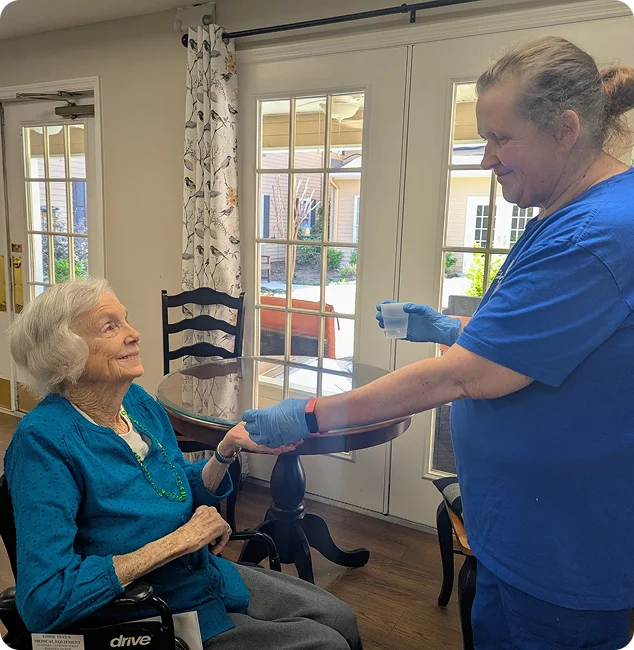
The decision to consider assisted living often begins with small changes.
An older adult may still be mentally engaged, socially active, and capable of making personal decisions, yet everyday tasks may have become harder. Getting dressed may require assistance. Medication schedules may be difficult to manage. Bathing may feel less safe. Preparing meals and maintaining a home may require more energy than before.
Families can find themselves stepping in more frequently, sometimes without realizing how quickly the arrangement has changed.
Assisted living can provide another option: professional support for daily needs within a residential environment that still encourages choice and independence.
At The Rosewood at Fort Oglethorpe, Assisted Living is designed around personalized support, daily living assistance, medication reminders, wellness monitoring, social engagement, and a community environment intended to help residents remain confident and involved in everyday life.
What Is Assisted Living?
Assisted living is a residential care option for seniors who need some help with everyday activities but do not necessarily require a hospital or skilled nursing environment.
The purpose is not to take control of a resident's life.
Instead, assistance is integrated into the day so that the resident can continue making choices and participating in the activities they enjoy.
For one person, this may mean help with bathing and dressing. Another resident may primarily need medication reminders and transportation. Someone else may need mobility assistance while remaining completely independent in other areas.
That individualized approach is one of the central ideas behind quality assisted living.
When Should a Family Consider Assisted Living?
There is no universal age or single event that determines when assisted living becomes appropriate.
Instead, families should look at patterns.
Difficulty keeping up with household responsibilities can be one sign. Frequent missed medications can be another. Changes in mobility, increasing isolation, difficulty preparing meals, or concerns about safety may also indicate that the current living arrangement deserves a closer look.
Rosewood's current information identifies assistance with bathing, dressing, personal care, medication reminders, wellness monitoring, and appointment scheduling as part of its assisted living support.
The important question is not whether an older adult can do everything perfectly.
It is whether the current environment allows them to live safely, comfortably, and meaningfully.
Assisted Living Does Not Have to Mean Giving Up Independence
One of the most persistent misconceptions about assisted living is that accepting help automatically means losing independence.
In practice, appropriate assistance can actually preserve independence by removing barriers.
Consider someone who enjoys attending social activities but struggles to prepare meals. Or someone who enjoys reading, gardening, or spending time with friends but needs help bathing.
Providing support with those specific tasks can allow the individual to continue doing the things they value.
Rosewood explicitly describes its assisted living philosophy around helping residents receive support while maintaining their independence and personal routines.
What Support Can Be Available?
Assisted living services vary by provider and individual care plan.
At Rosewood, the current Assisted Living page describes medication support, help with bathing and dressing, personal grooming assistance, wellness monitoring, appointment scheduling, transportation, meals, maintenance services, social activities, and an emergency response system.
These services can make everyday life easier in ways that are not always obvious from a care brochure.
A resident who no longer has to worry about household maintenance may have more time for social interaction. Someone who has difficulty driving may still attend appointments or activities through scheduled transportation. A resident who needs medication reminders can have additional structure around an important daily routine.
The value is often found in how these services work together.
The Importance of Personalized Care
No two seniors have exactly the same needs.
A care plan should therefore reflect the person rather than forcing the person into a standardized routine.
Personal preferences matter.
When does the resident prefer to wake up? What activities do they enjoy? How independent are they with dressing? What mobility assistance is needed? What routines are important to them?
Rosewood emphasizes respectful support that honors residents' personal routines and preferences.
Families should ask how these preferences are documented and communicated among the care team.
Assisted Living and Social Connection
Care is only one part of senior living.
An older adult may have excellent assistance with personal needs but still struggle if they feel disconnected from other people.
Community living can create more opportunities for everyday social interaction.
Rosewood currently offers daily social programs and events, resident council opportunities, outdoor recreation areas, transportation, and other lifestyle services alongside care.
Prospective residents should observe this during a tour.
Watch how residents interact. Do they appear comfortable? Are staff members engaged with them? Is there a balance between structured activities and relaxed social time?
The atmosphere often tells a more useful story than a brochure.
Dining and Daily Routine
Meals can be a surprisingly important part of the transition to assisted living.
For someone who has struggled with cooking, grocery shopping, or eating alone, regular dining can provide both convenience and social structure.
Rosewood currently describes three freshly prepared meals each day, with dining designed around familiar Southern-inspired food and social connection. The community also states that in-room dining is available for residents who are unwell or prefer privacy.
Families should ask about dietary accommodations and how meals are handled for residents with changing nutritional needs.
Assisted Living Compared With Independent Living
The clearest difference is the level of daily assistance.
Independent living generally focuses on lifestyle, convenience, maintenance-free living, and social connection for residents who remain able to manage personal care independently.
Assisted living adds support for daily activities.
Rosewood's independent living program emphasizes freedom from household maintenance and resident choice, while its assisted living program adds personal assistance and wellness support.
This distinction can help families understand why someone might benefit from assisted living even when they are still highly active.
Assisted Living Compared With Memory Care
Memory care is more specialized.
It is designed for individuals whose cognitive impairment requires a structured environment and dementia-focused support.
Rosewood's Memory Care program uses its Pathways approach and emphasizes familiarity, personalized routines, structured support, and specialized dementia care.
A resident can therefore be physically capable of many daily activities but still need memory care because of cognitive and safety concerns.
Families should discuss these distinctions with the provider and, when appropriate, the resident's healthcare professionals.
Assisted Living Compared With Skilled Nursing
Assisted living should not be confused with skilled nursing.
Skilled nursing is intended for individuals who require a higher level of clinical care or rehabilitation services. Assisted living generally focuses more heavily on residential living and assistance with everyday activities.
A senior recovering from a major medical event may require rehabilitation or skilled clinical services before transitioning to assisted living.
The appropriate setting depends on the individual's medical needs and professional recommendations.
What Should Families Look for During a Tour?
A tour should involve more than viewing a model apartment.
Look at the residents and staff.
Observe how caregivers speak to residents. Notice whether residents appear comfortable and whether the community feels calm, clean, active, and welcoming.
Ask to see dining areas and common spaces. Learn about activities. Ask how care plans are developed.
Also ask what happens when needs change.
Rosewood offers multiple care levels, including Independent Living, Assisted Living, Memory Care, and Short-Term Living, which gives families an opportunity to ask how transitions between services are handled.
Questions to Ask Before Choosing Assisted Living
Ask how the community assesses a new resident's care needs and who participates in that assessment.
Ask which services are included in the base cost and which may involve additional charges.
Ask how medication support works and whether the community provides reminders or a different level of medication management.
Ask what happens when a resident's needs increase, especially if the person later requires memory care.
Finally, ask how family members are informed about meaningful changes in a resident's condition or care plan.
Cost and Pricing Considerations
Assisted living pricing varies depending on location, apartment type, care needs, services, amenities, and provider pricing structure.
The base monthly rate does not always represent the full cost.
A community may include meals, utilities, transportation, housekeeping, maintenance, activities, and certain levels of care in its standard rate, while another provider may charge separately for some services.
Families should request a written breakdown.
It is also worth asking how costs change if the resident requires additional assistance.
Common Misconceptions About Assisted Living
The first misconception is that assisted living means a senior is no longer independent. Quality assisted living should instead provide targeted assistance while preserving personal choice.
Another misconception is that assisted living is essentially the same as a nursing home. The two settings can serve very different purposes and levels of need.
A third mistake is waiting for a major crisis before investigating options.
Planning before a crisis gives families time to tour communities, compare costs, involve the older adult in decisions, and choose an environment based on suitability rather than urgency.
Frequently Asked Questions
What does assisted living include at Rosewood?
Rosewood's current Assisted Living program includes support such as medication reminders, assistance with bathing and dressing, personal grooming support, wellness monitoring, appointment coordination, scheduled transportation, meals, social programs, and an emergency response system. Exact services are determined according to individual needs and should be confirmed with the community.
Does assisted living mean losing independence?
No. Assisted living is intended to provide help with daily needs while allowing residents to retain personal routines, choices, social connections, and as much independence as appropriate. Rosewood specifically describes its care philosophy around maintaining independence while providing support.
Can assisted living residents transition to memory care?
A community that offers both levels may be able to support transitions as needs change. Rosewood provides both Assisted Living and Memory Care within its senior living options and describes a full continuum of care. Families should discuss individual eligibility and transition procedures directly with the community.
Conclusion
Assisted living can represent an important change in how an older adult experiences daily life, but it should not be viewed simply as receiving more care.
The right community can reduce the responsibilities that have become difficult while giving residents more time for relationships, hobbies, activities, dining, and personal choices.
For families exploring assisted living in Fort Oglethorpe or near Chattanooga, the most important step is to evaluate the actual experience of the community. Meet the staff, understand the care model, review the costs, and determine whether the environment supports the resident's personality and goals.
The Rosewood at Fort Oglethorpe provides Assisted Living alongside other senior living options, allowing families to explore a broader continuum of support in one community.
What's Your Reaction?
 Like
0
 Dislike
0
 Love
0
 Funny
0
 Angry
0
 Sad
0
 Wow
0




