

























The Australian Town Where People Live Underground
What if the best way to escape Australia's desert heat was to live underground? Discover Coober Pedy, the extraordinary Outback town where homes, hotels and churches are built beneath the earth
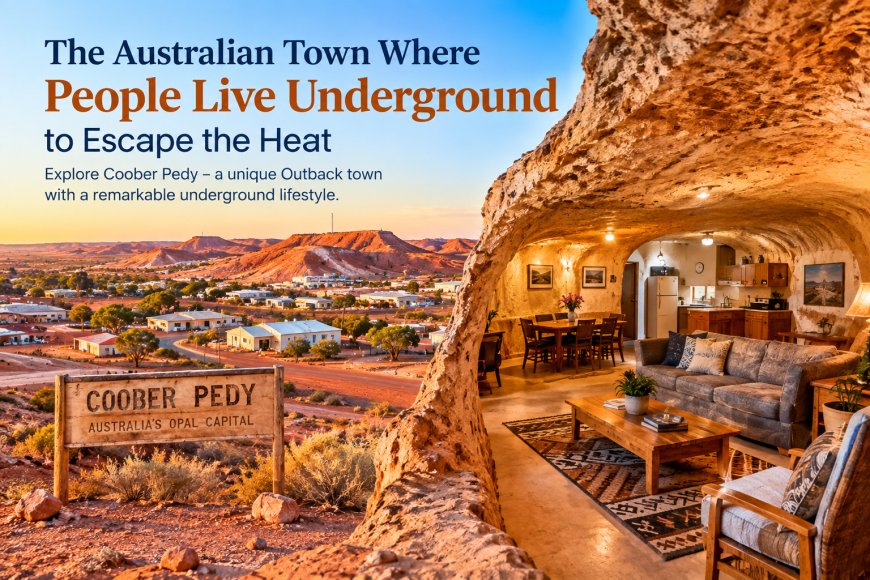
Imagine arriving in the Australian Outback on a scorching summer afternoon. The sun is relentless, the ground is baked dry, and the temperature outside is climbing towards 40°C. You step into what looks like an ordinary hillside, walk through a doorway and suddenly find yourself in a cool, comfortable living room buried beneath the earth.
No air-conditioning unit is roaring. No thick curtains are blocking the sunlight. The temperature simply feels different.
Welcome to Coober Pedy, one of Australia's most extraordinary towns, where living underground isn't a holiday gimmick or a futuristic experiment. For many residents, it is simply home.
In this article, we explore why people have moved beneath the surface to escape the desert heat, how an opal-mining settlement developed into a remarkable underground community, and what makes this unusual corner of South Australia worth discovering. We'll also look at what travellers can experience here and how to plan a journey into the heart of the Outback.
A Town Where the Ground Is More Than Just Ground
Located in the heart of South Australia's Outback, Coober Pedy is widely known as the opal capital of the world. Its landscape looks almost otherworldly, with dusty plains, rocky hills and enormous mounds of earth left behind by generations of miners.
But the most fascinating part of the town isn't always visible from the road.
Look more closely and you'll discover that some of the hills contain homes, churches, hotels and other buildings hidden beneath the surface. These underground dwellings are known locally as "dugouts".
It is a strange thought for visitors accustomed to houses with gardens, windows and sloping roofs.
In Coober Pedy, the most impressive part of a home may be the part you cannot see.
And the reason for this unusual way of life is surprisingly practical.
Why Would Anyone Choose to Live Underground?
The answer begins with the climate.
Coober Pedy sits in a semi-desert environment where summer temperatures can rise above 40°C, while nights in the cooler months can become surprisingly cold. The town receives very little rainfall, and the landscape offers limited natural shade.
Imagine trying to keep a conventional house comfortable in those conditions. Walls and roofs absorb heat during the day, and the interior can remain uncomfortable long after sunset.
Now imagine living beneath the ground instead.
The earth acts as natural insulation, helping underground rooms maintain a relatively stable temperature throughout the year. The local visitor information describes many dugouts as remaining around 23–25°C, although actual temperatures vary with the dwelling and conditions.
For residents, this is not simply about escaping a hot afternoon. It is about making everyday life more comfortable in a demanding environment.
The desert may dominate the landscape above, but underground, life can feel remarkably ordinary.
There are bedrooms, kitchens, living rooms and places to relax. Some homes are spacious and elaborately designed, rather than the cramped caves a first-time visitor might imagine.
In a town where the weather can be extreme, the most sensible home may be the one that works with the land rather than against it.
From Opal Mines to Underground Homes
Coober Pedy's underground lifestyle has a fascinating connection with its mining history.
The discovery of opal in the area in 1915 brought prospectors to this remote part of South Australia. As mining developed, people began using excavated spaces as shelter from the harsh conditions.
The underground homes that followed were shaped by the same landscape that made the town famous for opals.
Over time, simple dugouts developed into comfortable residences, some extending across substantial areas beneath the hillsides.
Think about that for a moment. A home that appears modest from the outside could contain a large living space hidden within the rock.
This is one of the reasons Coober Pedy is so fascinating to explore. The town's unusual architecture is not a modern attraction created for tourists. It is the result of generations of people adapting to their surroundings.
You Can Sleep, Worship and Explore Underground
One of the most surprising things about Coober Pedy is that underground living extends far beyond private homes.
Visitors can explore underground churches, museums, galleries and accommodation. Some hotels allow travellers to experience the distinctive atmosphere of sleeping beneath the surface without giving up modern comforts.
Imagine checking into an underground hotel after a day exploring the dusty Outback. Instead of looking out across a conventional hotel room, you're surrounded by the quiet atmosphere of a dugout.
For anyone who enjoys unusual accommodation, this is an experience that goes well beyond staying somewhere simply because it looks different in photographs.
The town also offers opportunities to explore its opal-mining past.
Historic mines and museums explain how miners worked beneath the surface, while guided experiences can help visitors understand how the town's underground spaces were created.
It is a chance to discover not just a curious architectural style, but the history of a community built around one of Australia's most distinctive natural resources.
Above Ground, the Landscape Is Just as Extraordinary
It would be a mistake to think Coober Pedy is only about what lies underground.
Step back outside and the landscape offers an entirely different experience.
The surrounding terrain has a rugged, almost lunar appearance. Vast open spaces, unusual rock formations and the remains of mining activity create scenery that feels very different from the beaches and green coastal landscapes many overseas visitors associate with Australia.
The nearby Kanku-Breakaways Conservation Park is known for its colourful hills and dramatic desert views. The region also offers access to the Painted Desert and the distinctive opal fields surrounding the town.
Sunset is particularly worth planning around. As the light changes, the colours of the desert can become more pronounced, creating a striking contrast with the pale ground and open sky.
And once darkness arrives, the Outback offers another attraction: the opportunity to experience a night sky far removed from the light pollution of major cities.
For travellers who enjoy photography, landscapes and unusual destinations, Coober Pedy provides a different side of Australia from the one often seen in conventional holiday brochures.
How to Plan a Visit to Coober Pedy
Coober Pedy is remote, but it can be incorporated into a wider South Australian or Outback itinerary.
The town lies approximately 850 kilometres north of Adelaide by road, and visitors can travel by car, coach or scheduled air services. Driving from Adelaide takes around nine hours, so it is important to plan stops, fuel and rest breaks carefully.
For many travellers, the cooler months from roughly March to November offer more comfortable conditions for exploring the region, although the best dates depend on your itinerary and the weather. Summer can be extremely hot, so visitors should check forecasts and plan outdoor activities carefully.
If you're travelling from the UK, it makes sense to consider Coober Pedy as part of a broader Australian holiday rather than a quick stop on its own.
You could begin in Adelaide, explore South Australia's landscapes and then continue into the Outback. Alternatively, combine the region with other destinations in a longer Australian itinerary.
When comparing flights to Australia, consider your arrival airport, domestic connections and the time needed to reach remote destinations such as Coober Pedy. Choosing your route around the places you genuinely want to experience can make the journey more practical and enjoyable.
A Different Way of Understanding Australia
Coober Pedy challenges the idea that Australian travel is all about beaches, famous city skylines and tropical islands.
Here, the most remarkable experience may be walking into a home hidden inside a hillside, discovering how people have adapted to an extreme climate, or watching the desert change colour as the sun goes down.
What makes the town memorable is not simply that people live underground.
It is the ingenuity behind the decision.
Rather than allowing the harsh conditions to define every aspect of daily life, generations of residents have found a way to make the landscape work for them. Their homes tell a story of practical thinking, determination, mining history and a distinctive community spirit.
For travellers looking to discover an Australia that feels genuinely different, Coober Pedy offers something far more interesting than another stop on a sightseeing checklist. Sometimes, the most extraordinary part of a destination is hiding just beneath your feet. And in this remarkable corner of the Outback, the best way to understand Australia may be to go a little deeper.
What's Your Reaction?
 Like
0
 Dislike
0
 Love
0
 Funny
0
 Angry
0
 Sad
0
 Wow
0






