Goodluck India: Automotive Forging Components Supplier for Reliable Vehicle Manufacturing
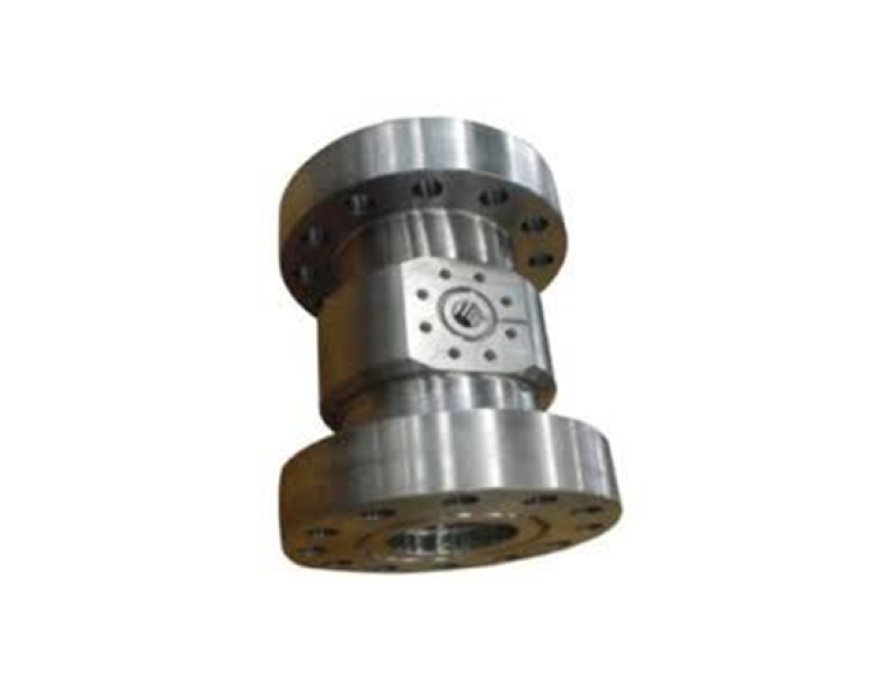
The automotive industry depends on components that can perform consistently under mechanical stress, vibration, impact, heat, and repeated operating cycles. From drivetrain assemblies and suspension systems to steering, transmission, and structural applications, forged components play an important role wherever strength and reliability are essential. Selecting the right manufacturing partner therefore involves more than finding a supplier capable of producing a particular shape. It requires confidence in material selection, forging technology, dimensional control, heat treatment, machining, testing, and production consistency.
Goodluck India, through its GoodLuck Engineering Co. Forging Division, provides engineered forging solutions for automotive and other demanding industries. As an automotive forging components supplier, the company combines open-die and closed-die forging capabilities with heat treatment, machining, inspection, and testing infrastructure. This integrated approach allows customers to develop forged components according to specific drawings, materials, dimensions, and application requirements.
Engineering Starts with the Application
An automotive forged component must be designed around the conditions in which it will operate. Load, fatigue, impact, temperature, corrosion exposure, component geometry, weight, and production volume can all influence the appropriate manufacturing process. The forging route must consequently be selected according to the component rather than treating every application in the same way.
Goodluck India's forging division works with carbon steel, alloy steel, stainless steel, duplex grades, nickel alloys, titanium, aluminium, Inconel, and other engineering materials. This material flexibility enables the company to address different component requirements across automotive, aerospace, defence, energy, oil and gas, and general engineering applications.
For automotive manufacturers and OEMs, this means that discussions can begin with the functional requirement of a component and then progress toward the appropriate material, forging method, heat-treatment cycle, machining process, and inspection requirements.
Why Forging Matters in Automotive Manufacturing
Forging is widely used where components need a strong and reliable material structure. The controlled deformation involved in forging can make it suitable for components exposed to substantial mechanical loads and repetitive service conditions.
For an automotive forging components supplier, manufacturing consistency is particularly important because automotive production frequently involves repeat orders and large-scale production programs. Component dimensions, material properties, heat treatment, and inspection requirements must remain controlled throughout production.
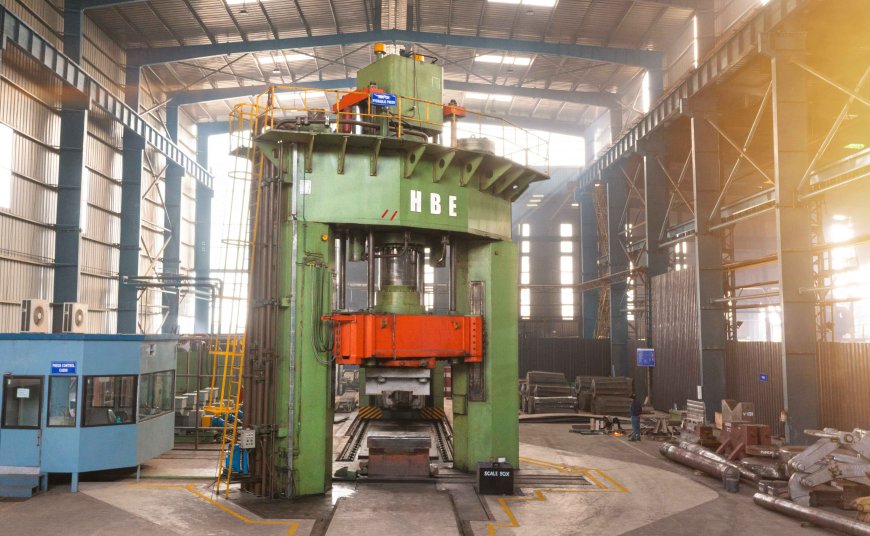
Goodluck Engineering Co. provides both open-die and closed-die forging capabilities, allowing production requirements to be matched with suitable manufacturing processes. The division has an installed forging capacity of 42,000 tons per year and produces forged products for multiple engineering industries.
Closed-Die Forging for Repeatable Components
When component geometry and production repeatability are central requirements, closed-die forging can provide an effective manufacturing route. A customer looking for a closed die forging supplier in india may require not only forging equipment but also tooling expertise, controlled production, heat treatment, machining, and inspection.
Goodluck India's forging facility includes closed-die pneumatic machines and a 650-ton closed-die forging press for customized parts. These capabilities allow the company to manufacture engineered components according to specified shapes and production requirements.
Closed-die forging can be particularly relevant for automotive applications where the same component geometry must be reproduced consistently over a production program. The process can be combined with subsequent machining to achieve the required final dimensions and functional interfaces.
From Forged Shape to Finished Component
Automotive component manufacturing rarely ends when the forging leaves the press. Depending on the product, additional machining may be required to produce holes, threads, bearing surfaces, mounting faces, grooves, profiles, or other functional features.
Goodluck India's in-house machining infrastructure includes more than 90 CNC, VMC, and VTL machines with four-axis functionality. The company can provide forgings and flanges in semi-finished or fully finished conditions.
This integrated approach can simplify procurement for automotive manufacturers because forging and machining requirements can be coordinated through the same manufacturing organization. It also provides an opportunity for closer process control between the initial forged geometry and the final machined component.
Material and Heat Treatment Control
Material selection is only one part of achieving the desired performance of an automotive forging. Heat treatment can influence mechanical properties, hardness, microstructure, and overall service performance. The treatment selected depends on the material grade and technical requirements of the component.
Goodluck Engineering Co. operates heat-treatment facilities supporting processes such as normalizing, hardening, tempering, annealing, solution annealing, and other specialized treatments. Oil and water quenching capabilities are also available depending on the application.
For automotive procurement teams, integrated heat treatment can be important because the final component properties depend on the relationship between material composition, forging process, thermal processing, and subsequent machining.
Inspection Supports Production Confidence
A forged automotive component may appear dimensionally correct while still requiring verification of its material and internal characteristics. Quality assurance therefore needs to address both visible dimensions and underlying material properties.
Goodluck India's forging quality laboratory is NABL accredited according to ISO 17025. Its stated testing capabilities include chemical and mechanical testing, ultrasonic testing, hardness testing, impact testing, surface testing, PMI, and macro- and microstructure examination.
Such inspection capabilities allow forged components to be evaluated against applicable technical requirements. For automotive manufacturers, this can support consistent documentation and verification throughout the production process.
Forged Bars for Automotive and Engineering Applications
Alongside customized automotive components, forged bars represent another important category of engineered forged products. Forged bars can serve as raw material for subsequent machining or may be supplied according to specific application requirements.
The manufacturing route for a forged bar depends on material grade, dimensions, mechanical requirements, and customer specifications. For applications involving high mechanical loads, selecting suitable forged material and maintaining controlled heat treatment and inspection can be important to the final performance of machined components.
Goodluck India's broader forging portfolio enables customers to source forged bars alongside other forged products, creating opportunities for consolidated procurement across different engineering requirements.
Stub Ends and Collars for Industrial Applications
While automotive components form an important part of the company's engineering portfolio, Goodluck India's forging capabilities also extend into industrial piping and pressure-related applications. Stubendscollars are forged components used in suitable piping configurations and require controlled material processing and dimensional accuracy.
These products can be manufactured according to specified materials, dimensions, standards, and application requirements. Goodluck's wider flange and forging portfolio includes multiple configurations for industrial applications, enabling customers to source complementary forged products through an established manufacturing organization.
The experience required to manufacture different forged geometries also demonstrates the importance of process flexibility within a modern forging facility. Different components may require different forging routes, heat-treatment processes, machining operations, and inspection procedures.
Supporting Automotive OEM Supply Chains
Automotive supply chains require suppliers capable of maintaining production continuity while meeting technical requirements. A component supplier must be able to understand drawings, specifications, material requirements, inspection plans, packaging needs, and delivery schedules.
Goodluck India approaches forging as an integrated manufacturing activity, combining forging with heat treatment, machining, laboratory testing, and inspection. This creates a manufacturing environment suited to customers that require coordinated production rather than isolated forging operations.
For OEMs, Tier suppliers, engineering companies, and automotive component manufacturers, the ability to discuss both component design and manufacturing feasibility can help establish a more effective production route.
Beyond Automotive Applications
The technical principles involved in automotive forging also apply across several other demanding industries. Components manufactured through controlled forging processes are used in aerospace, defence, oil and gas, power generation, marine, infrastructure, and heavy engineering.
Goodluck Engineering Co. serves these sectors with a broad range of forged products and material capabilities. Its experience across different applications allows manufacturing requirements to be approached according to the specific operating environment and component function.
This multi-industry exposure is particularly relevant for engineering groups that require different forged products from the same supplier base. Automotive components, forged bars, flanges, and specialized forged products can be evaluated within a common manufacturing framework.
Goodluck India as an Automotive Forging Partner
Choosing an automotive forging components supplier involves evaluating much more than production capacity. Material capability, forging technology, tooling, heat treatment, machining, testing, inspection, and technical support all contribute to a reliable manufacturing relationship.
Goodluck India brings these capabilities together through GoodLuck Engineering Co. Its forging division provides open-die and closed-die forging, heat treatment, machining, and laboratory testing for customers across automotive and other demanding engineering sectors.
For automotive manufacturers looking for a closed die forging supplier in india, or for organizations requiring customized forged components, forged bars, or industrial products such as stubendscollars, Goodluck India provides an integrated manufacturing platform for developing products around defined technical requirements.
About Goodluck India
Goodluck India Limited is an engineering and manufacturing company serving customers across multiple industrial sectors. Its business portfolio includes forgings, infrastructure and energy solutions, road safety products, tubes, pipes, coils, sheets, and other engineered products.
GoodLuck Engineering Co., the company's Forging Division, provides forged products for automotive, aerospace, defence, oil and gas, power, marine, and general engineering applications. Its manufacturing capabilities include forging, heat treatment, machining, testing, and inspection.
Goodluck India Limited
Good Luck House, II F, 166-167, Nehru Nagar 2, Ambedkar Road, Ghaziabad – 201001, Uttar Pradesh, India
Phone: +91-0120-4196600 / 4196700
Email: [email protected]
Website: https://www.goodluckindia.com/
Frequently Asked Questions
What does an automotive forging components supplier manufacture?
An automotive forging components supplier manufactures forged parts designed for vehicle and automotive-system applications. Depending on the project, products can include customized forged components for drivetrain, suspension, steering, transmission, and other mechanical systems.
Why is closed-die forging used for automotive components?
Closed-die forging is suitable for producing repeatable component geometries where controlled shape, dimensional consistency, and production efficiency are important. The exact suitability depends on the component design, material, volume, and technical specifications.
Does Goodluck India manufacture forged bars?
Yes. Forged bars are part of Goodluck India's broader forging product portfolio and can be manufactured according to applicable material, dimensional, and technical requirements.
Does Goodluck India manufacture stub ends and collars?
Yes. Goodluck India's forging portfolio includes stubendscollars and other forged products for industrial applications, subject to the required specifications and manufacturing feasibility.
What materials can be used for automotive forgings?
Depending on the application, Goodluck India works with carbon steel, alloy steel, stainless steel, duplex, nickel alloys, titanium, aluminium, Inconel, and other engineering materials.
Can Goodluck India provide machined forged components?
Yes. Its forging division has in-house CNC, VMC, and VTL machining capabilities and can provide forged products in semi-finished or finished conditions according to applicable requirements.
What's Your Reaction?
 Like
0
 Dislike
0
 Love
0
 Funny
0
 Angry
0
 Sad
0
 Wow
1