






















Beauty and Wellness Certification: Learn Skills That Pay
Beauty and Wellness Certification: India's Fastest-Growing Vocational Sector

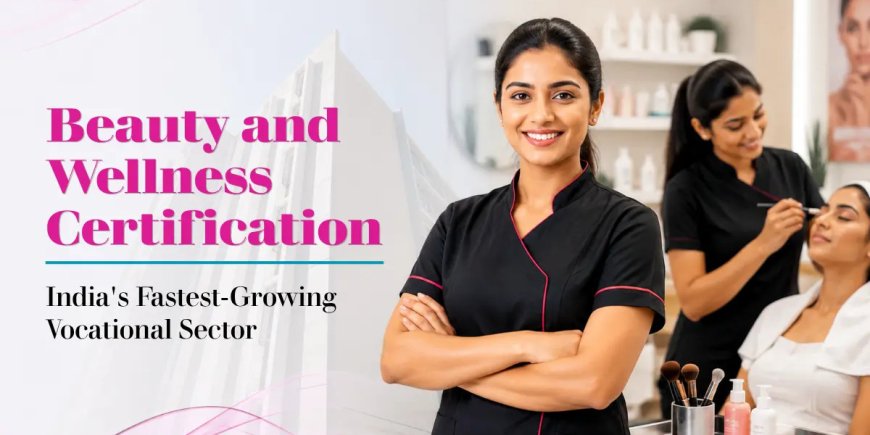
The beauty and wellness industry has become a diverse career space for people interested in skincare, haircare, makeup, wellness, fitness, salon services, and other personal-care professions. As customers increasingly look for trained professionals, practical skills and recognized qualifications can play an important role in starting and developing a career.
For students, freshers, working professionals, and individuals considering a career change, structured training can provide a clearer path from learning basic techniques to developing job-ready capabilities. A Beauty and Wellness Certification can be particularly useful when it combines technical knowledge, practical learning, professional standards, and industry-relevant training.
CII’s skill development ecosystem focuses on industry-led training, employability, hands-on learning, career support, and pathways for skilled talent. Its broader skilling initiatives include Multi Skill Training Institutes, Model Career Centres, CSR-led employment training, and international pathways.
Why Beauty and Wellness Skills Matter Today
Beauty and wellness is not limited to traditional salon work. The sector includes multiple specialized areas, creating opportunities for people with different interests and skill sets.
The Beauty & Wellness Sector Skill Council identifies areas such as beauty and salon services, skincare, hairdressing, makeup, cosmetology, nail care, spa, wellness, yoga, fitness, and product sales.
This variety means learners can explore a career direction based on their strengths and interests.
Growing Range of Career Skills
A structured training program can help learners develop skills such as:
-
Skincare and beauty treatment techniques
-
Hair care and styling
-
Makeup application
-
Salon and customer service
-
Wellness and personal care
-
Fitness and lifestyle-related skills
-
Product knowledge and sales
-
Hygiene, safety, and professional conduct
-
Client consultation and communication
Learning these skills systematically can help reduce the gap between theoretical knowledge and real workplace requirements.
What Can You Learn Through Professional Training?
The value of a certification program depends heavily on what you actually learn during the course. A useful program should go beyond simply providing a certificate and focus on practical, measurable competencies.
Technical and Practical Skills
Beauty and wellness professionals often work directly with clients, so hands-on practice is important. Depending on the specialization, training may include demonstrations, supervised practice, equipment handling, product selection, consultation techniques, and service procedures.
National occupational standards developed by the Beauty & Wellness Sector Skill Council include roles such as hair stylist, pedicurist and manicurist, yoga instructor, aromatherapist, colourist, and aesthetic skin trainer.
This shows how broad the sector can be and why choosing a specialization carefully matters.
Professional and Soft Skills
Technical ability is only one part of building a career. Beauty and wellness professionals also interact closely with clients, making communication and professionalism important.
Training can help learners strengthen:
-
Client communication
-
Consultation skills
-
Time management
-
Workplace etiquette
-
Personal grooming
-
Hygiene practices
-
Customer service
-
Professional confidence
These supporting skills can be valuable whether someone plans to work for an established business or eventually operate independently.
How Certification Can Support Career Development
A recognized qualification can provide formal evidence that a learner has completed structured training. However, certification should be considered alongside practical ability, experience, specialization, and local industry requirements.
CII states that its awarding-body framework is designed around industry-aligned courses, competency development, standardized certification, quality assurance, and pathways for further qualifications. It also highlights benefits such as career progression, industry acceptability, and NSQF-aligned certification.
For someone entering the sector, this can make structured learning more meaningful than relying entirely on informal experience.
Choosing the Right Beauty and Wellness Course
Not every course will suit every learner. Before enrolling, compare the curriculum, practical training, certification structure, duration, eligibility requirements, and career relevance.
Look at the Course Curriculum
Start by checking exactly what the program teaches. A good curriculum should clearly explain the skills, techniques, and knowledge covered.
Consider whether it includes:
-
Practical demonstrations
-
Hands-on training
-
Industry-relevant techniques
-
Hygiene and safety
-
Client handling
-
Assessment
-
Certification
-
Opportunities for further learning
Check the Certification Framework
Certification is more useful when you understand who awards it and what standards apply. The Beauty & Wellness Sector Skill Council is recognized as an awarding body by NCVET under MSDE and is promoted by CII with support from NSDC.
Learners should therefore verify the specific awarding body and qualification framework attached to the course they are considering.
Consider Your Career Goal
Your preferred career direction should influence your course selection.
For example, someone interested in:
-
Salon work may explore hair, skincare, makeup, or cosmetology.
-
Wellness may consider spa, yoga, fitness, or related services.
-
Entrepreneurship may benefit from combining technical training with customer service and business skills.
-
Product sales may look for programs that include product knowledge and retail skills.
Having a clear objective can make the learning journey more focused.
From Training to Employment and Entrepreneurship
Beauty and wellness skills can support different professional pathways. Some learners may seek employment in salons, spas, wellness centres, fitness facilities, or related businesses. Others may use their skills as a foundation for freelance work or eventually establish their own service business.
The Beauty & Wellness Sector Skill Council states that its mission includes helping youth and women develop employability and self-employment opportunities.
However, completing a course does not automatically guarantee employment or a specific income. Career outcomes can depend on skill level, experience, location, specialization, customer demand, and the ability to build a professional reputation.
Why Industry-Aligned Learning Makes a Difference
One of the key advantages of industry-aligned education is its focus on skills that can be applied in real professional environments.
CII’s skills initiatives emphasize hands-on training and employability, while its awarding-body framework highlights competency-based and industry-aligned learning.
For learners, this approach can provide a more practical understanding of what employers and customers expect.
Those exploring structured career development can Cii Skills to understand available skill-development pathways and how industry-focused training can support professional growth.
Building a Long-Term Career in Beauty and Wellness
The beauty and wellness sector continues to cover a wide range of occupations and specializations. Developing one skill can be a starting point, while additional certifications and practical experience can help professionals expand their capabilities over time.
A long-term career strategy may include:
-
Starting with foundational training
-
Developing a specific specialization
-
Practising techniques consistently
-
Building customer-service skills
-
Staying updated with industry practices
-
Adding relevant certifications
-
Developing a professional portfolio
-
Exploring employment or self-employment opportunities
Continuous learning can be especially valuable in an industry where techniques, products, equipment, and customer preferences can change.
Final Thoughts
A Beauty and Wellness Certification can be a practical starting point for individuals who want to turn an interest in personal care, beauty, or wellness into professional skills. The most important consideration is not simply having a certificate, but gaining relevant knowledge, practical experience, professional habits, and skills that can be applied in real-world settings.
With industry-focused initiatives, structured training pathways, and opportunities for skill development, CII’s wider skills ecosystem provides learners with resources to explore vocational and career-oriented education.
Before choosing a course, compare its curriculum, practical components, certification framework, and relevance to your career goals. A thoughtful choice can help you build a stronger foundation for employment, specialization, or future entrepreneurship in the beauty and wellness sector.
What's Your Reaction?
 Like
0
 Dislike
0
 Love
0
 Funny
0
 Angry
0
 Sad
0
 Wow
0





