













Can PRP Hair Treatment in Abu Dhabi Help Fine Hair Thicken
Can PRP Hair Treatment in Abu Dhabi help fine hair thicken? Learn how PRP may support miniaturized follicles and improve visible hair caliber.
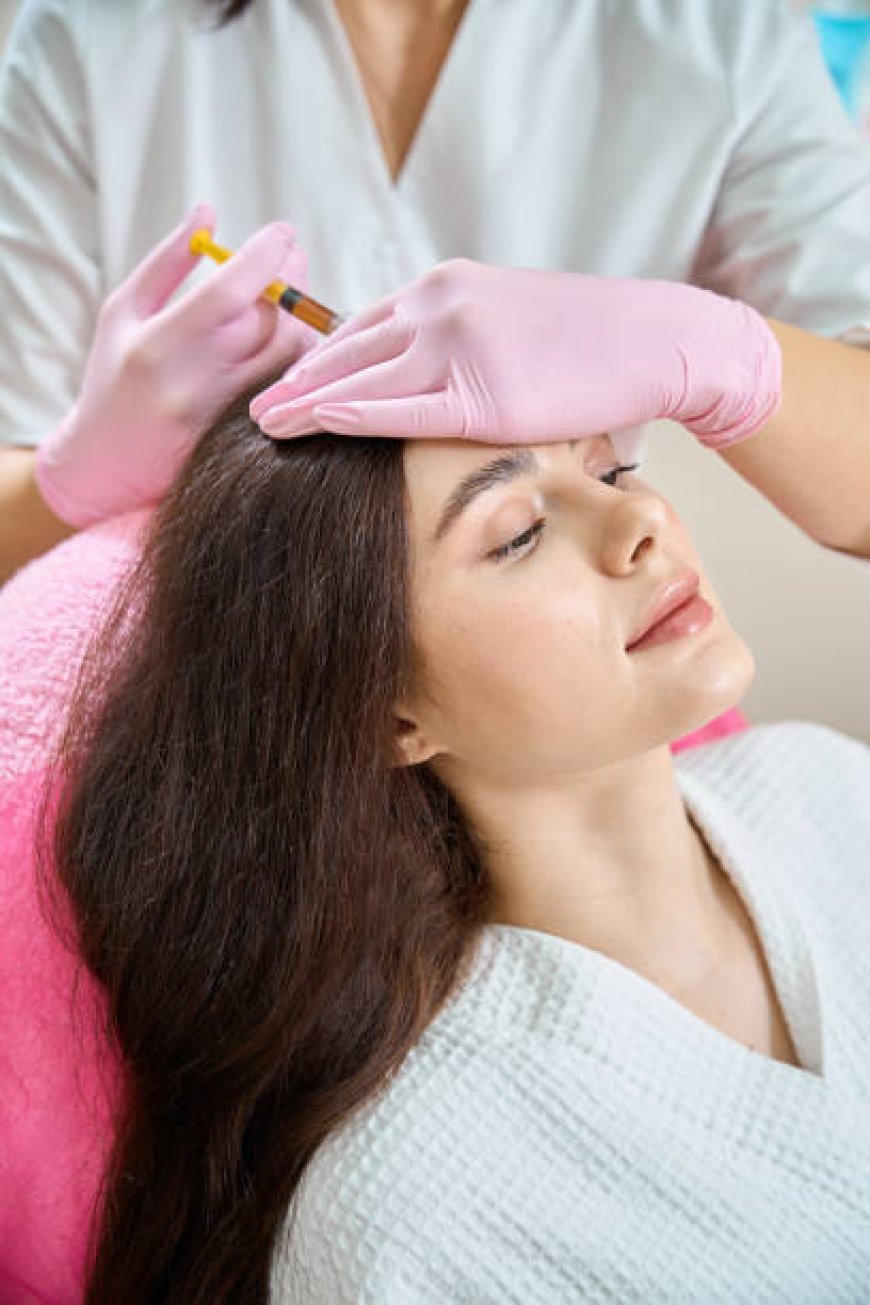
Fine hair does not always mean fewer follicles; sometimes the follicles are still present but producing progressively smaller shafts. PRP Hair Treatment in Abu Dhabi may help improve the appearance of fine, miniaturized hair by supporting viable follicles and encouraging stronger hair growth over time, although it cannot turn a permanently inactive follicle into a new one.
Why Hair Becomes Finer Before It Disappears
Hair density and hair thickness are related but different measurements. A scalp can retain many follicles while producing increasingly narrow strands, creating the appearance of reduced coverage even before obvious baldness develops.
Miniaturization Changes the Hair Shaft
When a follicle becomes miniaturized, successive growth cycles can produce shorter, finer, and less pigmented hairs. These hairs contribute less visual coverage because they occupy less surface area and transmit more light to the scalp.
This is particularly important in early pattern hair loss. The follicle may still be active, which creates a potential window for treatments designed to support its function.
Fine Hair Is Not the Same as Naturally Fine Hair
Some people have genetically fine hair throughout their scalp without experiencing progressive loss. Others notice that previously thicker strands have gradually become weaker.
The difference is determined through comparison of hair caliber, density, distribution, and progression rather than by strand diameter alone.
How PRP Hair Treatment in Abu Dhabi May Support Hair Thickness
PRP involves processing a small blood sample to isolate a platelet-rich component and injecting it into selected scalp areas. The treatment is intended to provide a concentrated platelet preparation around follicles that remain capable of producing hair.
Supporting the Follicular Environment
The objective of PRP is not to coat the hair shaft or cosmetically enlarge an existing strand. Its role is directed toward the biological environment surrounding the follicle.
When a follicle is producing miniaturized hair but remains viable, supporting its activity may contribute to improved shaft caliber and visible density over subsequent growth cycles.
Why Thickness Develops Gradually
Hair shafts are produced inside follicles over time. A treatment performed today cannot immediately replace a fine strand that is already growing.
Instead, the potential benefit becomes visible as follicles progress through subsequent growth cycles. This is why treatment assessment usually takes place over months rather than days.
How Clinicians Assess Fine Hair Before PRP
A good treatment plan begins by determining whether fine hair represents active miniaturization, natural hair characteristics, or another form of density change.
| Finding | What It May Indicate | Relevance to PRP |
|---|---|---|
| Fine strands across the entire scalp | Naturally fine hair | Limited if no progressive loss exists |
| Finer hairs concentrated in one zone | Localized miniaturization | May be suitable for targeted treatment |
| Gradually decreasing shaft diameter | Progressive follicular change | Potentially relevant |
| Fine hairs with visible scalp | Reduced coverage | Requires density and follicle assessment |
| Smooth, long-standing bald area | Significant follicular loss | Limited PRP potential |
| Fine hair with sudden shedding | Active shedding process | Underlying cause should be investigated |
This distinction helps avoid treating the visible hair shaft while overlooking the actual condition of the follicle.
Crown, Hairline, and Diffuse Fine Hair Need Different Mapping
Fine hair can appear in several patterns, and each requires a different approach to treatment planning.
Fine Hair Around the Crown
The vertex naturally contains a whorl, so reduced shaft diameter can make the scalp more visible around the spiral. The practitioner needs to distinguish natural directional changes from true miniaturization.
Fine Hair Along the Frontal Region
The frontal scalp contains follicles with important aesthetic implications for facial framing. Fine strands here may represent early recession, miniaturization, or naturally softer hair along the hairline.
The treatment area should therefore be defined according to follicular changes rather than simply drawing a line around the visibly thin region.
Diffuse Fine Hair
Diffuse thinning affects a broader scalp region and may involve multiple zones simultaneously. In these cases, treatment planning needs to consider overall density instead of concentrating injections on one isolated patch.
For patients exploring the wider range of hair-restoration options in Dubai, understanding the difference between follicular support and surgical replacement can help clarify which approach matches the extent of loss.
The Relationship Between Hair Caliber and Visible Density
A person can have a reasonable follicle count but still perceive thinning because each follicle is producing a smaller shaft.
Why Thicker Strands Change Coverage
A thicker hair shaft occupies more visual space and reflects light differently. When many follicles produce finer strands, the scalp becomes easier to see between hairs even if follicles remain present.
This is one reason hair-thickening treatment should be assessed using both density and shaft caliber.
Why Photographs Can Be Misleading
Lighting, hair length, moisture, styling products, and camera angle can make fine hair appear dramatically different from one photograph to another.
Consistent clinical photographs taken under comparable conditions are more useful for monitoring gradual changes.
Treatment Planning for Fine Hair
PRP treatment is not simply a matter of injecting the same volume across every scalp. The treatment page describes individualized planning according to the degree and distribution of hair loss.
Defining the Weakest Areas
The practitioner can identify areas where the hair shafts are noticeably finer than adjacent regions. These areas form the basis for treatment mapping.
Adjusting Injection Coverage
Fine hair may be distributed in a narrow region or across a much wider area. Injection placement should therefore correspond to the actual pattern rather than using a generic scalp grid.
Establishing a Baseline
Baseline photographs and scalp examination make it easier to determine whether subsequent changes involve shaft thickness, density, shedding, or all three.
What Hair Thickening May Look Like After PRP
PRP should not be judged by immediate changes in the hair shaft. The treatment information describes a gradual progression, with early strengthening followed by more noticeable improvements in volume and hair texture over subsequent months.
Early Recovery
Immediately after injections, temporary redness, swelling, tenderness, or mild irritation can occur. These effects relate to the procedure itself and should not be confused with hair-growth results.
Developing Hair Changes
As follicles progress through their growth cycles, patients may begin noticing changes in hair texture and apparent strength. The earliest improvement may be subtle because individual follicles do not all enter growth at exactly the same time.
Later Density Improvement
When treatment is effective and viable follicles respond, increased shaft caliber can make the scalp appear less visible. A cosmetic improvement can therefore result from thicker existing hairs rather than the creation of a completely new population of follicles.
Abu Dhabi Lifestyle Factors for Fine Hair
The UAE environment creates practical considerations for people managing fine hair. Strong sunlight, heat, perspiration, frequent air conditioning, and regular use of styling products can influence how fragile or flat fine hair appears.
Sun and Hair-Shaft Exposure
Fine hair provides less physical coverage of the scalp, increasing the importance of protecting exposed scalp areas from direct sunlight. After PRP injections, direct sun exposure should also be minimized according to the clinic's aftercare guidance.
Heat and Styling
Frequent heat styling can make already fine strands more susceptible to breakage. Breakage occurs along the shaft and is different from follicular shedding, so it should not automatically be interpreted as treatment failure.
Air Conditioning
Regular exposure to dry indoor air can contribute to scalp and hair dryness. Gentle cleansing and avoiding unnecessarily aggressive hair-care routines can help maintain the condition of fine strands.
When PRP May Not Be Enough to Thicken Fine Hair
The condition of the follicle determines the ceiling of regenerative treatment. PRP can support viable follicles, but it cannot manufacture a new follicle where the original follicular unit has been permanently lost.
Long-Standing Bald Areas
If an area contains little or no active follicular production, increasing the thickness of existing hairs may not provide enough coverage. Surgical restoration may need to be considered when donor follicles are available and the clinical pattern supports transplantation.
Hair Shaft Damage
Fine-looking hair can sometimes be caused by breakage, chemical processing, or repeated heat exposure rather than follicular miniaturization. Treating the scalp will not repair a damaged segment of hair that has already emerged from the follicle.
Underlying Medical Causes
Hormonal changes, nutritional deficiencies, inflammatory scalp disorders, medications, and other health factors can contribute to changes in hair quality. Identifying these factors is important before attributing all fine hair to pattern-related follicular miniaturization.
Questions About PRP Hair Treatment in Abu Dhabi for Fine Hair
Can PRP make naturally fine hair thicker?
PRP is more relevant when fine hair results from follicular miniaturization rather than a person's natural hair characteristics. It cannot reliably change genetically fine hair into a different natural hair type.
How long does it take to notice thicker hair?
Hair changes develop gradually. The treatment information indicates that noticeable improvements generally become easier to assess after several months, with more visible changes commonly developing around four to six months.
Can PRP help fine hair before it becomes bald?
Potentially, if the follicles remain viable. Early miniaturization provides more existing follicular tissue to support than a long-standing completely bald area.
Does thicker hair mean more follicles have grown?
Not necessarily. An improvement in shaft caliber can make the hair appear denser without creating new follicles.
The Strategic Investment
Fine hair deserves a follicle-level assessment because visible thinning can occur before substantial follicular loss has taken place. PRP Hair Treatment in Abu Dhabi may support miniaturized but viable follicles and improve the caliber and visual coverage of growing hair, while advanced follicular loss may require a different restoration strategy.
For patients evaluating fine or progressively weaker hair, Tajmeels Clinic provides personalized hair-restoration planning based on scalp findings, follicular viability, and the distribution of thinning.
What's Your Reaction?
 Like
0
 Dislike
0
 Love
0
 Funny
0
 Angry
0
 Sad
0
 Wow
0