













Choosing a Commercial Laundry Press Machine for Professional Finishing Systems
Introduction
Professional garment finishing is an essential part of commercial laundry operations, particularly for businesses that handle large volumes of uniforms, hotel linen, workwear and institutional garments. Washing and drying are only part of the process; proper pressing and finishing help deliver a neat, presentable and consistent final product. A commercial laundry press machine plays an important role in this stage by applying controlled heat, pressure and steam to remove wrinkles and improve garment appearance. Businesses planning to upgrade their finishing departments should evaluate equipment based on garment types, daily workload, available space, operator skills and maintenance requirements. Selecting a suitable system also means understanding the difference between garment presses, utility presses and complete finishing lines. For businesses exploring established finishing equipment, the option to Buy Forenta finishing system and steam press equipment in India can be considered alongside other suitable commercial solutions. Supershine Laundry helps businesses understand commercial and industrial laundry equipment requirements, including finishing systems, steam presses and supporting equipment. The right investment should match actual operational needs rather than simply focusing on machine features.
What Is a Commercial Laundry Press Machine?
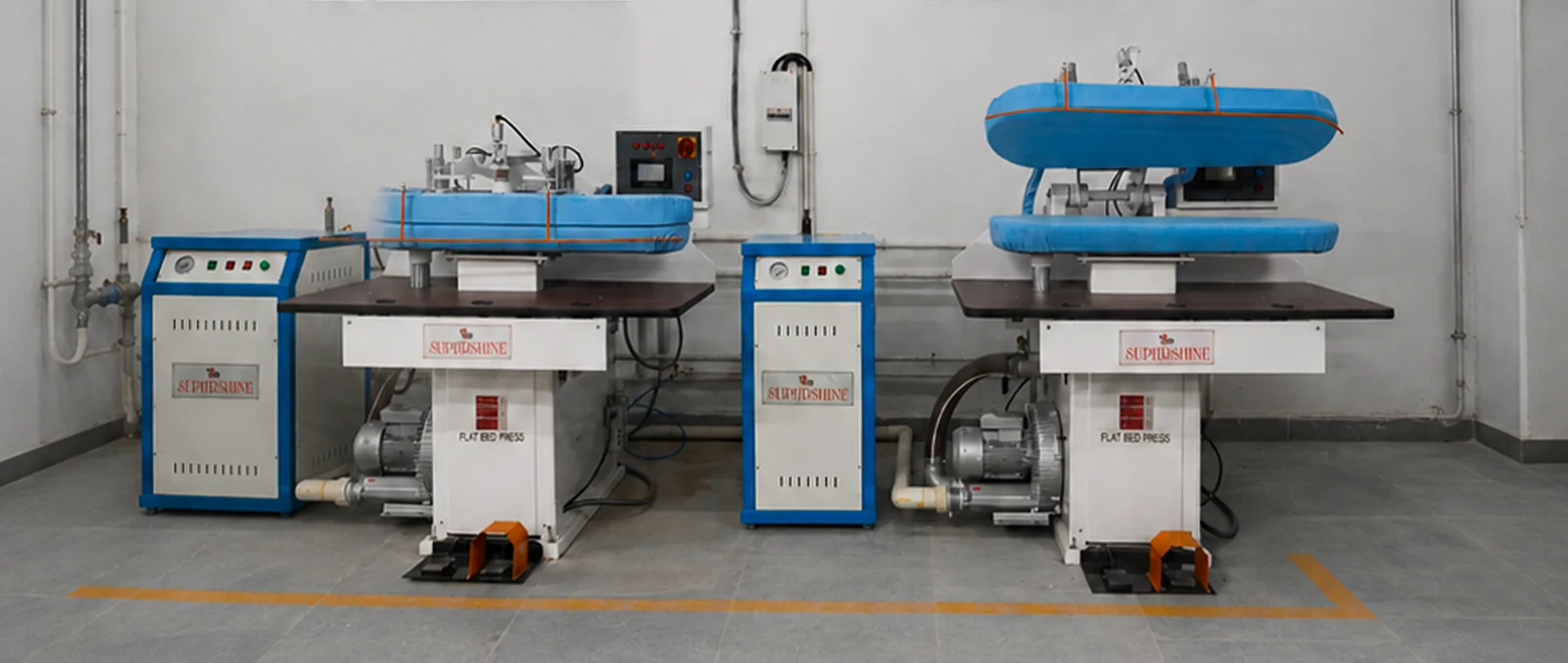
A commercial laundry press machine is professional finishing equipment designed to press garments and textiles using a combination of heat, pressure and, depending on the model, steam. It helps remove wrinkles, improve fabric presentation and produce a more consistent finish than basic manual ironing.
These machines are commonly used in:
-
Hotels and resorts handling guest garments, uniforms and staff clothing.
-
Hospitals and healthcare facilities processing uniforms and suitable textile items.
-
Universities and educational institutions managing uniforms and workwear.
-
Commercial laundries offering garment finishing services.
-
Garment manufacturing units requiring organised pressing operations.
-
Hospitality businesses handling employee clothing and customer garments.
The equipment selected should reflect the type of textiles being processed. A machine suitable for cotton uniforms may not be the best choice for delicate garments or specialised fabrics.
Understanding Different Types of Laundry Pressing Equipment
Commercial finishing departments may require different types of pressing equipment. Understanding their functions helps purchase managers select a suitable combination.
1. Flat Garment Press
A flat garment press uses two pressing surfaces to apply heat and pressure to clothing or fabric sections. The operator positions the garment between the pressing surfaces and follows the machine's operating procedure.
It can be useful for:
-
Shirts and uniform components.
-
Flat textile sections.
-
Certain workwear applications.
-
Garments requiring consistent surface finishing.
2. Steam Press
A steam press uses steam and heated pressing surfaces to relax fabric fibres and reduce wrinkles. Steam helps prepare garments for finishing, while controlled pressure creates a smooth appearance.
Steam presses are particularly useful for businesses processing different types of uniforms and garments. However, fabric care instructions and suitable temperature settings must always be considered.
3. Utility Press
Utility presses are designed for specific garment areas or finishing requirements. Depending on the equipment configuration, they can support operations involving sleeves, collars, cuffs and other garment sections.
They are useful in finishing departments where different garment components require specialised treatment.
4. Complete Garment Finishing Systems
A complete finishing system combines different machines and workstations to organise the finishing process. Depending on the operation, this may include garment presses, steam equipment, finishing tables and related handling equipment.
A coordinated system can help businesses organise garment movement and reduce unnecessary handling between finishing stages.
Why Do Commercial Businesses Need Professional Pressing Equipment?
The finishing stage influences how customers perceive the quality of laundry services. Even when washing and drying are completed properly, poorly finished garments can create an inconsistent customer experience.
Investing in suitable pressing equipment can support several operational requirements.
Consistent Garment Presentation
Commercial facilities often process multiple garments of the same type. Professional pressing equipment helps operators follow repeatable finishing procedures, supporting a more uniform appearance across processed garments.
Better Workflow Organisation
A dedicated finishing area allows businesses to separate washing, drying, pressing, inspection and packing activities. This makes it easier to identify workflow problems and organise staff responsibilities.
Support for Different Fabric Requirements
Commercial laundries may handle cotton, polyester blends and other textile materials. Suitable pressing equipment provides different finishing options, although temperature, steam and pressure settings must follow fabric requirements.
Improved Finishing Capacity
A properly planned finishing department can support the overall laundry workflow. However, the actual output depends on garment type, operator experience, loading procedures, equipment configuration and processing time.
Businesses should evaluate the entire production line instead of assuming that installing one additional press will automatically increase daily output.
How to Choose the Right Commercial Laundry Press Machine
Selecting equipment requires a practical assessment of the laundry operation. The following factors can help procurement teams make an informed decision.
1. Identify the Types of Garments
Start by listing the garments and textiles processed regularly.
For example:
-
Hotels may process staff uniforms, guest garments and selected linen items.
-
Hospitals may require finishing for staff uniforms and suitable healthcare garments.
-
Universities may process institutional uniforms and workwear.
-
Commercial laundries may handle different customer garment categories.
-
Garment manufacturers may require pressing equipment for production finishing.
The equipment should match the actual fabric and garment requirements.
2. Evaluate Daily Processing Requirements
Estimate the number of garments processed during a normal working shift and during peak periods.
Consider:
-
Average daily garment volume.
-
Number of operating shifts.
-
Available finishing staff.
-
Garment complexity.
-
Required inspection and packing time.
-
Space available for equipment and movement.
This information helps determine whether an individual press or a coordinated finishing line is more appropriate.
3. Check Steam and Utility Requirements
Steam-based finishing equipment requires suitable utility arrangements. Before purchasing, check the manufacturer's specifications for steam supply, electrical connections, operating pressure and other installation requirements.
If a separate boiler or steam generator is required, its compatibility should also be assessed.
The facility should evaluate ventilation, drainage, water quality and safe access for maintenance where applicable.
4. Consider Operator Safety and Training
Pressing equipment involves heated surfaces, pressure and steam. Operators must understand the correct loading procedure, controls, safety mechanisms and emergency shutdown process.
Purchase managers should check:
-
Safety guards and protective arrangements.
-
Emergency stop functionality.
-
Operating instructions.
-
Operator training requirements.
-
Accessibility for routine cleaning and maintenance.
Training should be completed before equipment enters regular production.
5. Review Maintenance and Spare Parts Support
Maintenance planning is an important part of equipment ownership. Ask the supplier about routine servicing, commonly required spare parts, technical assistance and expected maintenance procedures.
A machine's purchase price should not be the only deciding factor. Businesses should also consider installation, operator training, utilities, maintenance and long-term operating requirements.
Forenta Finishing Systems: What Should Buyers Evaluate?
Forenta is an established name associated with professional garment finishing equipment. Businesses considering its equipment should review the available models and configurations according to their actual production requirements.
Before selecting a system, buyers should examine:
-
Equipment configuration: Identify the specific press, finishing unit or steam equipment required.
-
Garment compatibility: Check whether the equipment is suitable for the fabrics and garments handled by the facility.
-
Steam requirements: Confirm the recommended steam supply and operating conditions.
-
Installation planning: Evaluate floor space, utility connections and operator access.
-
Maintenance arrangements: Understand servicing requirements and spare parts availability.
-
Supplier support: Confirm what installation, commissioning and technical support services are included.
A finishing system should be selected as part of the complete laundry workflow. For example, a commercial laundry processing uniforms may need a different arrangement from a garment factory finishing multiple clothing styles.
Businesses researching Forenta equipment can compare available specifications with their daily operational needs before finalising a purchase.
Commercial Press Machine vs Manual Ironing
Manual ironing and professional pressing equipment serve different operational purposes. The right choice depends on garment volume, available labour and finishing standards.
Manual ironing
-
Suitable for small-scale or occasional garment finishing.
-
Offers flexibility for individual garments.
-
Requires operator time and consistent technique.
-
May become difficult to manage when garment volumes increase.
Commercial pressing equipment
-
Designed for organised professional finishing operations.
-
Offers controlled pressing procedures according to machine configuration.
-
Can support repetitive garment processing.
-
Requires appropriate installation, utilities and operator training.
A commercial laundry press machine may be a practical option for businesses with regular finishing requirements. However, the expected operational benefits should be evaluated against equipment cost, staffing and maintenance needs.
How Supershine Laundry Supports Commercial Finishing Requirements
Choosing laundry equipment involves more than identifying an individual machine. Businesses need to understand how washing, drying and finishing equipment work together within the available facility.
Supershine Laundry deals in commercial and industrial laundry equipment and can help businesses explore equipment options based on their operational requirements.
The selection process should consider:
-
Existing laundry equipment and production workflow.
-
Types of garments and textiles being processed.
-
Daily and seasonal workload.
-
Available floor space and utility connections.
-
Finishing requirements and equipment configuration.
-
Maintenance and spare parts considerations.
For hotels, hospitals, universities, commercial laundries and garment manufacturing facilities, a properly assessed finishing department can help organise garment processing from washing through final inspection.
Supershine Laundry encourages businesses to evaluate equipment specifications and installation requirements before making purchasing decisions. Comparing suitable finishing options helps buyers avoid selecting machines that do not match their actual workload.
Common Mistakes to Avoid When Purchasing Finishing Equipment
Even a technically suitable machine may not deliver the expected operational value if the purchasing process overlooks important requirements.
Avoid these common mistakes:
-
Choosing equipment without assessing garment types: Different fabrics require different finishing conditions.
-
Ignoring utility requirements: Steam, electricity and other installation needs should be confirmed before delivery.
-
Overlooking floor space: Operators need sufficient room for garment loading, unloading and movement.
-
Focusing only on purchase price: Installation, training, maintenance and operating costs should also be considered.
-
Neglecting operator training: Incorrect operating practices can affect finishing quality and workplace safety.
-
Not checking service arrangements: Spare parts and technical support should be discussed before purchasing.
A structured equipment assessment helps businesses make more practical and sustainable investment decisions.
Conclusion
Professional garment finishing is an important part of a well-organised commercial laundry operation. Selecting suitable pressing equipment requires attention to garment types, production requirements, steam supply, installation conditions, operator safety and maintenance support.
A commercial laundry press machine can support consistent garment presentation when it is selected and operated according to the facility's actual requirements. Businesses should compare individual presses and complete finishing systems before making a final decision.
Supershine Laundry supports commercial and industrial laundry equipment requirements by helping businesses explore suitable equipment options. Organisations interested in upgrading their finishing departments can evaluate available Forenta configurations and steam pressing solutions. If your business is planning to Buy Forenta finishing system and steam press equipment in India, review the technical specifications, installation requirements and support arrangements to identify the most suitable solution.
Frequently Asked Questions
1. What is a commercial laundry press machine used for?
It is used to remove wrinkles and improve the appearance of garments and textiles through controlled heat, pressure and, depending on the equipment, steam. Hotels, commercial laundries, hospitals and garment facilities use professional pressing equipment for finishing operations.
2. What is the difference between a steam press and a garment press?
A steam press uses steam to help relax fabric fibres during finishing. A garment press applies heat and mechanical pressure to smooth garments. Some professional finishing equipment combines both functions.
3. Is Forenta finishing equipment suitable for commercial laundries?
Forenta equipment can be considered for professional garment finishing applications. Suitability depends on the specific model, garment types, processing requirements, available utilities and installation conditions.
4. What should businesses check before purchasing a steam press?
Businesses should check garment compatibility, steam supply, electrical requirements, installation space, safety features, operator training, maintenance procedures and spare parts availability.
5. Can Supershine Laundry help businesses select commercial finishing equipment?
Supershine Laundry deals in commercial and industrial laundry equipment and can help businesses explore suitable equipment options. Buyers should share their garment types, daily workload, facility requirements and finishing objectives to assess appropriate solutions.
What's Your Reaction?
 Like
0
 Dislike
0
 Love
0
 Funny
0
 Angry
0
 Sad
0
 Wow
0