Controlling Small Flows at High Temperature: How a Finned Bonnet Control Valve Protects Stem Packing
Mark 708HT finned bonnet fractional flow control valve for steam, hot water and high-temperature service up to 1000°F (538°C). Cv 0.05 to 4.0, sizes 1/4" to 3/4".

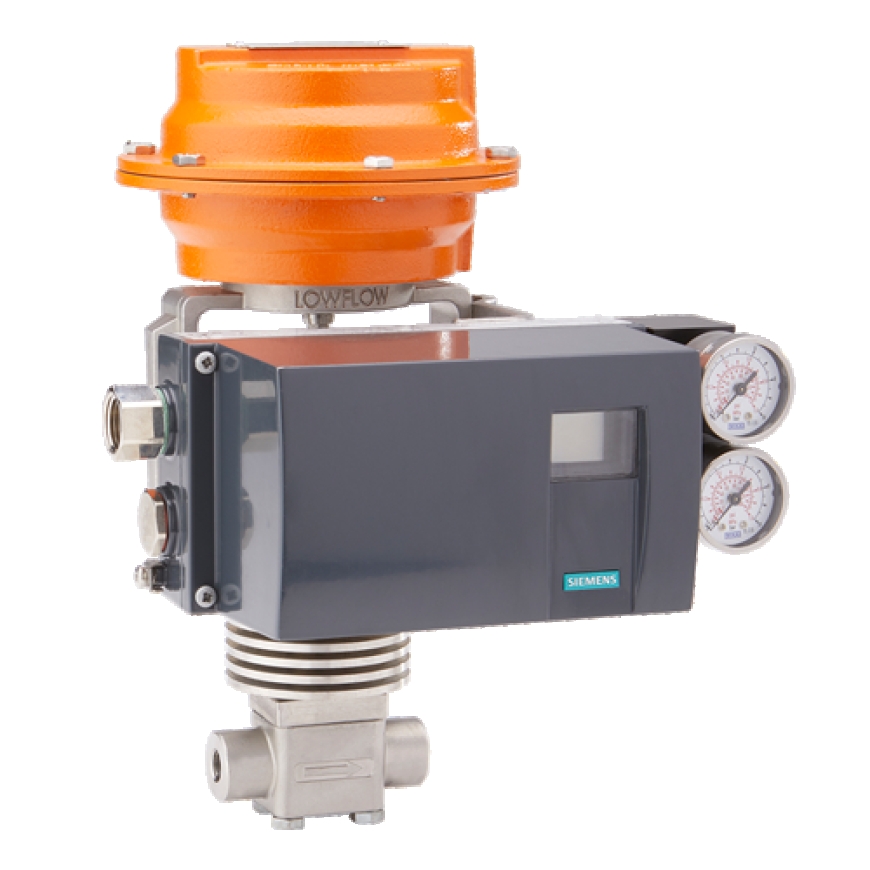
Controlling a small flow of steam, hot oil, or hot gas is harder than it looks. The valve must be precise at low Cv, and it must also survive the heat. In the stem-sealing area, temperature is often what limits the valve. This article explains why heat threatens stem packing and how a cooling fin bonnet addresses the problem, using the Mark 708HT Series as a reference.
Why High Temperature Is a Problem for Control Valves
A globe-style control valve has a stem that moves through the bonnet to position the plug. The stem passes through packing, which seals the process fluid from the atmosphere. Packing is often the most temperature-sensitive part of a valve. Standard packing materials, such as PTFE-based types, have limited temperature capability. Exposed to steam or a hot process line, they can degrade, harden, or lose sealing force, which leads to stem leakage and shortened service life.
Heat can also travel up the stem and bonnet toward the actuator. This is a concern in pneumatically actuated valves, whose diaphragm and mounting components are not intended for the temperature of the process fluid.
What a Cooling Fin Bonnet Does
A finned bonnet has an extended, finned section between the valve body and the packing area. The fins increase the surface area available to dissipate heat to the surrounding air. This lowers the temperature at the packing compared with a standard bonnet.
The benefit is practical. According to the manufacturer, the finned bonnet cools the area around the packing, which allows standard packing materials to be used in services where they otherwise would not be suitable. Users do not need to switch to specialty high-temperature packing for every hot application.
Mark 708HT Series Overview
The Mark 708HT is a finned bonnet fractional flow control valve designed for steam, hot water, and high-temperature oil, gas, and liquid services up to 1000°F (538°C). It is an air-operated (pneumatic) globe-style valve intended for precise control at low flow rates.
|
Parameter |
Mark 708HT Series |
|
Maximum service temperature |
1000°F (538°C) |
|
Valve style / seat |
Globe, Class IV shutoff |
|
Sizes |
1/4" to 3/4" (DN8 to DN20) |
|
Cv (Kv) |
0.05 to 4.0 (0.04 to 3.4) |
|
Actuator signal ranges |
3-15 psi or 6-30 psi; split ranges available with optional top-mounted positioner |
|
End connections |
Threaded, socket weld*, integral tube, welded flange* (*1/2" and 3/4" only) |
|
Body materials |
Carbon steel, stainless steel, Hastelloy C, Monel, Alloy 20, others |
|
Approvals |
CRN, ATEX certified |
Key Features and Benefits
- Packing protection. The finned bonnet keeps stem packing cooler than the process temperature, extending seal life.
- Fractional flow capability. With a Cv range from 0.05 to 4.0, the valve suits pilot-scale and laboratory flow where standard-size control valves would be oversized.
- Range of body materials. Alloy options let users match the valve to corrosive or aggressive media, not just temperature.
- Flexible control. Standard pneumatic signal ranges are supported, and split-range operation is possible with a top-mounted positioner.
Where This Type of Valve Is Used
The manufacturer lists these installations: pilot plants, test stands, R&D facilities, and processing plants. Industries include aviation and aerospace, chemical, refining and petrochemical, oil and gas, general process or industrial, and test equipment and service. Typical duties include steam supply to small heat exchangers, hot oil flow control on test rigs, and high-temperature gas or liquid dosing in polymer and resin production.
Selection Tips
- Confirm the real process temperature. The 1000°F figure is the upper limit. Check the maximum operating temperature and pressure together, since the allowable pressure of anybody material falls as temperature rises.
- Choose the body material for both temperature and chemistry. Not every listed alloy has the same capability at elevated temperature. Verify the pressure-temperature rating for the chosen material.
- Size to the flow. Select the Cv that puts normal operation in the middle of the valve's travel, rather than choosing on line size.
- Consider shutoff. The globe seat is Class IV. If the process needs tighter shutoff, review it with the manufacturer.
- Plan the insulation. Do not insulate over the finned bonnet. Insulation traps heat and defeats the purpose of the fins. Insulate the body and piping only.
- Check ambient conditions. Fin performance depends on air circulation. Enclosed or very hot ambient spaces reduce the cooling effect.
Conclusion
A finned bonnet is a straightforward way to keep stem packing within its working temperature when controlling small flows of hot media. The Mark 708HT Series applies this approach to a fractional flow control valve with 1/4" to 3/4" sizing, a wide Cv range, and multiple alloy options. For data sheets, the installation and maintenance manual, or a quote, visit the Mark 708HT Series product page.
What's Your Reaction?
 Like
0
 Dislike
0
 Love
0
 Funny
0
 Angry
0
 Sad
0
 Wow
0