Data Analyst Course in Gurgaon: Complete Guide to Learning Data Analytics
Learn about the Data Analyst Course in Gurgaon with practical training in Excel, SQL, Python, and Power BI, along with projects and career guidance for beginners.

Data has become an important part of almost every business decision today. Companies collect information from customers, sales, websites, employees, marketing campaigns, and daily operations. But collecting data is only the beginning. Businesses also need professionals who can understand this information and turn it into useful insights.
This is where data analysts come into the picture. They help organisations understand what is happening in their business, identify patterns, find problems, and support better decision-making. For students and working professionals who want to enter this field, learning practical data analytics skills can be a strong career move.
At Gyansetu, we provide a Data Analyst Course in Gurgaon designed to help learners understand the tools, techniques, and practical concepts used in data analytics.
What Does a Data Analyst Do?
A data analyst works with data to answer business questions. Their responsibilities can vary depending on the organisation and industry, but the basic process usually includes collecting data, cleaning it, analysing it, preparing reports, and communicating findings.
For example, a retail company may want to know why its sales have decreased in a particular region. A data analyst can study sales records, customer behaviour, product performance, and regional trends to identify possible reasons.
The analyst then presents the findings through reports or dashboards so that managers can make informed decisions.
This means that data analytics is not simply about working with numbers. It is about understanding a problem, asking the right questions, working with relevant information, and communicating the results clearly.
Why Learn Data Analytics in 2026?
The use of digital technology has increased the amount of information businesses generate every day. From online purchases and customer interactions to financial transactions and marketing campaigns, companies have access to huge volumes of data.
As businesses become more dependent on data-driven decisions, professionals who understand analytics tools are becoming increasingly useful across different departments.
Data analysts can work in industries such as:
-
Information technology
-
Banking and finance
-
E-commerce
-
Healthcare
-
Retail
-
Manufacturing
-
Marketing
-
Telecommunications
-
Consulting
-
Education
Another benefit of data analytics is that it combines technical knowledge with business understanding. You do not have to become a software developer to work in analytics. However, you do need to develop a strong understanding of data and learn how to use the right tools effectively.
What Is Covered in a Data Analyst Course?
A good Data Analyst Course should provide a combination of concepts, tool-based learning, assignments, and practical projects. At Gyansetu, learners can gradually build their knowledge instead of trying to understand advanced topics immediately.
Advanced Excel
Excel continues to be widely used for reporting and business analysis. Beginners can start by understanding formulas, functions, sorting, filtering, PivotTables, charts, conditional formatting, and lookup functions.
Advanced Excel also helps learners understand how business data is structured and how basic analysis is performed.
SQL
SQL is one of the most important skills for working with databases. Data analysts often need to retrieve specific information from large databases and prepare it for analysis.
Learners can practise concepts such as SELECT statements, WHERE conditions, joins, grouping, aggregate functions, subqueries, and other commonly used SQL operations.
Practical SQL exercises are especially useful because they help learners understand how database queries are used in real work situations.
Python
Python is another valuable skill for modern data analysts. It can be used for data cleaning, manipulation, analysis, and automation.
Learners can begin with Python fundamentals and gradually work with libraries such as Pandas and NumPy. Python becomes particularly useful when analysts need to work with larger datasets or perform repetitive tasks more efficiently.
Power BI
Analysing data is only part of an analyst's responsibility. The results also need to be communicated in a simple and understandable way.
Power BI is widely used for creating interactive dashboards and reports. Learners can work with data sources, data modelling, visualisations, calculated measures, filters, and dashboard creation.
A well-designed dashboard can help a manager quickly understand important business trends without going through hundreds of rows of raw data.
The Importance of Data Cleaning
One of the most important but often overlooked parts of data analytics is data cleaning.
Real-world datasets can contain duplicate records, missing information, spelling differences, incorrect formats, and inconsistent values. If these problems are ignored, the final analysis may produce misleading results.
For this reason, learners need to understand how to identify and correct common data-quality issues.
At Gyansetu, practical exercises help learners work with datasets that resemble the type of information they may encounter in professional environments.
Why Practical Projects Matter
Reading about data analytics is different from actually analysing data.
A learner may understand what a PivotTable, SQL join, or Power BI dashboard is, but practical work helps develop confidence in using these tools.
For example, learners can work on a sales analysis project where they need to:
-
Clean the raw dataset.
-
Analyse sales using Excel.
-
Query information using SQL.
-
Perform additional analysis using Python.
-
Create a Power BI dashboard.
-
Present the findings in a simple business format.
Projects like these help learners understand how different tools can work together as part of an actual analytics workflow.
Who Can Join a Data Analyst Course?
Data analytics can be learned by people from different educational backgrounds. Students from commerce, management, engineering, mathematics, computer science, and other disciplines can consider building analytics skills.
Fresh graduates can use these skills while preparing for entry-level positions. Working professionals can also learn data analytics to improve their reporting, decision-making, and technical capabilities.
You do not necessarily need extensive programming knowledge before starting. A beginner can start with basic concepts and gradually move towards more advanced topics through regular practice.
Career Opportunities in Data Analytics
After developing relevant skills, learners can consider several roles depending on their qualifications, experience, and technical knowledge.
Some common positions include:
-
Data Analyst
-
Junior Data Analyst
-
Business Analyst
-
Reporting Analyst
-
MIS Analyst
-
BI Analyst
-
Operations Analyst
-
Marketing Analyst
The responsibilities of these roles can differ from one company to another. Some positions may focus heavily on reporting and Excel, while others may require stronger SQL, Python, or business intelligence skills.
Building a project portfolio can also help candidates demonstrate their practical knowledge during job applications and interviews.
Why Choose Gurgaon for Data Analytics Training?
Gurgaon, now officially known as Gurugram, is one of the major corporate hubs in the Delhi-NCR region. The city has companies operating across technology, finance, consulting, retail, e-commerce, telecommunications, and other sectors.
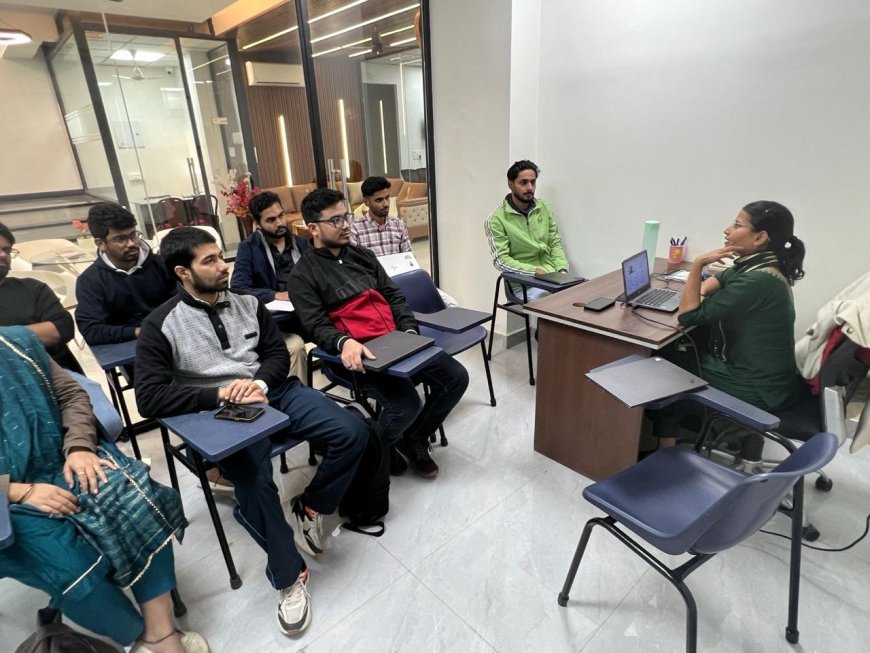
For learners living in Gurgaon and nearby areas, classroom-based training can provide regular interaction with trainers and fellow learners. It can also make it easier to ask questions, practise concepts, and receive guidance during projects.
Gyansetu provides offline training in Sector 38, Gurgaon, near Medanta Hospital. Online learning options are also available for learners who prefer to study remotely.
How Gyansetu Helps Learners
At Gyansetu, our focus is on helping students and working professionals develop practical technology skills. We have been providing training since 2012, with courses covering data analytics, data science, artificial intelligence, programming, business intelligence, and other technology areas.
Our trainers include working professionals and industry experts who bring practical knowledge into the classroom. Learning is supported through assignments, case studies, practical exercises, and real-world projects.
We also provide career-related support such as resume preparation, interview preparation, mock interviews, career guidance, and job referrals for eligible learners.
Our aim is not simply to complete a syllabus. We want learners to understand how the tools they study are used when solving actual business problems.
Final Thoughts
Data analytics is a field where continuous practice can make a real difference. Learning Excel, SQL, Python, and Power BI can provide a strong foundation, but learners should also develop problem-solving, communication, and critical-thinking skills.
If you are planning to start your journey in analytics, a Data Analyst Course in Gurgaon can provide a structured environment to learn these skills and practise them through projects.
At Gyansetu, we believe that learning becomes more meaningful when students can connect classroom concepts with real business situations. With consistent practice, practical assignments, project experience, and proper career preparation, beginners can build a solid foundation for pursuing opportunities in the data analytics field.
What's Your Reaction?
 Like
0
 Dislike
0
 Love
0
 Funny
0
 Angry
0
 Sad
0
 Wow
0