Digital Health Providers: Building a More Connected Future for Healthcare

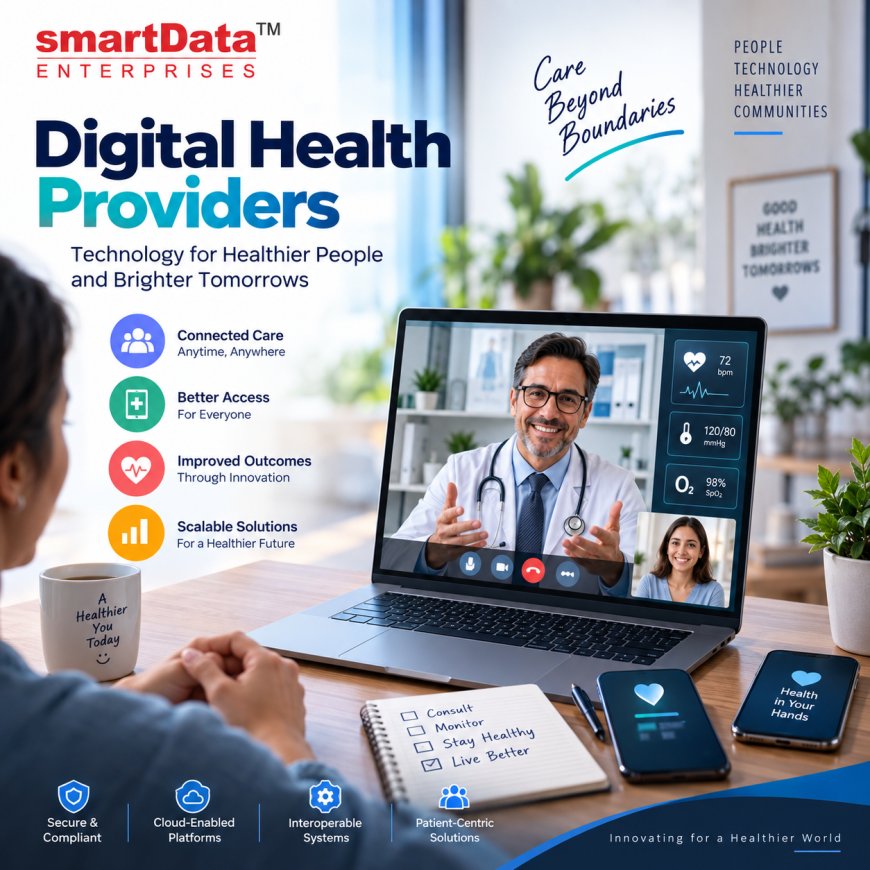
Healthcare is rapidly moving beyond traditional clinics and hospitals. Patients now expect convenient digital services, faster communication, and easier access to healthcare professionals. At the same time, healthcare organizations are looking for technology that can improve workflows while creating better patient experiences.
This transformation has made Digital Health Providers an important part of the modern healthcare ecosystem. By combining software, data, artificial intelligence, cloud technologies, and connected services, digital health solutions can help organizations deliver healthcare in smarter and more flexible ways.
What Are Digital Health Providers?
Digital health providers use technology to support healthcare delivery, patient engagement, clinical communication, and healthcare management. Their solutions can include mobile healthcare applications, telehealth platforms, electronic medical systems, remote monitoring tools, data analytics, and other digital services.
The objective is not simply to digitize existing processes. It is to create connected healthcare experiences that make information and services easier to access.
Why Digital Health Is Growing
Healthcare organizations are dealing with increasing demands for accessibility, efficiency, and personalized services. Patients want healthcare experiences that fit into their everyday lives, while providers need systems that can handle growing amounts of information.
Digital healthcare can help address these changing expectations by enabling remote communication, automated workflows, online services, and data-driven decision-making.
Key Technologies Behind Digital Healthcare
Telehealth and Virtual Consultations
Virtual consultation platforms allow patients to communicate with healthcare professionals through video, audio, and messaging. This can be useful for appropriate consultations, follow-ups, and remote healthcare services.
Healthcare Mobile Applications
Mobile applications can connect patients with healthcare services through smartphones and tablets. Depending on their purpose, these applications can support appointments, wellness programs, communication, health information, and remote engagement.
Artificial Intelligence
AI can help healthcare organizations analyze large datasets, identify patterns, automate repetitive processes, and generate useful insights. When implemented responsibly, AI can support both clinical and operational workflows.
Cloud Computing
Cloud technology provides scalable infrastructure for healthcare applications and data. It can support accessibility, integration, collaboration, and the deployment of modern digital healthcare services.
Remote Patient Monitoring
Connected devices and wearable technologies can help collect health-related information remotely. These solutions can support ongoing engagement and provide healthcare teams with additional information between visits.
Benefits of Digital Healthcare Solutions
The adoption of Digital Healthcare Solutions can create value for both patients and healthcare organizations.
Better Accessibility
Digital platforms can help patients access healthcare services without always needing to travel to a physical facility.
Greater Convenience
Online services and virtual communication can make certain healthcare interactions easier to manage around work, family, and daily responsibilities.
Improved Patient Engagement
Digital applications can provide new ways for patients to communicate with providers and stay involved in their healthcare journey.
Efficient Healthcare Workflows
Automation, data integration, and digital communication can reduce manual processes and help healthcare teams manage information more efficiently.
Data-Driven Decisions
Connected systems can bring together valuable information and provide insights that support better operational and healthcare decision-making.
The Importance of Connected Healthcare
One of the biggest opportunities in digital healthcare is connecting different systems and services.
Hospitals, clinics, laboratories, pharmacies, patients, healthcare professionals, and digital applications may all generate valuable information. When these environments can communicate effectively, healthcare organizations can create a more complete and connected digital ecosystem.
Interoperability and secure data integration therefore play an important role in the future of healthcare technology.
Security and Privacy Come First
Healthcare information is highly sensitive, so security must remain a core component of every digital health solution.
Organizations need appropriate authentication, authorization, encryption, monitoring, data governance, and compliance measures. Digital healthcare platforms should be designed with privacy and security in mind from the beginning.
Building user trust is just as important as building technological capabilities.
Creating Better Patient Experiences
Technology should make healthcare easier—not more complicated.
A well-designed digital healthcare platform should provide an intuitive experience for patients and healthcare professionals. Whether it is a mobile application, virtual consultation platform, wellness solution, or healthcare management system, usability can have a major impact on adoption.
The best digital solutions combine advanced technology with simple, patient-focused experiences.
The Future of Digital Health
The future of healthcare will increasingly involve connected platforms, intelligent applications, AI-powered insights, cloud technologies, and remote services.
As healthcare organizations continue their digital transformation journeys, Digital Health Providers will play an important role in helping them adopt technologies that support accessibility, efficiency, innovation, and patient engagement.
Digital transformation is no longer simply about moving healthcare services online. It is about creating an integrated ecosystem where technology, data, healthcare professionals, and patients work together more effectively.
Conclusion
Digital healthcare is reshaping the way healthcare services are delivered and experienced. From virtual consultations and healthcare applications to AI, cloud computing, and remote monitoring, modern technologies are creating new opportunities for healthcare organizations.
The right technology partner can help organizations turn these opportunities into practical, scalable, and secure digital solutions.
smartDataInc provides technology expertise for healthcare organizations looking to build modern digital healthcare platforms and connected solutions. Explore Digital Health Providers to learn more about digital healthcare solutions and their role in transforming the healthcare industry.
#DigitalHealthProviders #DigitalHealthcareSolutions #DigitalHealth #HealthcareTechnology #HealthcareInnovation #smartDataInc
What's Your Reaction?
 Like
0
 Dislike
0
 Love
0
 Funny
0
 Angry
0
 Sad
0
 Wow
0