

























Fractional Flow Control Valves: How to Achieve Precise Control at Very Low Flow Rates
Explore fractional flow control valves for precise micro-flow control: Cv 0.00001 to 4.0, cryogenic to 1000°F service, and pressures up to 8000 psi.

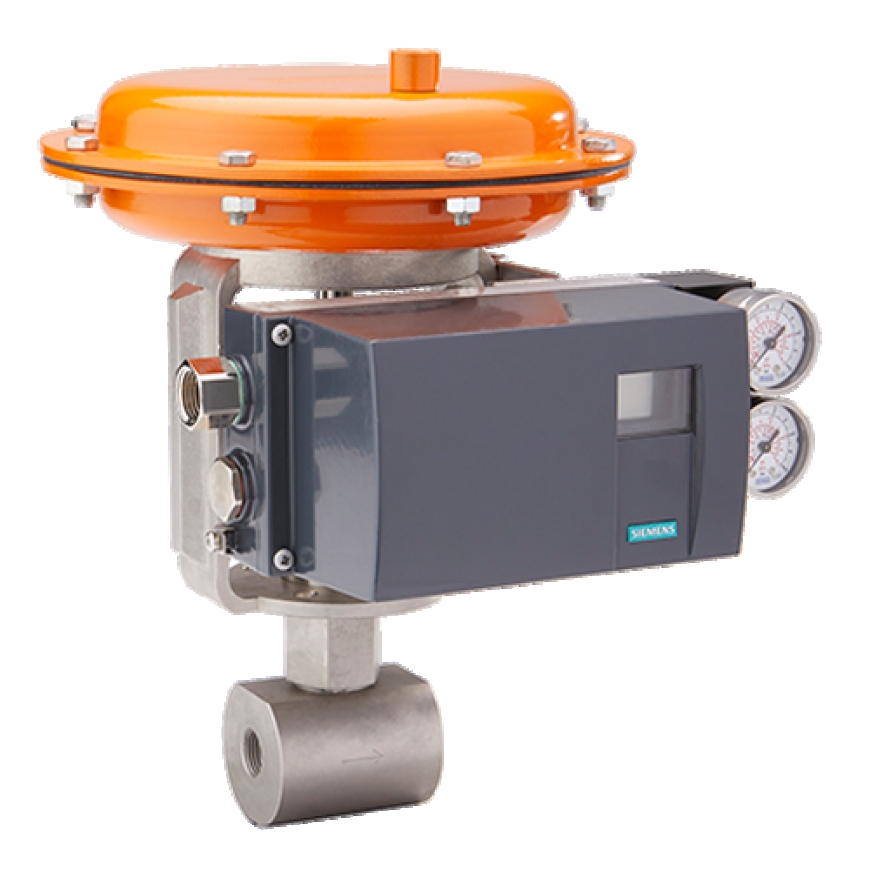
Most control valves are designed for flows measured in gallons per minute. Pilot plants, laboratory test stands, analytical instruments, and chemical dosing skids often work with flows a thousand times smaller. In these systems, a standard control valve is oversized. It cannot hold a stable setpoint, and small changes in stem position cause large swings in flow. Fractional flow control valves are built for this range.
What Is a Fractional Flow Control Valve?
A fractional flow control valve is a control valve with a very small flow coefficient (Cv), so it can throttle low flow rates accurately and repeatably. Cv is the number of US gallons per minute of water at 60°F that will pass through a valve with a 1 psi pressure drop. Metric Kv is roughly 0.865 × Cv. A valve with a Cv of 0.00001 passes only a tiny fraction of a gallon per minute under that pressure drop.
LowFlow's Mark 708 family covers Cv values from 0.00001 to 4.0 in line sizes of 1/4" to 1" (DN8 to DN25). It is available with pneumatic or electric actuation.
Why Oversized Valves Cause Problems at Low Flow
Valve sizing matters most in micro-flow service. An oversized valve has three main problems:
- Poor resolution: The valve operates only a small percentage open, where a tiny stem movement causes a large flow change.
- Hunting and instability: The control loop oscillates around the setpoint because the valve is too sensitive.
- Seat wear: Throttling near the seat at high velocity can erode the trim and shorten its life.
Selecting a valve whose Cv matches the required flow and pressure drop lets the valve work in the middle of its stroke, where control is most stable.
Key Design Features for Micro-Flow Accuracy
Precision at very low flow depends on the mechanical design of the valve:
- Rolling diaphragm actuation reduces friction on the stem, so the valve responds smoothly to small changes in the control signal.
- Guided trim keeps the plug aligned with the seat through the whole stroke, which improves repeatability.
- Quick-change trim lets the Cv be changed by swapping trim components. LowFlow valves allow this in-line, without tools or a process shutdown, which reduces maintenance downtime.
These features suit liquid, gas, and steam service across a wide range of temperatures and pressures.
Choosing the Right Configuration
Fractional flow applications vary widely, so valves come in several configurations for specific conditions. The LowFlow Mark 708 range illustrates the main options:
- Standard (Mark 708): General precision control in 1/4" to 3/4" sizes for pilot plants, R&D, OEM equipment, and dosing systems.
- Short pattern (Mark 708SH): A compact 1/4" body with Cv from 0.00001 to 0.2 for space-constrained installations.
- Bellows stem seal (Mark 708BS): A metal bellows replaces conventional stem packing as the leak path. This helps with fugitive emissions control and hazardous fluids.
- Double packing (Mark 708DP): A second packing set adds containment where standard packing cannot hold the process media.
- High pressure (Mark 708HP and 708HPA): Up to 8,000 psi (552 bar) for the straight-body HP, and up to 12,000 psi (827 bar) for the angle-body HPA. Typical uses are hydrocarbon processing, chemical processing, and offshore injection.
- High temperature (Mark 708HT): A finned bonnet moves heat away from the packing for service up to 1000°F (538°C), including steam and hot water.
- Cryogenic (Mark 708CR): An extended bonnet keeps the packing area away from the cold fluid, which prevents packing freezing and leakage. It suits liquid CO₂, hydrogen, and nitrogen.
- Motor actuated (Mark 708MV): Electric actuation for skid builders, laboratories, and dosing systems where compressed air is unavailable.
- Three-way (Mark 709): Mixing, diverting, and bypass duties at differential pressures up to 1460 psi (100 bar).
- Heavy-duty (8000 Series): Larger, more rugged valves for corrosive or harsh environments, with pressures up to 6000 psi (414 bar) and sizes up to 2". Bellows, cryogenic, and three-way variants are also available.
Where Fractional Flow Control Valves Are Used
- Pilot plants and process scale-up: Small-scale tests need accurate control, so the results carry over to full-scale design.
- Chemical injection and additive dosing: Oil and gas and chemical processing rely on repeatable low-rate metering.
- Analytical instrumentation and sampling: Analyzers depend on stable sample flow.
- Supercritical CO₂ extraction: Food and beverage, pharmaceutical, and research processes need fine control at high pressure.
- Aerospace and defense test stands: Hydrogen fuel cell and propulsion testing need control with cryogenic fluids.
- Laboratory and R&D systems: Pharmaceutical, biotech, and university labs need reliable test stands.
Practical Selection Checklist
Before specifying a valve, gather:
- Fluid type and phase (liquid, gas, steam, or two-phase)
- Minimum, normal, and maximum flow rates
- Inlet pressure and pressure drop across the valve
- Operating temperature range, including any cryogenic or high-temperature extremes
- Required leakage class and any fugitive emission limits
- Actuation type (pneumatic or electric) and control signal
- Body and trim materials compatible with the fluid
At very small orifice sizes, even fine particles can block the flow path. Upstream filtration is recommended for reliable operation.
Conclusion
Precise low-flow control depends on choosing a valve designed for it, with the correct Cv, seals, materials, and actuation for the process. Fractional flow control valves give engineers the resolution and repeatability that standard control valves cannot provide at micro-flow rates.
To explore the full range of Cv values, pressure ratings, temperature options, and actuation types, visit the Fractional Flow Control Valves page at LowFlow Valve.
What's Your Reaction?
 Like
0
 Dislike
0
 Love
0
 Funny
0
 Angry
0
 Sad
0
 Wow
0





