How Biological and Chemical Indicators Support Sterilization Validation
Learn how biological and chemical indicators support sterilization validation by providing reliable evidence that sterilization processes meet required safety and performance standards.

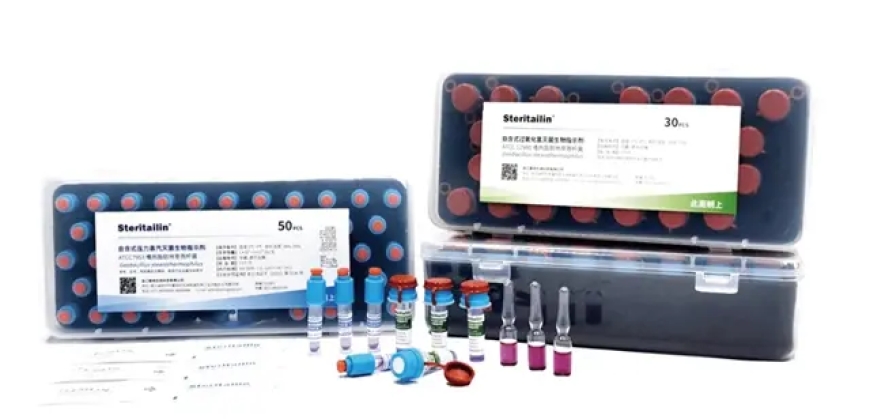
Sterilization is a critical process in pharmaceutical manufacturing, healthcare, biotechnology, and laboratory environments where products, instruments, and materials must be free from viable microorganisms. To demonstrate that a sterilization process is working effectively and consistently, facilities rely on Biological and Chemical Indicators as important monitoring tools. These indicators provide valuable evidence about whether sterilization conditions have been achieved and help organizations verify the reliability of processes such as steam sterilization, ethylene oxide (EO) sterilization, dry heat, and other validated methods.
What Is Sterilization Validation?
Sterilization validation is a documented process used to demonstrate that a sterilization cycle can consistently achieve the required level of microbial inactivation. Instead of simply assuming that a sterilizer is effective, validation evaluates whether critical parameters such as temperature, pressure, exposure time, humidity, or sterilant concentration are controlled within established limits.
A properly validated sterilization process typically involves equipment qualification, cycle development, process monitoring, performance testing, and routine verification. Biological and chemical indicators can support these activities by providing different types of evidence about sterilization performance.
Role of Biological Indicators in Sterilization
Biological indicators (BIs) are designed to challenge a sterilization process using highly resistant microorganisms or their spores. Because bacterial spores can be significantly more resistant to certain sterilization conditions than ordinary vegetative microorganisms, they provide a demanding test of process effectiveness.
For example, Geobacillus stearothermophilus spores are commonly associated with steam sterilization and some other processes, while Bacillus atrophaeus spores are commonly used for dry heat and ethylene oxide applications.
During validation, biological indicators are placed at locations considered difficult for the sterilizing agent to reach. After the sterilization cycle, the indicators are incubated or processed according to their instructions. A negative growth result indicates that the biological challenge was successfully inactivated under the tested conditions.
This makes BIs particularly useful for demonstrating microbial lethality during qualification and validation studies.
Understanding Chemical Indicators
Chemical indicators provide another important layer of sterilization monitoring. Unlike biological indicators, they do not directly demonstrate microbial destruction. Instead, they use chemical reactions to show that specific sterilization conditions have been reached.
Depending on the indicator type, a chemical indicator may respond to one or more critical parameters, such as temperature, time, steam exposure, or sterilant concentration. A visible color change or other defined endpoint allows personnel to determine whether the indicator has been exposed to the required conditions.
Chemical indicators can be used in different forms, including indicator strips, tapes, labels, cards, and integrators. Their application depends on the sterilization method and the monitoring objective.
Biological and Chemical Indicators Work Together
One of the key advantages of using Biological and Chemical Indicators together is that they provide complementary information.
Chemical indicators can offer a rapid visual indication that the required exposure conditions were achieved. Biological indicators, meanwhile, provide a direct microbiological challenge to evaluate the effectiveness of the sterilization process.
For example, a sterilization cycle may reach the programmed temperature and pressure, and a chemical indicator may show the expected endpoint. However, validation may still require biological evidence to demonstrate that the process can effectively inactivate resistant microorganisms.
Using both types of indicators helps create a more comprehensive monitoring strategy.
Supporting Sterilization Cycle Development
During sterilization validation, process engineers need to determine appropriate cycle parameters. This may involve testing different exposure times, temperatures, sterilant concentrations, loading configurations, and challenging locations.
Biological indicators can be positioned in areas where sterilization is expected to be more difficult. These locations may include dense loads, areas with restricted airflow, product interiors, or other challenging positions identified through process studies.
Chemical indicators can be used alongside these challenges to help determine whether the sterilizing conditions reached the intended locations.
The information generated during these studies can contribute to establishing a reproducible sterilization cycle.
Identifying Potential Process Problems
Sterilization validation is not only about confirming successful cycles. It can also help identify weaknesses in equipment, loading patterns, sterilant distribution, or process parameters.
For instance, if chemical indicators do not show the expected response at a particular location, this may indicate inadequate exposure to the sterilizing conditions. Similarly, a biological indicator that demonstrates microbial survival during a validation study can signal that the cycle requires further investigation.
Such findings can lead to adjustments in cycle parameters, loading procedures, equipment configuration, or other process controls before routine production begins.
Importance in Routine Sterilization Monitoring
The value of indicators extends beyond initial validation. Once a sterilization process has been validated, facilities may continue using appropriate indicators as part of routine monitoring and quality assurance programs.
Chemical indicators can provide convenient checks for individual loads, packages, or process locations, depending on the application. Biological indicators may be incorporated into periodic qualification, requalification, or other monitoring programs based on established procedures and applicable requirements.
Routine monitoring helps organizations detect potential changes in sterilizer performance and maintain confidence in the process over time.
Documentation and Traceability
Sterilization validation requires strong documentation because results must be traceable and reviewable. Indicator results can become part of validation protocols, batch records, monitoring records, or quality documentation.
Important information may include indicator type, lot number, placement location, sterilization cycle identification, processing conditions, incubation or readout results, and acceptance criteria.
Accurate documentation helps quality teams investigate deviations and demonstrate that sterilization activities were performed according to approved procedures.
Choosing the Right Indicators
Selecting the appropriate indicator depends on the sterilization technology, validation objective, product configuration, and applicable standards or procedures. Facilities should use indicators that are suitable for the specific sterilization process and follow the manufacturer's instructions for storage, handling, placement, incubation, and interpretation.
It is also important to understand that chemical indicators and biological indicators have different purposes. A chemical indicator showing a successful endpoint should not automatically be interpreted as proof of sterility. Likewise, a biological indicator result needs to be evaluated within the broader validation protocol.
Conclusion
Sterilization validation requires reliable evidence that a sterilization process can consistently achieve its intended microbial reduction. Biological and Chemical Indicators support this objective by providing complementary information. Biological indicators challenge the sterilization process with resistant microorganisms, while chemical indicators demonstrate exposure to defined sterilization conditions.
When appropriately selected, positioned, monitored, and documented, these indicators can support cycle development, process qualification, routine monitoring, deviation investigation, and ongoing quality assurance. By integrating indicator results with physical process measurements and other validation activities, pharmaceutical, healthcare, and laboratory organizations can build a stronger and more reliable sterilization control strategy.
What's Your Reaction?
 Like
0
 Dislike
0
 Love
0
 Funny
0
 Angry
0
 Sad
0
 Wow
0