How Does GFC Hair Treatment in Dubai Stimulate Hair Follicles?
Discover how GFC Hair Treatment in Dubai uses blood-derived growth-factor components to support the scalp environment and existing hair follicles.
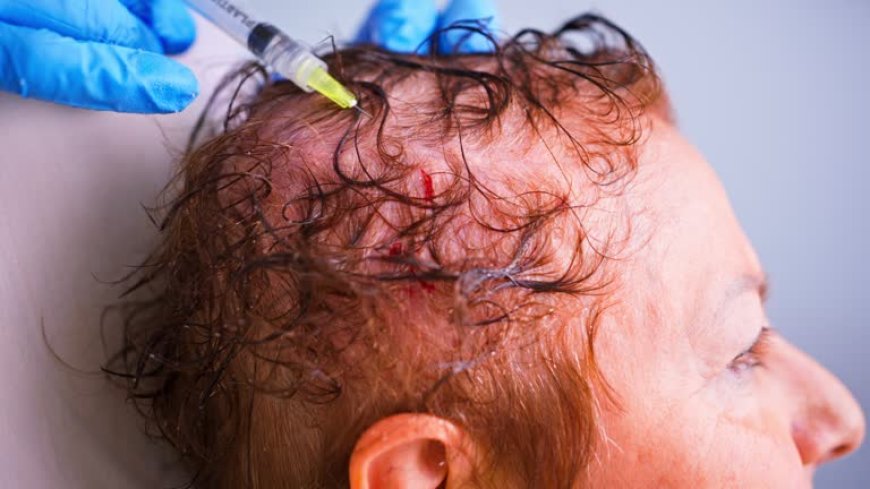
GFC Hair Treatment in Dubai is designed to deliver concentrated blood-derived growth-factor components into selected areas of the scalp. These biological signals are intended to support the local follicular environment, particularly around follicles that remain viable but may be producing progressively finer or weaker hair.
The important point is that GFC does not work like a hair transplant. It does not physically move follicles or create completely new ones. Its role is supportive, focusing on the biological environment surrounding existing follicles.
What Happens Around a Weakening Hair Follicle
Hair follicles are living structures embedded within the scalp. Their activity depends on interactions between follicular cells, surrounding tissue, blood supply, signaling molecules, and the hair-growth cycle.
When a follicle undergoes miniaturization, the resulting hair may become:
- Finer in diameter
- Shorter in visible length
- Less pigmented
- Less dense across the scalp
GFC is intended to provide concentrated growth-related signals to the treated scalp region.
How GFC Hair Treatment in Dubai Works at the Scalp Level
The treatment begins with the patient's own blood being processed to obtain a growth-factor-rich fraction.
After preparation, the resulting GFC material is delivered into selected scalp areas through controlled injections.
The Biological Objective
Rather than acting as a simple cosmetic coating, the treatment is designed around localized biological signaling.
The intended sequence is broadly:
- Blood is collected using a clinical protocol.
- The sample is processed to isolate the relevant growth-factor components.
- The prepared GFC material is placed into selected scalp regions.
- Growth-related signaling interacts with the local tissue environment.
- Existing viable follicles receive supportive biological signals.
- Hair growth is observed gradually through subsequent growth cycles.
The exact response varies between patients because follicular condition and the cause of hair loss are not identical.
Growth Factors and the Follicular Environment
Growth factors are signaling proteins involved in tissue communication and repair processes.
Within the scalp, these signals can participate in cellular communication involving tissue maintenance, vascular support, and follicular activity.
Why the Scalp Environment Matters
A hair follicle does not operate independently.
Its performance is influenced by the surrounding dermal tissue and the biological signals present around it. Supporting that environment is therefore one of the central concepts behind growth-factor-based hair treatments.
GFC is intended to influence this environment rather than mechanically replace the follicle.
GFC Does Not Simply “Turn On” Every Follicle
The phrase “stimulating dormant follicles” is commonly used in hair-treatment marketing, but the biology is more nuanced.
A follicle that is miniaturized or temporarily inactive is not necessarily equivalent to an entirely absent follicle.
Viable Versus Permanently Absent Follicles
This distinction matters.
If a follicle remains structurally present, there may be an opportunity to support its biological environment. If the follicular structure is permanently absent, an injectable growth-factor treatment cannot simply manufacture a new follicle in its place.
That is one reason clinical assessment matters before treatment.
What Determines the Response to GFC
Several factors can influence how a patient responds.
These may include:
- Cause of hair loss
- Duration of thinning
- Degree of follicular miniaturization
- Baseline hair density
- Scalp condition
- Age and biological factors
- Ongoing progression of hair loss
- Other treatments being used
GFC therefore should be viewed as a personalized treatment rather than a standardized response.
GFC and the Hair Growth Cycle
Hair grows in cycles rather than continuously.
The active growth phase is followed by transitional and resting phases. Because follicles move through these stages at different times, visible changes after treatment do not happen overnight.
Why Results Take Time
Even if the scalp receives growth-factor signals immediately after treatment, the visible hair shaft still has to develop through its natural growth cycle.
Patients should therefore judge progress over an appropriate clinical timeframe rather than expecting immediate thickness.
How Injection Placement Matters
GFC treatment is not simply about putting a substance anywhere on the scalp.
Areas of reduced density may require a deliberate distribution pattern based on the patient's thinning pattern.
A clinician may consider:
- Central scalp density
- Crown involvement
- Frontal thinning
- Temple areas
- Miniaturized hair distribution
- Symmetry between regions
The objective is targeted delivery rather than indiscriminate injection.
GFC Compared With a Hair Transplant
The two treatments work through fundamentally different mechanisms.
| Feature | GFC Hair Treatment | Hair Transplant |
|---|---|---|
| Main approach | Biological support | Follicle relocation |
| Uses existing follicles | Yes | Donor follicles are moved |
| Creates new follicles | No | No, but relocates viable follicles |
| Surgical procedure | No | Yes |
| Main objective | Support selected follicles and scalp environment | Add density to selected areas |
| Best suited to | Selected thinning patterns | Areas requiring follicular redistribution |
Neither approach automatically suits every form of hair loss.
Why Medical Assessment Comes Before Treatment
A visible thinning area can have multiple explanations. Growth-factor therapy should not be used simply because the scalp appears less dense.
A clinician may first establish:
- The pattern of hair loss.
- Whether follicles remain viable.
- Whether miniaturization is present.
- Whether another scalp or systemic factor may be contributing.
- Whether GFC fits the patient's wider treatment plan.
This reduces the risk of choosing a procedure based only on appearance.
What GFC Can and Cannot Do
GFC may support the environment around selected existing follicles, but it has clear biological limits.
It may be considered for:
- Early or moderate thinning
- Areas with miniaturized hair
- Selected diffuse thinning patterns
- Hair-restoration plans focused on preserving existing density
It is not a substitute for:
- Replacing completely absent follicles
- Treating every cause of hair shedding
- Guaranteeing permanent hair growth
- Diagnosing the underlying reason for unexplained shedding
The Role of GFC in Modern Hair Restoration
For suitable patients, GFC can form one component of a broader hair-management strategy.
Its value comes from its biological approach: supporting the scalp environment and existing follicular structures rather than simply changing the visible appearance of the hair.
For patients considering advanced hair restoration in Dubai, the first step is understanding whether the follicles being treated are still biologically capable of responding.
A Practical Takeaway
GFC is best understood as a supportive follicular treatment, not a replacement for follicles that no longer exist.
A consultation at Tajmeels Clinic can help determine whether the pattern, follicular condition, and treatment goals are compatible with GFC.
What's Your Reaction?
 Like
0
 Dislike
0
 Love
0
 Funny
0
 Angry
0
 Sad
0
 Wow
0