How to Choose a Heavy-Duty Control Valve for Corrosive and High-Pressure Process Applications
Learn how heavy-duty control valves handle corrosive fluids, pressures up to 6000 psi and fractional flow in test stands, R&D and process plants.

Control valves in test stands, pilot plants and chemical processing lines often work under harder conditions than standard industrial valves are built for. Fluids can be corrosive, pressures can run into the thousands of psi, and flow rates can be very small yet still need tight control. Choosing the wrong valve here leads to unstable control, premature trim wear and unplanned downtime.
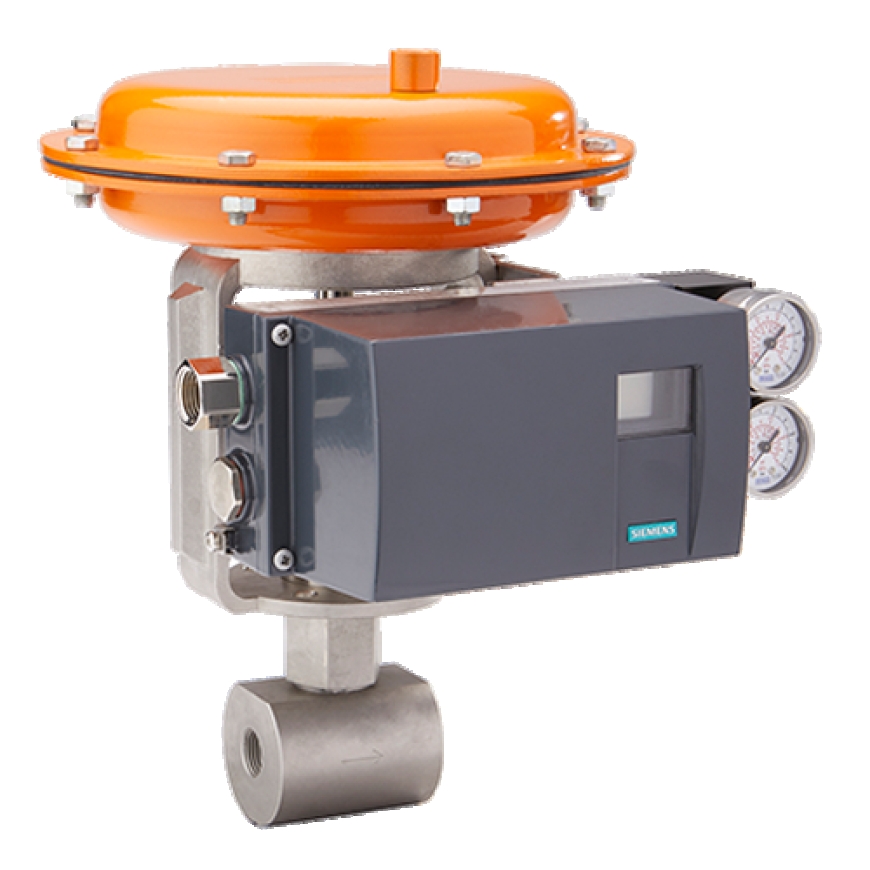
This guide covers the main engineering factors to weigh when selecting a heavy-duty control valve, using the Mark 8000 Series from LowFlow Valve as a reference design.
Full Flow vs. Fractional Flow Control
Most standard control valves are sized for full process flow. Fractional flow control valves are designed for very low flow coefficients (Cv), where the trim must resolve very small changes in flow. A valve that is oversized for a low-flow duty operates with the plug barely off its seat. In that position, small stem movements cause large flow changes, and control becomes unstable.
Some applications need both capabilities in the same valve family. The 8000 Series heavy duty control valve is intended for process applications requiring either full flow or fractional flow control, so one platform can cover a range of duties.
Barstock Construction for High Pressure
Valve bodies are either cast or machined from solid bar stock. Bartock bodies are machined from wrought material, which has a uniform grain structure and avoids the porosity risks of castings. This makes them well suited to high-pressure service and to exotic alloys that are difficult or uneconomical to cast.
The 8000 Series uses heavy-duty bar stock construction rated for pressures up to 6000 psi (414 bar). It is offered in body sizes from 1/2" to 2" (DN15 to DN50), with in-line designs up to 2" and angle-pattern designs up to 1" (DN25).
Actuators, Deadband and Positioners
Even a well-built valve body will control poorly if the actuator adds friction or backlash. Deadband is the range over which the control signal can change without producing any movement in the valve. It limits how finely the loop can hold a setpoint.
The 8000 Series uses a totally enclosed multi-spring actuator designed to minimize deadband. The actuator is also field reversible, so the same unit can be set for air-to-open or air-to-close action to match the fail-safe position the process requires. A range of positioners and actuators is available, including electric options, so the valve can be matched to the plant's control system.
Seat Type and Shutoff Class
Leakage requirements vary by application. Shutoff is classified under the ANSI/FCI 70-2 leakage standard:
- Class III: limited seat leakage, suited to general throttling duty.
- Class IV: tighter shutoff for metal-seated valves, commonly specified for general process control.
- Class VI: the tightest class, typically achieved with soft seats, for applications where near-bubble-tight shutoff is needed.
The 8000 Series is available with globe or angle seats in Class III, IV or VI. Globe seats suit conventional in-line piping. Angle seats suit layouts where the flow turns 90 degrees at the valve.
Material Selection for Corrosive Service
Body and trim materials must be compatible with the process fluid, temperature and concentration. The 8000 Series is offered in:
- Carbon steel and stainless steel for general process and industrial fluids
- Brass for non-corrosive, general-purpose service
- Monel, Hastelloy C and Alloy 20 for aggressive chemical environments
- Stellite for wear- and erosion-prone duties
- Kynar (PVDF), PVC and CPVC for corrosive chemical service where a non-metallic wetted path is preferred
Note that plastic-bodied valves have lower pressure and temperature limits than metallic barstock valves. Always confirm the rating for your specific configuration against the manufacturer's data sheet.
2-Way and 3-Way Configurations
Some processes need a valve that regulates a single line. Others need to split one stream into two (diverting) or combine two streams into one (mixing). The 8000 Series can be configured in 2-way or 3-way designs, for diverting or mixing service, with globe or angle seats. This avoids using two separate valves to do the job of one.
Maintainability
Trim wear is normal in demanding service, so the valve should be practical to service. The 8000 Series is in-line maintainable, meaning trim repairs can be carried out without removing the valve body from the pipeline. That shortens maintenance windows and reduces the risk of disturbing connected piping.
Typical Applications
Heavy duty fractional flow valves of this type are used in:
- Corrosive or harsh process environments
- Test stands
- R&D facilities
- Processing plants
- Dosing, injection and venting systems
They serve industries including aviation and aerospace, chemical, refining and petrochemical, oil and gas, general industrial processing, and test equipment and services.
Selection Checklist
Before specifying a heavy-duty control valve, gather the following:
- Process fluid, including corrosivity and any solids content
- Operating and maximum pressure
- Operating temperature range
- Required flow range and Cv
- Allowable pressure drop
- Shutoff requirement (Class III, IV or VI)
- Fail-safe action (fail open or fail closed)
- End connection type (NPT, BSPT, flanged, socket weld and so on)
- Control signal and positioner requirements
Conclusion
Heavy duty control valves need to combine a pressure-rated body, chemically compatible materials, a low-deadband actuator and an appropriate seat. The LowFlow Valve 8000 Series brings these together in one configurable platform, with variants for bellows stem seals, cryogenic service and three-way operation.
For full specifications, see the 8000 Series data sheet and product details, or contact LowFlow Valve with your process conditions for a recommendation.
What's Your Reaction?
 Like
0
 Dislike
0
 Love
0
 Funny
0
 Angry
0
 Sad
0
 Wow
0