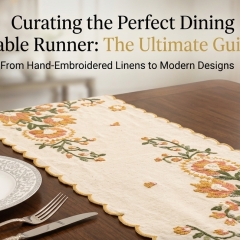




















How to Choose the Right Table Runner for Every Room in Your Home
Choosing a table runner for your dining table, living room or console? Here is how to get the size, fabric and colour right before you buy online.
A table runner is a long, narrow piece of fabric laid along the centre of a table. It protects the surface, adds colour and texture, and gives the eye a place to rest. A runner that suits a dining table may look wrong on a bedside table. The right choice depends on the furniture, the room and how you use the table every day.
This guide covers how to pick a table runner for each room, which fabric to choose, how to size it and what to check before you buy.
Why Choosing the Right Table Runner Matters
A runner can fix several small problems at once. On a dining table, it softens the look of a bare wooden top. On a glass centre table, it adds warmth and gives your decorative pieces a base. On a console, it keeps bowls and lamps from scratching the surface.
Five things decide whether a runner works:
- Size: a runner that is too short or too wide makes the table look unbalanced.
- Fabric: it should suit how much the table is used. A table where children eat needs something different from a console that only holds a vase.
- Colour: it should sit comfortably with your walls, furniture and upholstery.
- Design: a busy pattern can compete with the other things on the table.
- Purpose: daily meals, guest dinners and pure decoration each call for a different choice.
Decide what the table is for before you look at designs.
How to Choose a Table Runner for Different Rooms
Choosing a Dining Table Runner for Everyday Meals
A dining table runner should be easy to wash, sit slightly off the table edge and stay clear of where plates are placed.
Measure your table first. For a six-seater, a runner that stretches a little beyond both ends usually looks right. Leaving the sides of the table visible helps the table look wide and open.
For everyday meals, choose fabrics you can wash without worry. Roti, dal and chai spills are part of Indian dining, so a runner you hesitate to wash will not stay on the table for long.
Look at your dinnerware and chairs as well. If your plates are patterned, a plain runner keeps the table calm. If your crockery is white or cream, a runner with some colour or texture can give the table more character.
Selecting a Table Runner for Your Living Room Centre Table
A centre table is usually smaller than a dining table, so proportion matters most here. The runner should not swallow the table. A narrow runner running across the centre, or a short one laid lengthwise, tends to look better than one that covers the whole top.
The table material affects the choice:
- Wooden tables: a runner adds contrast, so pick a colour that complements the wood tone.
- Glass tables: a runner hides fingerprints and gives a tray or vase a stable base.
- Marble tables: the stone already has pattern, so a plain or softly textured runner usually works better.
Keep accessories simple. A tray, a small plant or a few coffee-table books are enough. If the runner has an embroidered or textured design, use fewer objects on top.
Styling a Table Runner on a Console or Entryway Table
Console tables sit near the front door, so they often hold keys, a lamp, a bowl and some flowers. A runner can tie these together and protect the surface from daily wear.
Let the runner hang a little over the front edge if the table is narrow, since that adds depth. Place the heaviest item, usually the lamp, toward one end and balance it with a lower object at the other. Leave some bare runner visible. A crowded console looks untidy no matter how good the fabric is.
Choosing a Table Runner for a Bedroom or Bedside Table
In a bedroom, the aim is calm. Take your colours from the bedsheet, curtains or headboard, and choose a runner in a softer shade of one of them. Plain or lightly textured designs suit bedrooms better than bold patterns.
Bedside tables are small, so a full-length runner is rarely needed. A short runner on a dresser or a small side table is usually enough. Keep the surface to a lamp, a book and perhaps a small tray.
Which Table Runner Fabric Should You Choose?
No fabric is the best for every home. The right one depends on how the table is used and the look you want.
| Fabric | Look and feel | Best suited for | Care to expect |
|---|---|---|---|
| Cotton | Soft, simple, relaxed | Everyday dining and casual rooms | Usually easy to wash; check the label |
| Linen | Natural, slightly textured | Modern and minimalist interiors | Can crease; check care instructions |
| Velvet | Rich, soft, deeper colour | Console tables, centre tables, occasion dining | Often needs gentler handling |
| Embroidered | Detailed, decorative | Festive tables, traditional or luxury interiors | Check whether it needs delicate washing |
Care needs differ by product, so read the label before buying. For a table used daily, practicality usually matters more than appearance. For a console that no one eats on, you can choose a more delicate fabric without worry.
How to Select the Right Table Runner Size
Measure the length and width of your table, then decide how much of the table you want covered.
Start with the table. Note its length and its width. Then think about overhang, the part of the runner that hangs past the table ends. Many people like a modest overhang at each end because it makes the runner look intentional. On a large table, a longer drop can look good. On a small table, a long drop may touch the floor or get in the way of chairs.
Width needs the same thought. A runner that is too wide leaves little table visible and can make the table feel smaller. A narrower one frames the middle and leaves space for place settings.
Here is a simple way to think about it. On a long dining table, you may want a runner that runs close to the full length with a small drop. On a small round or square centre table, a short runner laid across the middle may look better than a long one. These are starting points. Lay a strip of paper or a measuring tape on the table to see how the proportions look before you decide.
How to Match a Table Runner with Your Home Décor
Pick one or two colours already in the room and build the runner choice around them.
- Colours: Look at your walls, curtains, sofa and chairs. A runner in a lighter or deeper shade of an existing colour usually blends in. A contrasting colour can work if it appears somewhere else in the room, such as in a cushion.
- Patterns: In a plain room, a patterned runner can be the main feature. In a room that already has patterned curtains or upholstery, a plain runner usually works better.
- Textures: Mixing textures is fine, but keep one element quiet. A textured runner on a smooth wooden table is enough without adding a heavily textured tablecloth or mats.
- Interior style:
- Modern: clean lines and solid colours.
- Traditional: embroidery, warmer shades.
- Minimalist: neutral tones and simple weaves.
- Luxury: richer fabrics, fine detailing and a restrained colour palette.
- Seasons and festivals: Keep a second runner for Diwali, Eid, Christmas or family gatherings. A change of runner refreshes the table with little effort.
When Should You Choose a Luxury Table Runner?
A luxury table runner makes sense when the table is a visible part of your room, or when you want a piece that looks refined and is meant to last. It is not necessary for every table.
Judge quality by what you can see and check:
- Fabric: does it feel good and suit how you use the table?
- Stitching: are the edges neat and even?
- Detailing: is any embroidery or border well finished?
- Colour and design: do they fit your room, or only look good in a photo?
- Finish: does the product look carefully made overall?
A premium piece also needs some care, so check whether it can handle regular use. A luxury table runner works well for guest dining, a formal living room or a console table. For a table where children do homework and eat snacks, a practical cotton option may serve better.
What to Check Before Buying a Table Runner Online
Buying a table runner online is convenient, but you cannot touch the fabric. A short checklist helps:
- Measure your table. Write down length and width before you open any product page.
- Read the fabric and care details. Check the washing instructions and decide whether you will actually follow them.
- Check the product dimensions. Compare them with your own measurements.
- Study the photographs. Look at close-ups of the stitching and weave. Photos can show colour slightly differently from real life, so note the stated colour as well.
- Think about colour and design. Hold a similar shade against your furniture, or check it against your curtains in daylight.
- Consider the use. Decide whether this is for daily meals, guests or decoration.
- Read the return and exchange policy. Know what happens if the size or colour is not right.
If you want to compare options after taking measurements, you can browse the CR Home table runner collection and check each product’s listed details against your own list.
Common Table Runner Selection Questions
Can I use a table runner on a centre table?
Yes. Choose a runner that is shorter and narrower than the table so the surface remains visible. Keep the accessories few. A tray and a small plant are enough, and they will not compete with the fabric.
Should a dining table runner match the tablecloth or placemats?
It does not have to match exactly. Pick tones that sit well together. If one item is patterned, keep the other plain. This keeps the table balanced and stops it from looking crowded.
Can I leave a table runner on the table all the time?
You can on tables that are used lightly, like a console. For a dining table, many people prefer to remove it for heavy meals and put it back afterwards. Choose a fabric that matches how often you plan to wash it.
How do I choose a luxury table runner for my dining room?
Start with your table size and interior style. Then check the fabric, stitching and finish. Pick a design that fits your colours rather than the most decorative one you find. Check the care instructions too.
What should I check before buying a table runner online?
Check your table measurements against the product dimensions, read the fabric and care details, look at the close-up photos and confirm the return policy. These four checks prevent most online buying mistakes.
Final Tips for Choosing the Right Table Runner
Keep it simple. Measure the table, decide what it is used for, choose a fabric that suits that use, and pick colours already present in the room. Check these four points in that order and the decision is usually easy.
Some small rules help too. Leave part of the table visible. Do not crowd the runner with objects. Keep a spare for festivals or guests. And when you shop for a table runner online, trust your measurements more than the product photo.
If you are looking for something with a premium finish, CR Home offers table runners for dining tables, centre tables and consoles, and you can compare them against your own checklist before you decide.
What's Your Reaction?
 Like
0
 Dislike
0
 Love
0
 Funny
0
 Angry
0
 Sad
0
 Wow
0