












How to Rent a Dumpster in Michigan: Easy Guide
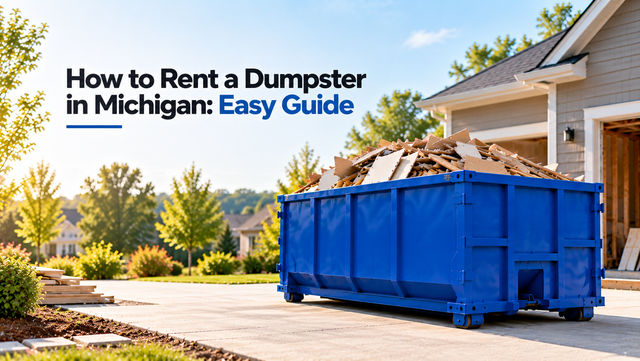
You finish tearing out the old kitchen cabinets. There’s drywall leaning against the garage, broken flooring in the driveway, and enough construction debris to make your regular trash pickup look completely useless.
Now comes the question: How do you actually rent a dumpster in Michigan?
The process is easier than it sounds. You need to figure out what you're throwing away, how much you have, where the dumpster will go, and how long you'll need it. Get those four things right, and most of the headache disappears.
Here’s a practical step-by-step guide to How to Rent a Dumpster in Michigan.
1. Start With the Waste, Not the Dumpster
This is where many people go wrong.
They start by asking, "Should I get a 20-yard or 30-yard dumpster?" before figuring out what they're actually throwing away.
Instead, look at your project first.
Are you cleaning out a garage? Removing old roofing? Remodeling a kitchen? Demolishing a room? Clearing a rental property?
Each project creates a different amount and type of waste.
For example, a garage cleanout may contain furniture, boxes, and general household junk. A roofing project creates a large volume of shingles and roofing materials. A demolition project can produce drywall, wood, flooring, and other construction debris.
The waste tells you what kind of dumpster makes sense.
2. Pick the Right Dumpster Size
Once you know what you're removing, estimate the volume.
A smaller dumpster can work for limited cleanouts or smaller renovation projects. Larger containers make more sense when you're dealing with a full renovation, construction debris, or a major property cleanout.
But don't make the mistake of judging size by weight alone.
A pile of old furniture can take up a lot of space without being extremely heavy. Concrete, brick, dirt, and similar materials are the opposite—they may not fill the dumpster quickly, but they can reach weight limits fast.
So when choosing a dumpster, think about both volume and weight.
3. Check What You Can Actually Throw Away
This step can save you from an awkward surprise later.
A dumpster is not a catch-all container.
Common project debris such as wood, drywall, flooring, cabinets, roofing materials, furniture, and general household junk may be accepted depending on the rental and disposal requirements.
Other materials may require separate handling.
These can include:
-
Batteries
-
Tires
-
Propane tanks
-
Hazardous chemicals
-
Fuels
-
Certain electronics
-
Medical waste
-
Asbestos-containing materials
-
Other regulated waste
If you're unsure about something, don't play guessing games. Ask before it goes into the dumpster.
4. Figure Out Where the Dumpster Will Go
Now look at your property.
You need a location that provides enough room for the dumpster and delivery truck. A driveway is often the most convenient option for residential projects, but it needs to be accessible and reasonably clear.
Move vehicles, equipment, toys, branches, and other obstacles before delivery.
Also think about how you'll load the dumpster. If workers have to carry debris halfway across the property every time, cleanup becomes a lot more frustrating.
If you plan to put the dumpster on a public street or another public area, check whether a local permit is required. Requirements can vary by municipality.
5. Decide How Long You'll Need It
Don't just think about the day the dumpster arrives.
Think about the entire project.
A quick weekend cleanout is very different from a renovation that will continue for two or three weeks.
Before booking, ask:
-
How many days are included?
-
What happens if I need extra days?
-
When can the dumpster be picked up?
-
Can pickup be scheduled around my project?
This is particularly important for contractors. A dumpster sitting empty on a job site is wasted space and money.
At the same time, having it removed too early can leave you with a new pile of debris and nowhere to put it.
6. Ask About Weight Limits and Extra Charges
This is the part people sometimes discover too late.
A dumpster rental isn't always just a flat price for a box sitting in your driveway.
Depending on the rental terms, the final cost can be affected by the dumpster size, rental period, debris type, weight, location, and other requirements.
Ask about the included weight allowance before loading heavy materials.
If you're removing concrete, brick, asphalt, dirt, or other dense materials, this question becomes especially important.
You should also ask about additional rental days and any other charges that could apply to your project.
7. Book the Dumpster Around Your Project
Once you've worked out the size, material, placement, and rental period, you're ready to schedule delivery.
Try not to order the dumpster simply because "the project starts Monday."
Think about when the major debris will actually be generated.
If demolition starts Monday morning, having the dumpster there before demolition begins makes sense. If you're not starting demolition for another week, there may be little reason to have a container occupying your driveway that entire time.
Good timing makes the rental more useful.
What Does Renting a Dumpster in Michigan Usually Involve?
In simple terms, the process looks like this:
Estimate the waste → choose a size → check accepted materials → prepare the placement area → schedule delivery → load the dumpster → arrange pickup.
That's really it.
The tricky part isn't the booking process. It's making the right decisions before you book.
For Michigan homeowners, contractors, landlords, and property managers, the available dumpster rental services can vary based on project type, location, container size, and waste requirements.
A Quick Michigan Dumpster Rental Checklist
Before confirming your rental, run through this list:
☐ What type of waste am I removing?
☐ Roughly how much waste will I generate?
☐ Do I need a 10-, 20-, 30-, or 40-yard dumpster?
☐ Are any of my materials restricted?
☐ Where will the dumpster be placed?
☐ Is there enough room for delivery?
☐ Do I need a local permit?
☐ How many rental days are included?
☐ What is the weight allowance?
☐ What happens if I need additional days?
☐ When should pickup be scheduled?
If you can answer these questions, you're already most of the way there.
The Bottom Line
Renting a dumpster in Michigan isn't complicated. Choosing the right dumpster is the part that deserves some thought.
Start with your debris. Estimate the volume. Consider the weight. Check what is allowed. Prepare the placement area. Then schedule the container around your actual project timeline.
Do that, and you won't be standing in your driveway halfway through a renovation wondering why the dumpster is already full.
Frequently Asked Questions
How do I rent a dumpster in Michigan?
Choose a dumpster based on your project's waste volume and material type, confirm what materials are accepted, select a suitable placement area, check rental and weight terms, and schedule delivery and pickup.
What size dumpster do I need in Michigan?
The right size depends on the amount and type of debris. Smaller cleanouts may need a smaller container, while renovations, construction, and major property cleanouts may require 20-, 30-, or 40-yard options.
Do I need a permit for a dumpster in Michigan?
It depends on where the dumpster will be placed. A dumpster on private property may have different requirements from one placed on a public street. Check with the relevant local authority before delivery.
How much does it cost to rent a dumpster in Michigan?
Pricing can vary based on dumpster size, rental duration, location, waste type, weight, and other rental conditions. Ask for the complete rental terms rather than comparing only the advertised starting price.
What's Your Reaction?
 Like
0
 Dislike
0
 Love
0
 Funny
0
 Angry
0
 Sad
0
 Wow
0