



















How TPMS Service Helps Maintain Proper Tire Pressure

How TPMS Service Helps Maintain Proper Tire Pressure
Proper tire pressure affects more than comfort. It can influence steering response, tread wear, fuel consumption, and how your vehicle behaves during braking. Your Tire Pressure Monitoring System helps keep you informed when pressure falls outside the recommended range.
How does TPMS service help maintain proper tire pressure?
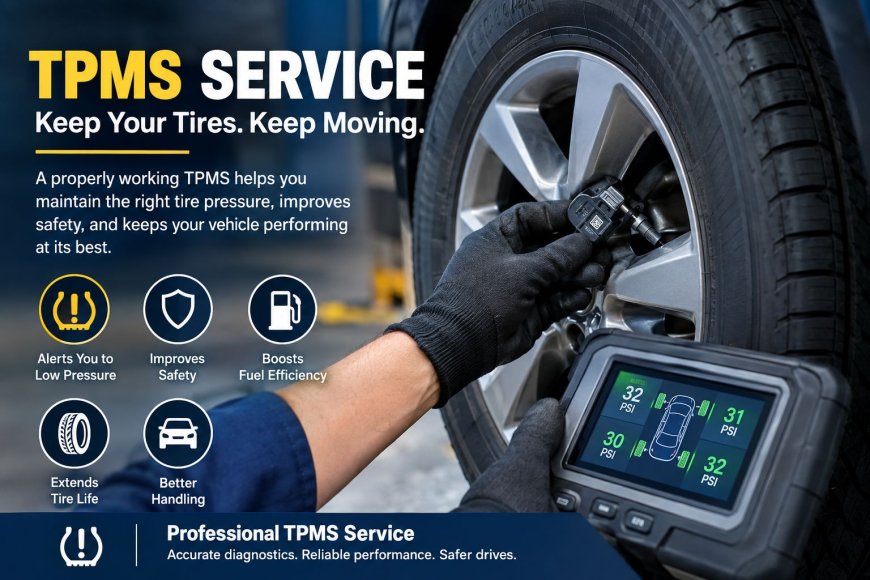
TPMS Service helps verify that the sensors, warning system, and related components are operating correctly. While TPMS does not physically inflate a tire, it provides valuable pressure information that allows drivers to identify low-pressure conditions and respond before they become bigger problems.
Why does correct tire pressure matter?
Every vehicle has a recommended tire pressure determined by the manufacturer. The specification is designed around the vehicle's weight, handling characteristics, tire size, and suspension setup.
Driving with incorrect pressure can affect several areas of vehicle performance.
Low pressure may cause:
-
Increased rolling resistance
-
Faster shoulder wear
-
More heat buildup
-
Less precise steering
-
Reduced fuel efficiency
Excessive pressure can contribute to:
-
Uneven center tread wear
-
A harsher ride
-
Reduced road contact
-
Changes in handling
Neither condition is ideal. Maintaining the recommended pressure gives the tires the best opportunity to perform as intended.
How does TPMS alert you to pressure changes?
TPMS sensors measure tire pressure and send information to the vehicle's monitoring system. When pressure drops below a specified threshold, the dashboard warning light alerts the driver.
Some newer vehicles provide individual pressure readings for each tire, making it easier to identify which tire needs attention.
However, TPMS readings should be viewed as a monitoring tool, not a replacement for regular inspections.
For example, a small puncture can cause a tire to lose air gradually. A driver may notice the TPMS warning before noticing anything unusual while steering.
Can temperature affect tire pressure?
Yes. Tire pressure changes naturally with temperature.
When temperatures fall, air pressure inside a tire can decrease. This is why drivers may notice a TPMS warning during colder mornings even when a tire does not have a puncture.
The appropriate response is to check the actual tire pressure and adjust it to the vehicle manufacturer's recommended specification.
It is better to check pressure when tires are cold because driving creates heat and temporarily increases the pressure reading.
What does a TPMS inspection include?
Depending on the vehicle and the problem, a TPMS inspection may include several steps:
-
Checking actual tire pressure
-
Comparing readings with the manufacturer's specifications
-
Inspecting TPMS sensors
-
Checking valve components
-
Testing sensor communication
-
Looking for warning-system faults
-
Determining whether a relearn procedure is needed
The goal is to identify the reason behind the warning instead of simply clearing the dashboard light.
How can drivers prevent TPMS-related problems?
Simple habits can reduce the chances of tire pressure problems becoming serious.
Check tire pressure regularly, especially before long trips. Inspect tread condition and look for nails, cuts, bulges, or other visible damage.
Also pay attention to changes in how the vehicle feels. Pulling, vibration, unusual tire noise, or a repeated warning may indicate a problem that deserves inspection.
A properly maintained TPMS gives drivers useful information, but it works best when combined with routine tire care.
FAQ
Does TPMS tell me the exact tire pressure?
Some vehicles display individual tire pressures, while others only provide a warning when pressure falls below a certain level. Check your owner's manual to understand how your system works.
Should I check tire pressure even when there is no TPMS warning?
Yes. Regular manual pressure checks remain important because TPMS is designed primarily to warn you about significant pressure changes, not replace routine tire maintenance.
What's Your Reaction?
 Like
0
 Dislike
0
 Love
0
 Funny
0
 Angry
0
 Sad
0
 Wow
0