








How Virtual Reality in Schools Is Changing Education

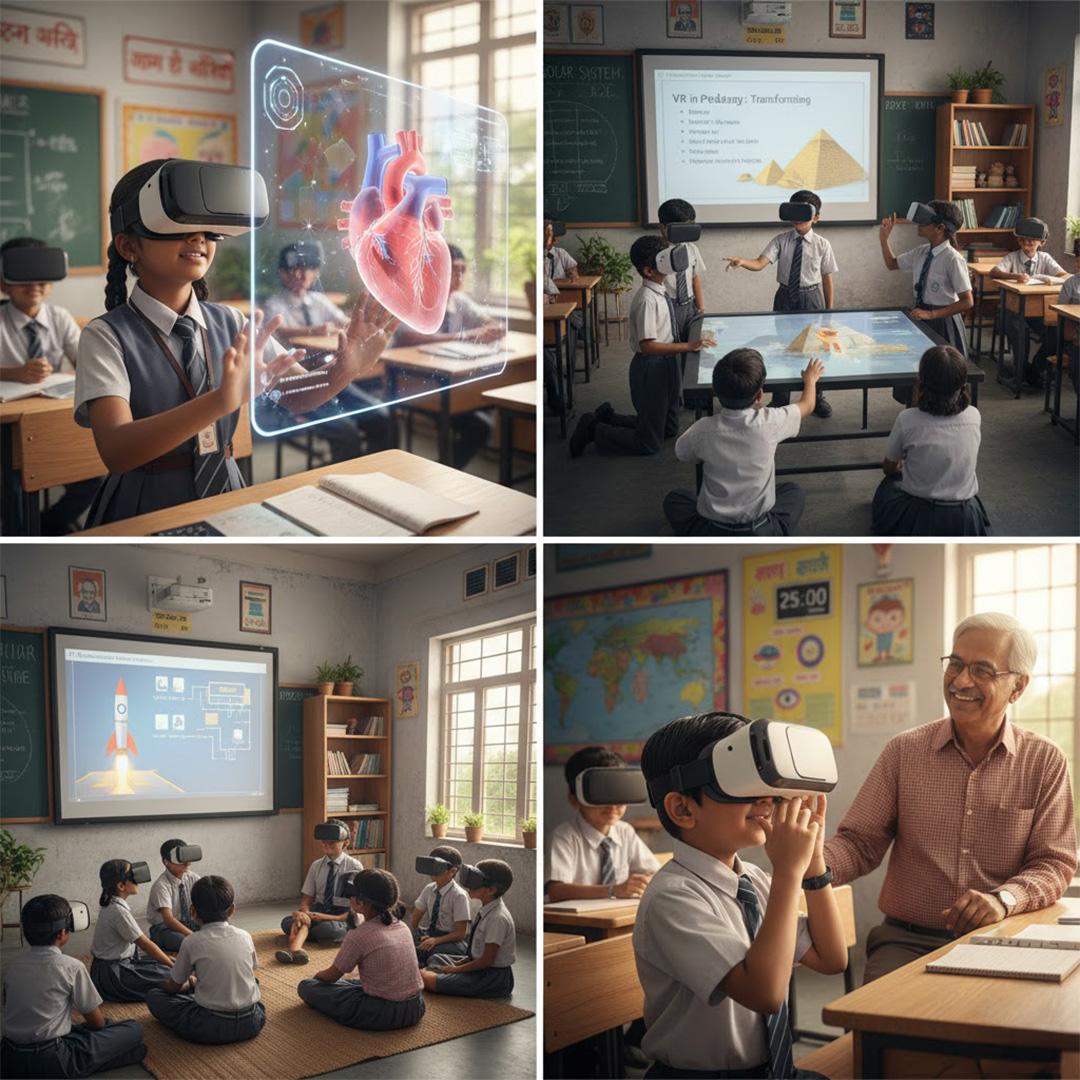
Picture a Class 5 student slipping on a headset and suddenly standing inside a volcano, watching lava bubble a few metres away. Nobody has to remind her to pay attention. That small moment explains why virtual reality in schools has moved from a tech fair novelty to a genuine teaching tool.
The numbers support what teachers are seeing. A PwC study found that people learning through VR were up to four times more focused than those learning through e-learning. For any school, that kind of attention is hard to ignore, and it is why more principals are now asking how AR VR labs could fit into their own timetables.
From Reading About Places to Standing in Them
Textbooks describe the Great Wall of China or the surface of Mars. VR lets students walk along one and gaze across the other. Virtual field trips need no bus, no permission slips and no packed lunches, and every child gets the same front-row view. A student in a small town can explore a museum in Paris during the very same lesson as a student in Delhi. Geography, history and science stop being chapters to finish and become places to visit.
Why Younger Children Gain the Most
Young learners think in pictures and stories. That is exactly what makes virtual reality in primary education so effective. A child who struggles to understand the water cycle from a diagram can watch it unfold around them, cloud by cloud. Short, guided sessions of a few minutes are usually plenty. Teachers often notice quieter students speaking up after a VR lesson, simply because they finally have something exciting to describe.
Making Tricky Concepts Easy to See
Some topics are tough to grasp on paper. The inside of a human heart, the shape of an atom or the way planets orbit the sun are hard to picture from a flat image. Inside a headset, students can zoom in, turn models around and look from every angle. Well-planned AR VR labs combine both technologies, so a student can place a 3D model on the desk through augmented reality, then step right inside it with VR. Mistakes cost nothing, and curiosity grows naturally.
What Teachers Need to Make It Work
Headsets alone will not transform a classroom. Teachers need content that matches the syllabus, clear lesson plans and training that builds real confidence. The good news is that most pick it up quickly once they see how their students react. Schools exploring virtual reality in primary education should also keep sessions short, clean headsets between users and pair each VR activity with discussion or a hands-on task. That balance keeps the technology in service of learning, not the other way round.
Conclusion
The real value of virtual reality in schools lies in how it turns lessons into experiences students remember long after the bell rings. It does not replace teachers or books. It simply gives both a much bigger window to the world.
RoboSpecies helps schools set up immersive learning spaces alongside robotics, AI and coding labs, complete with NEP 2020-aligned curriculum, teacher training and ongoing technical support. Trusted by over 2,500 schools, our team handles everything from planning to installation. Book a free demo with RoboSpecies today and let your students see learning in a whole new way.
What's Your Reaction?
 Like
0
 Dislike
0
 Love
0
 Funny
0
 Angry
0
 Sad
0
 Wow
0