Hybrid Hair Transplant in Dubai: Planning Over 5000 Grafts
Planning over 5000 grafts requires careful donor mapping, zone prioritization, graft handling, and long-term restoration strategy in Dubai.
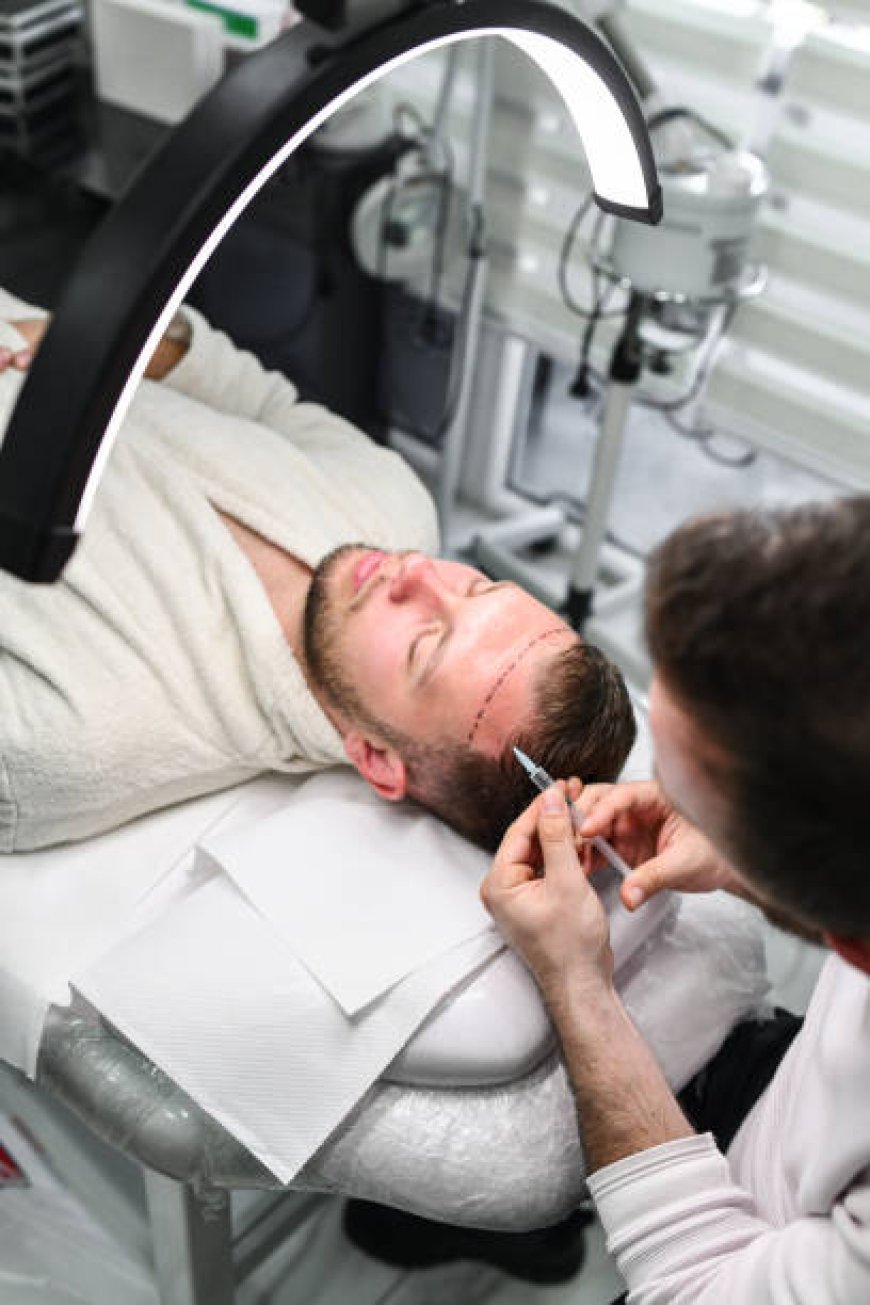
Hybrid Hair Transplant in Dubai can be considered when extensive hair loss creates a graft requirement that may exceed what a single extraction technique can comfortably provide. A plan involving more than 5,000 grafts requires detailed donor assessment, recipient-zone prioritization, follicular-unit preservation, and careful decisions about whether restoration should be performed in one operative plan or divided into stages.
What a 5000-Graft Plan Actually Means
A graft is a naturally occurring follicular unit containing one or more hairs. Therefore, 5,000 grafts does not mean 5,000 individual hairs; the actual hair count depends on the patient's follicular-unit composition.
High-graft procedures are usually associated with extensive recipient-area requirements rather than simply a desire for maximum density.
Why Graft Count Cannot Be Chosen in Isolation
A surgeon cannot safely determine graft requirements by looking only at the size of a bald area. The calculation also depends on:
- Existing hair density
- Hair caliber and texture
- Number of hairs per follicular unit
- Donor density
- Donor-zone stability
- Scalp laxity
- Hairline position
- Mid-scalp coverage
- Crown size and pattern
- Future native-hair loss
- Previous transplant procedures
Two patients with similar bald areas may therefore require very different surgical plans.
More Grafts Do Not Automatically Mean Better Coverage
A high graft count can become counterproductive if donor resources are harvested without a coherent distribution strategy. The objective is not simply to remove the maximum possible number of follicular units.
The objective is to create the greatest useful visual coverage while protecting the donor area and preserving options for future treatment.
Why High-Volume Cases Need a Hybrid Strategy
FUE and FUT remove follicular units through fundamentally different mechanisms. FUE extracts individual units through small punch sites, while FUT removes a strip of donor scalp and subsequently separates follicular units under magnification.
Combining the two can provide additional flexibility when a patient's restoration requirement is unusually high and the donor anatomy supports both approaches.
The Role of FUT in High-Graft Planning
FUT can provide a substantial number of intact follicular units from a surgically removed strip. Because the tissue is removed as a continuous section, technicians can dissect the strip into individual grafts while preserving suitable follicular units.
This can be particularly relevant when a large number of grafts are required and the surgeon wants to avoid relying exclusively on extensive distributed FUE extraction.
The Role of FUE
FUE adds flexibility because individual follicular units can be selected from suitable areas of the donor zone. It can also allow the surgical team to target specific follicular-unit characteristics according to the recipient area's requirements.
For example, finer single-hair units may be valuable around the frontal hairline, while stronger multi-hair units can contribute more efficiently to broader areas behind it.
Donor Mapping Comes Before the 5000-Graft Number
The phrase “5,000 grafts” should never be treated as a universal target. The donor area determines whether such a number is realistic.
Measuring Donor Density
A proper assessment examines follicular-unit density across different portions of the donor zone rather than assuming that every square centimeter contains the same number of usable units.
Variations in density can influence where FUE extraction is practical and how much tissue can be safely considered for FUT.
Evaluating Follicular-Unit Composition
A donor zone with a high percentage of multi-hair follicular units may provide more hairs per graft than one dominated by single-hair units.
This distinction matters because a 5,000-graft plan could theoretically produce substantially different hair counts depending on the patient's donor characteristics.
Considering the Permanent Donor Zone
The long-term stability of the donor region is another major consideration. Harvesting aggressively from areas likely to miniaturize later can compromise the appearance of the donor area.
A high-volume plan therefore needs to distinguish between currently growing hair and hair that is expected to remain stable over the patient's long-term pattern.
Mapping the Recipient Area
Once donor capacity is understood, the recipient scalp must be divided into functional restoration zones.
| Recipient zone | Primary objective | Planning consideration |
|---|---|---|
| Frontal hairline | Natural framing | Fine graft selection and irregular design |
| Frontal zone | Visual density | Graduated transition behind hairline |
| Mid-scalp | Broad coverage | Efficient distribution of grafts |
| Crown | Optical coverage | Whorl direction and spiral geometry |
| Transitional areas | Blend existing and transplanted hair | Avoid abrupt density changes |
A 5,000-plus graft plan is therefore not simply “5,000 grafts everywhere.” Each graft needs an intended destination.
Hairline Grafts Require Different Thinking
The frontal hairline generally benefits from finer follicular units and controlled irregularity. Placing high-density multi-hair grafts directly at the leading edge can produce an unnatural appearance.
The hairline also establishes the visual height of the entire restoration. Lowering it unnecessarily can consume grafts that may be needed for the mid-scalp or crown.
The Mid-Scalp Often Determines Overall Coverage
The mid-scalp can connect the frontal restoration with the crown. In extensive hair loss, leaving this region under-resourced may create an obvious visual separation between restored areas.
For that reason, surgeons may evaluate whether a moderate density across a larger area creates a better appearance than attempting maximum density in only one zone.
Crown Restoration Has Its Own Geometry
The crown is not a flat circular patch. Its natural whorl changes the direction in which hairs emerge and can require careful angulation and distribution.
Because the crown can consume a substantial number of grafts, its priority must be balanced against frontal and mid-scalp requirements.
Graft Allocation in a High-Volume Procedure
The most important question is often not “How many grafts can be harvested?” but “Where will each graft create the greatest visual benefit?”
A useful planning framework is:
- Establish the permanent donor capacity.
- Define the frontal hairline conservatively.
- Identify the minimum graft requirement for frontal framing.
- Allocate grafts through the mid-scalp according to native-hair density.
- Assess whether crown restoration is feasible within the remaining donor budget.
- Reserve donor resources for potential future progression.
This approach prevents a large graft number from becoming an arbitrary target.
When More Than 5000 Grafts May Be Considered
A high-graft plan may be discussed for patients with extensive baldness, particularly when the recipient area is large and the donor zone has sufficient usable follicular resources.
The decision is more complex when there is:
- Advanced Norwood-pattern loss
- A broad frontal-to-crown bald area
- Strong donor density
- High-caliber donor hair
- Previous surgery affecting donor resources
- A large gap between existing density and desired coverage
A patient with extensive baldness but weak donor capacity may not be an appropriate candidate for a 5,000-plus graft procedure.
One High-Volume Plan Versus a Staged Restoration
Large graft numbers also raise an operational question: should restoration be concentrated into one major procedure or divided into separate sessions?
This should not be decided from graft count alone.
Factors Favoring a Single High-Volume Approach
A concentrated procedure may be considered when donor capacity, scalp characteristics, recipient size, operative logistics, and patient health all support it.
The surgeon must also consider the practical limits of prolonged surgery, including graft handling time and the ability to maintain consistent surgical quality throughout the procedure.
Factors Favoring Staging
Staging can be useful when the recipient area is exceptionally large, donor supply needs to be preserved, or restoration priorities can be addressed sequentially.
It can also allow the outcome of an initial restoration to inform later density planning.
The key distinction is that staging should be a strategic decision rather than simply a response to an arbitrary graft threshold.
Surgical Quality Becomes More Important as Graft Numbers Rise
Large procedures create more opportunities for technical variability. Every graft passes through several stages: extraction, handling, sorting, storage, recipient-site placement, and implantation.
Minimizing Graft Handling Stress
Follicular units are living tissue. Prolonged exposure outside the scalp, unnecessary manipulation, crushing, desiccation, and inappropriate storage conditions can compromise graft quality.
A high-volume procedure therefore requires disciplined coordination between extraction and implantation.
Recipient-Site Creation Matters
Even an excellent donor harvest cannot compensate for poorly designed recipient sites.
The angle, direction, depth, spacing, and distribution of implantation sites influence how transplanted follicles integrate visually with native hair.
Surgical Fatigue Is a Planning Variable
Long procedures require careful workflow management. A high graft number should not encourage a team to prioritize quantity at the expense of consistency.
For patients researching a high-volume [Dubai hair restoration planning] approach, the more useful question is whether the complete surgical workflow can maintain quality from the first graft to the last.
Hair Characteristics Can Change the Visual Result
Hair caliber, curl, color contrast with the scalp, and follicular-unit composition all influence apparent density.
A patient with thick, slightly wavy hair may obtain stronger optical coverage from the same graft number than someone with fine, straight hair and high scalp contrast.
This is why graft-count comparisons between patients are often misleading.
Native Hair Must Be Protected
In partially bald areas, transplanted follicles are not the only consideration. Existing miniaturized hair may still contribute significantly to coverage.
Recipient-site placement should account for native follicles to reduce unnecessary trauma and maintain the existing hair wherever possible.
Future Hair Loss Changes the Equation
A high-graft procedure cannot prevent genetically susceptible native follicles from continuing to miniaturize.
If the frontal or mid-scalp native hair remains vulnerable, transplanting aggressively around it without a long-term strategy can create density inconsistencies later.
Recovery After a High-Graft Hybrid Procedure
Recovery depends on the techniques used, the number of grafts harvested, individual healing characteristics, and the extent of the recipient area.
Typical early issues can include redness, swelling, tenderness, scabbing, itching, and temporary shedding. Patients should follow the surgical team's instructions regarding washing, medication, physical activity, sun exposure, and scalp handling.
Dubai's climate adds a practical consideration. Strong sunlight and high temperatures can make postoperative scalp protection particularly important during the early healing period.
Returning to Normal Activities
The first several days are generally focused on protecting the grafts and allowing the scalp to settle. Strenuous exercise, excessive sweating, direct sun exposure, and friction against the scalp may need to be restricted according to the treating surgeon's instructions.
Visible growth does not occur immediately. Newly transplanted follicles typically progress through a healing and growth cycle before meaningful cosmetic improvement becomes apparent.
How Long Does a 5000-Graft Result Take
A high graft count does not accelerate biological growth. Transplanted follicles still require time to establish themselves and produce new hair.
Early shedding can occur before new growth becomes visible. Cosmetic improvement develops progressively over subsequent months, with the final assessment requiring considerably more patience than the immediate postoperative period.
This makes realistic timeline counseling an essential part of high-volume transplant planning.
Questions to Ask Before a 5000-Graft Plan
Is 5000 Grafts a Safe Number for Everyone?
No. The appropriate number depends on donor capacity, donor stability, recipient size, follicular-unit characteristics, scalp anatomy, previous procedures, and long-term planning.
Does a Larger Graft Number Guarantee Higher Density?
No. Density depends on graft distribution, hair count per graft, hair caliber, recipient-site design, and the amount of scalp being covered.
Why Combine FUE and FUT?
A hybrid approach can provide two complementary harvesting methods when the patient's anatomy and restoration requirements make combining them appropriate.
Can the Crown and Hairline Be Restored Together?
They can be addressed within the same overall plan in selected patients, but the graft allocation must balance frontal framing, mid-scalp continuity, and crown coverage.
Is 5000 Grafts Always Better Than 4000?
Not necessarily. A well-distributed 4,000-graft restoration can be more effective than an unnecessarily aggressive 5,000-graft harvest if donor resources are limited.
Will Existing Hair Continue to Thin?
Potentially. Transplanted donor follicles are generally selected for long-term stability, but native non-transplanted hair may continue to undergo pattern hair loss.
The Strategic Investment
A large hair transplant should be evaluated as a long-term reconstruction of the scalp rather than a race toward the highest possible graft count. For patients considering extensive restoration, Tajmeels Clinic can provide a structured assessment of donor capacity, recipient priorities, graft requirements, technique selection, and the realistic scope of restoration.
The strongest investment is not necessarily the procedure using the most grafts. It is the plan that uses the available donor resources intelligently, creates natural transitions, protects existing hair, and preserves options for the future.
What's Your Reaction?
 Like
0
 Dislike
0
 Love
0
 Funny
0
 Angry
0
 Sad
0
 Wow
0