












Laser Welding Equipment: A Modern Approach to Precision Metal Fabrication
Laser welding equipment provides manufacturers with a modern method for joining metal components with controlled heat and precise energy delivery

Modern manufacturing demands speed, accuracy, consistency, and clean production processes. Laser welding equipment has become an important solution for businesses that need reliable joining of metal components across different industrial applications. Instead of relying on traditional heat sources, laser welding uses a concentrated beam of light to create controlled heat at the welding area.
This technology can be used for fabrication, repair work, component assembly, automotive production, metal processing, machinery manufacturing, and many other applications. Depending on the production requirements, laser welding equipment can be configured for different materials, thicknesses, working environments, and production volumes.
For manufacturers looking to improve their welding operations, understanding how this equipment works and where it can be used is an important step toward selecting a suitable system.
How Laser Welding Works
Laser welding begins with the generation of a concentrated laser beam. The beam is directed toward the area where two metal components need to be joined. When the laser reaches the material, its energy is converted into heat, creating a small molten area.
As the laser moves along the joint, the molten material cools and solidifies, producing a permanent weld. The process can be carefully controlled by adjusting parameters such as laser power, welding speed, focal position, shielding gas, and beam characteristics.
The controlled nature of the process allows manufacturers to work with relatively precise welding paths. This makes laser welding particularly useful when appearance, dimensional accuracy, and repeatable production are important.
Choosing the Right Laser Source
The laser source is one of the central components of welding equipment. Fiber lasers are widely used in modern industrial welding systems because they can deliver concentrated energy to the workpiece while supporting efficient production.
Different power levels can be selected according to the material and thickness being processed. Lower-power systems may be suitable for thinner materials and detailed applications, while higher-power systems can be used for thicker components and demanding industrial workloads.
When selecting equipment, manufacturers should consider the metals they commonly process, expected material thickness, required welding speed, joint design, and production volume.
Materials Suitable for Laser Welding
Laser welding equipment can be used with a variety of metals when the machine and process parameters are correctly selected. Common materials include stainless steel, carbon steel, aluminum, galvanized materials, titanium, and certain alloys.
Stainless steel is frequently processed in industries where clean and controlled welds are required. Aluminum requires careful parameter selection because of its thermal properties and reflectivity. Carbon steel is commonly found in general fabrication, machinery, structural components, and industrial manufacturing.
Before purchasing equipment, it is important to evaluate the specific materials used in production. A machine designed for one application may require different settings or configurations for another.
Handheld Laser Welding Equipment
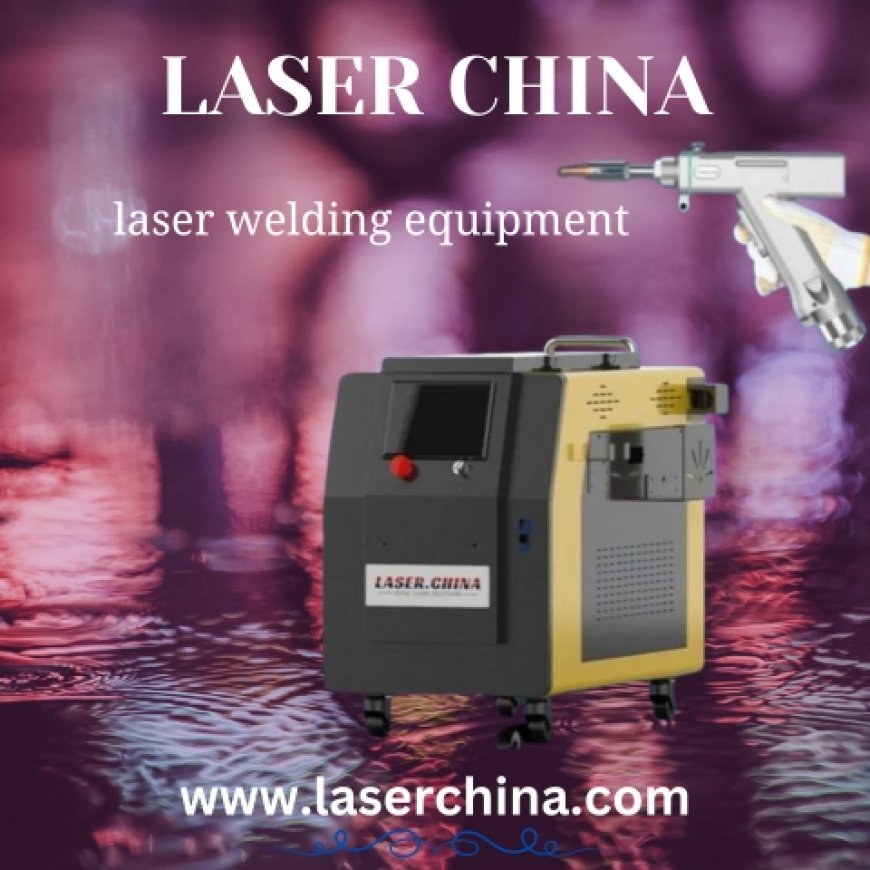
Handheld systems have expanded the use of laser welding beyond large automated production lines. A handheld laser welding machine allows an operator to guide the welding head manually along the joint.
This format can be useful for workshops and manufacturers working with different component shapes or relatively small production batches. Operators can move around the workpiece rather than being restricted to a fixed welding position.
Handheld laser welding equipment is commonly considered for applications involving sheet metal, cabinets, metal frames, machinery components, doors, kitchen equipment, and general fabrication.
Operator training remains important because correct movement, focusing, parameter selection, and safety procedures directly affect welding quality.
Automated Laser Welding Systems
For manufacturers handling repetitive production, automated laser welding systems can be integrated with machinery, fixtures, robotic arms, or production lines.
Automation allows welding paths and process parameters to be programmed for repeated jobs. This can help maintain consistency between production cycles while reducing the amount of manual intervention required.
Robotic laser welding can be particularly relevant to automotive components, industrial machinery, electronics, metal furniture, and high-volume manufacturing. The appropriate automation level depends on production requirements, component geometry, cycle time, and available workspace.
Laser Welding in Metal Fabrication
Metal fabrication businesses work with numerous component shapes, thicknesses, and designs. Laser welding equipment can become part of a broader fabrication workflow that includes cutting, bending, forming, cleaning, and finishing.
For example, a manufacturer may cut metal sheets with a fiber laser cutting machine, bend the components according to a design, and then use laser welding to assemble the finished parts.
This creates a connected production process where different laser technologies can support different stages of manufacturing. Businesses can therefore select equipment according to their current production requirements while planning for future expansion.
Applications Across Different Industries
The use of laser welding continues to extend across many manufacturing sectors.
In automotive production, laser welding can be used for selected body components, brackets, battery-related parts, and other metal assemblies. In machinery manufacturing, it can be applied to equipment frames, housings, brackets, and precision components.
Metal furniture manufacturers may use laser welding for tables, cabinets, frames, and decorative structures. Kitchen equipment producers can use the process for stainless steel products and fabricated assemblies.
The technology is also relevant to electrical equipment, agricultural machinery, industrial enclosures, medical equipment manufacturing, and specialized metal products.
Weld Preparation and Joint Design
The quality of a laser welding process depends on more than simply selecting a powerful machine. Proper preparation of the workpiece is equally important.
The surfaces should be appropriately prepared, positioned, and aligned before welding. Dirt, oil, excessive oxidation, and other contaminants can interfere with the welding process.
Joint design should also match the application. Butt joints, lap joints, corner joints, and other configurations may require different welding parameters and positioning.
Fixtures can help keep components in the correct position during production. Consistent preparation makes it easier to maintain repeatable results from one workpiece to another.
Selecting Equipment for Production Requirements
Businesses should evaluate several practical factors before investing in laser welding equipment. The first consideration is the material being processed. Material type and thickness influence the required laser power and process configuration.
Production volume is another important factor. A workshop producing customized parts may require a flexible handheld system, while a factory producing thousands of identical components may benefit from automated equipment.
Available workspace, electrical requirements, cooling arrangements, extraction systems, operator training, maintenance support, and spare parts should also be considered.
A clear understanding of the intended application makes it easier to select equipment that fits the production environment rather than purchasing a system based only on power specifications.
Operating and Maintenance Considerations
Regular maintenance helps keep welding equipment operating consistently. Operators should follow the manufacturer's recommended procedures for cleaning, inspection, cooling systems, optics, cables, and other components.
The welding head and protective optical components should be kept clean because contamination can affect beam delivery and welding performance. Cooling systems should also be monitored according to the machine manufacturer's requirements.
Preventive maintenance can help identify potential problems before they interrupt production. Keeping appropriate replacement components available can also reduce unnecessary downtime.
Workplace Safety
Laser welding requires appropriate safety practices because industrial laser systems can present serious hazards when operated incorrectly.
Manufacturers should establish suitable controlled work areas and follow applicable laser safety requirements. Operators should receive proper training and use the protective equipment specified for the particular system and wavelength.
Ventilation and fume management should also be considered because welding can produce fumes and particles depending on the material and process.
Safety procedures should be treated as an essential part of production planning rather than an optional addition.
The Future of Laser Welding
As manufacturing becomes increasingly focused on precision and efficient production, laser welding technology continues to develop. Improvements in laser sources, control systems, automation, monitoring, and machine integration are creating more possibilities for industrial users.
Manufacturers are also combining welding systems with cutting, cleaning, marking, and robotic technologies to create more connected production environments.
For businesses entering laser-based fabrication, understanding current production requirements and future expansion plans can help establish a practical equipment strategy.
Final Thoughts
Laser welding equipment provides manufacturers with a modern method for joining metal components with controlled heat and precise energy delivery. From handheld systems used in fabrication workshops to automated equipment integrated into industrial production lines, the technology can be adapted to a wide range of manufacturing requirements.
What's Your Reaction?
 Like
0
 Dislike
0
 Love
0
 Funny
0
 Angry
0
 Sad
0
 Wow
0