A Data Driven Approach to LinkedIn Ads Management for B2B Brands
This article breaks down why assumption based LinkedIn advertising fails for B2B brands and what a truly data driven management process looks like instead. It covers building campaigns around real customer data rather than guesswork, testing audience segments against each other, setting up accurate conversion tracking, and using reporting that connects ad spend directly to pipeline rather than surface level metrics like clicks and impressions. The piece is aimed at marketing leaders and founders who want a clearer, more analytical approach to running LinkedIn Ads.
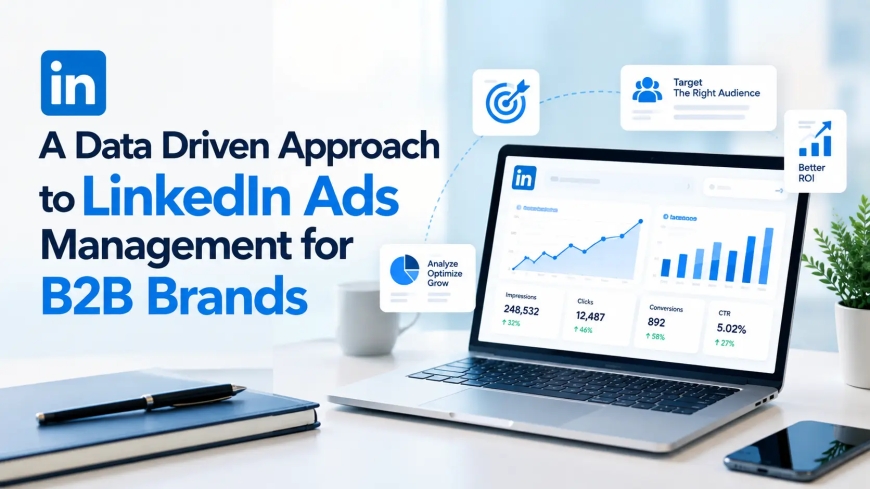
Most B2B marketing decisions get made on instinct. Someone feels like a certain audience will convert better, or assumes a particular ad format will perform well, and budget gets allocated based on that feeling. LinkedIn punishes this approach more than almost any other platform. Cost per click is high enough that guessing gets expensive fast. The brands seeing consistent results are the ones treating every decision as something to be tested and measured, not assumed. This is what a genuinely data driven approach to linkedin ads management actually looks like, and why it matters more on LinkedIn than almost anywhere else.
Why Assumptions Fail on LinkedIn Specifically
On platforms like Facebook, a broad audience and a decent budget can sometimes produce results just through volume. LinkedIn does not work that way. The audience is smaller, more expensive to reach, and far less forgiving of poor targeting. A campaign built on assumptions about who the ideal customer is, without data to back it up, tends to burn through budget while producing leads that never convert. This is one of the most common reasons businesses eventually seek out linkedin ads management services instead of continuing to run campaigns internally without a structured process.
Building Campaigns Around Data Instead of Guesswork
Starting with existing customer data, not assumptions
Before building any audience on LinkedIn, the most useful starting point is data that already exists. Which industries convert best. What job titles show up most often in closed deals. What company size tends to have the fastest sales cycle. A proper linkedin ads management agency treats this research phase as foundational, not optional. Campaigns built on real customer patterns consistently outperform campaigns built on assumptions about the target market.
Testing audience segments against each other
Rather than picking one audience and hoping it performs, a data driven process involves running multiple audience segments simultaneously and letting performance data decide which one gets more budget. This is a core part of ongoing linkedin campaign optimization. The segments that produce lower cost per qualified lead get more investment. The ones that do not get scaled back or cut entirely.
Measuring beyond clicks and impressions
Click through rate tells you almost nothing about whether a campaign is working for the business. A campaign can have a strong click through rate and still produce leads that never turn into revenue. This is why linkedin conversion tracking has to be set up correctly before meaningful decisions can be made. Without accurate tracking connecting ad spend to actual pipeline, every optimization decision is based on incomplete information.
The Role of Reporting in a Data Driven Process
Reporting is often treated as a formality, something sent at the end of the month to justify spend. In a genuinely data driven process, it plays a much larger role. Strong linkedin ads reporting should answer a specific question. Where exactly is budget producing qualified pipeline, and where is it being wasted. This means going beyond platform level metrics and connecting ad performance to actual CRM data, tracking which leads became real sales conversations and which did not.
When reporting works this way, it stops being a summary and becomes a decision making tool. Budget shifts based on what the data shows, not based on which campaign feels like it should be working.
Why This Approach Requires Dedicated Attention
A data driven process is not something that runs on autopilot. It requires someone actively reviewing performance, running tests, and adjusting strategy on an ongoing basis.
This is part of why many B2B brands eventually work with a managed service provider linkedin ads team rather than treating LinkedIn ads as a side task for an already stretched internal marketing team. A managed service provider linkedin ads management setup gives a business consistent, dedicated attention without the cost of a full time specialized hire.
The role has also shifted over time. A skilled linkedin ads expert today spends less time inside the platform interface and more time interpreting data, connecting ad performance to business outcomes, and adjusting strategy based on what the numbers actually show.
What This Looks Like Over a Full Campaign Lifecycle
In the early stage, data driven management focuses on testing multiple audience segments and creative variations to establish a baseline of what performs.
In the middle stage, focus shifts toward narrowing in on the best performing segments, cutting underperforming ones, and refining messaging based on what the data has shown so far.
In the mature stage, the focus becomes efficiency. Lowering cost per qualified lead, expanding into adjacent high performing segments, and maintaining consistent creative testing to prevent audience fatigue.
At every stage, decisions are driven by what the data is showing, not by assumptions carried over from the campaign's original setup.
Final Thought
LinkedIn rewards precision more than almost any other advertising platform, and precision requires data, not instinct. Brands that treat LinkedIn ads management as an ongoing analytical process consistently outperform those treating it as a simple set up and monitor task. The difference between a campaign that produces real pipeline and one that quietly burns through budget usually comes down to this exact distinction. One is guided by data at every step. The other is guided by assumptions that were never properly tested.
FAQ About Data Driven LinkedIn Ads Management
What does data driven LinkedIn Ads management actually mean?
Ans. It means every decision in a campaign, from audience selection to budget allocation, is based on actual performance data rather than assumptions. This includes testing audience segments against each other, tracking conversions accurately, and using reporting that connects spend directly to pipeline instead of relying on instinct or guesswork.
Why is LinkedIn advertising less forgiving of guesswork compared to other platforms?
Ans. LinkedIn has a smaller, more specific audience and a much higher cost per click than platforms like Facebook or Google Display. This means poorly targeted campaigns burn through budget quickly, and there is little room for broad, unfocused targeting to produce results through volume alone.
What data should a business use before building a LinkedIn campaign?
Ans. The most useful starting point is existing customer data, such as which industries convert best, which job titles appear most often in closed deals, and what company size tends to have the fastest sales cycle. This data should guide audience building instead of assumptions about who the ideal customer might be.
Why does conversion tracking matter so much in this process?
Ans. Without accurate conversion tracking, a business can only measure surface level metrics like clicks and impressions, which do not indicate whether a campaign is actually producing pipeline. Proper tracking connects ad performance to real business outcomes, which is necessary for making informed optimization decisions.
How is reporting different in a data driven approach?
Ans. Reporting in a data driven process goes beyond platform level numbers and connects ad spend to actual CRM data, showing which leads turned into real sales conversations. This turns reporting into a decision making tool rather than a simple monthly summary.
Does a data driven approach require more time and resources than standard campaign management?
Ans. It generally requires more consistent attention, since testing, tracking, and reporting need to be reviewed regularly rather than checked occasionally. This is one of the main reasons many B2B brands choose to work with a dedicated LinkedIn Ads management team rather than managing this process internally alongside other marketing responsibilities.
What's Your Reaction?
 Like
0
 Dislike
0
 Love
0
 Funny
0
 Angry
0
 Sad
0
 Wow
0