
















Natural Hairline Treatment in Dubai for Widow’s Peak Correction
Natural Hairline Treatment in Dubai can refine a prominent widow’s peak by assessing facial proportions, follicular density, temples, and hair growth direction.
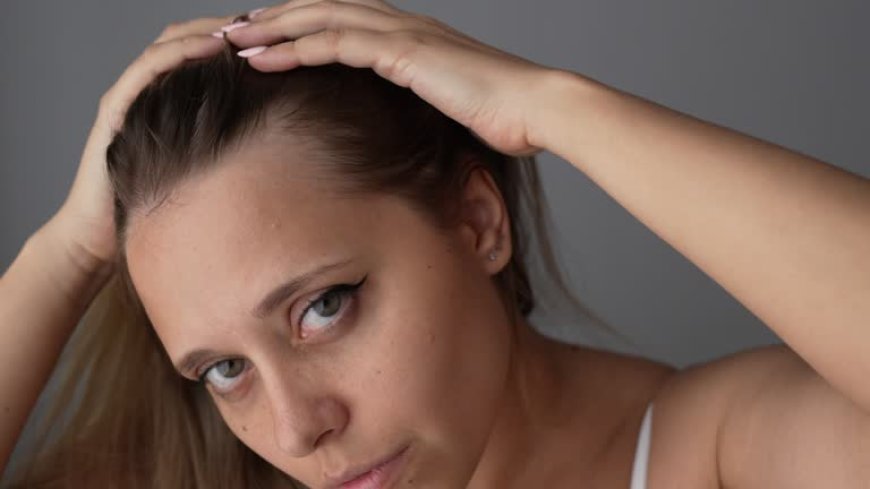
A widow’s peak is a V-shaped point of hair growth extending lower into the forehead than the surrounding frontal hairline. Natural Hairline Treatment in Dubai can be considered when the peak appears disproportionately prominent, has become more noticeable through recession, or needs to be balanced with the surrounding frontal contour.
Correction does not necessarily mean removing the characteristic V shape completely. In many cases, the clinical objective is to soften the transition between the central point and the temporal regions while maintaining an anatomically convincing hairline.
Understanding a Widow’s Peak Before Correction
A widow’s peak can be a completely natural anatomical variation. The central frontal follicles may simply extend farther forward than the adjacent hairline.
Natural Versus Receding Hairline Changes
A naturally occurring widow’s peak can remain stable for years. A different pattern occurs when the temples progressively recede while the central point remains relatively strong.
This can make the central V appear increasingly pronounced even though its position has not changed significantly.
Why the Temples Matter
The visual effect of a widow’s peak depends heavily on the neighboring temples. If the temporal points move backward, the central peak becomes more visually dominant.
Treatment planning should therefore examine the entire frontal architecture rather than focusing exclusively on the lowest point of the V.
Natural Hairline Treatment in Dubai and Facial Proportion
Hairline design is closely connected to forehead height and facial proportions. The same widow’s peak may appear subtle on one face and considerably more prominent on another.
Measuring the Frontal Relationship
Assessment may consider:
- Forehead height
- Central hairline position
- Temporal recession
- Existing frontal density
- Hair calibre
- Facial width
- Eyebrow position
- Direction of existing hair growth
The aim is to determine whether the peak itself requires correction or whether surrounding thinning is making the feature appear exaggerated.
Avoiding an Artificial Straight Line
Removing every irregularity can create an unnatural result. Human hairlines normally contain variations in density and contour.
A carefully softened widow’s peak may therefore look more convincing than a perfectly horizontal frontal edge.
When Natural Hairline Treatment in Dubai May Be Considered
Treatment is more relevant when the widow’s peak is accompanied by recession, thinning, or a stable shape that the patient wishes to modify.
Non-Surgical Approaches
PRP, ACell PRP, microneedling, microneedling with PRP, and scalp micropigmentation are among the methods listed by Tajmeels for natural hairline treatment.
These techniques have different objectives. PRP-based treatments and microneedling are used in protocols designed to support existing follicles, while scalp micropigmentation creates the visual impression of greater density.
FUE Hair Transplantation
FUE becomes relevant when the desired contour requires additional follicles in an area where existing growth is insufficient. Individual grafts can be extracted from a donor region and placed into precisely designed recipient sites.
The direction and angle of each graft are especially important around the widow's peak because the frontal edge is immediately visible. Tajmeels identifies FUE hair transplantation as its surgical approach for receding hairline treatment.
Designing a Softer Widow’s Peak
The correction strategy can vary significantly between patients.
Softening the Central Point
If the central point is only mildly pronounced, a clinician may design a transition that reduces the visual contrast between the peak and surrounding areas.
The objective is not necessarily to eliminate the V completely but to create a more gradual contour.
Balancing the Temporal Points
In other cases, the central peak appears prominent primarily because the temples have receded. Restoring or strengthening the temporal transition can therefore produce a more balanced appearance without aggressively altering the central point.
Preserving Individual Hair Direction
Hairline grafts should follow the directional pattern of neighboring follicles. Incorrect angles can cause hairs to project unnaturally from the scalp.
Tajmeels' hair-transplant information emphasizes precision in graft direction, angle, spacing, and density when creating natural-looking hairlines.
Treatment Options for Widow’s Peak Concerns
| Technique | Primary role | Can add biological hair? | Typical use |
|---|---|---|---|
| PRP | Follicular support | Where viable follicles remain | Thinning |
| ACell PRP | Supportive scalp treatment | Where viable follicles remain | Selected thinning |
| Microneedling | Controlled scalp stimulation | Supports existing follicles | Reduced density |
| Microneedling + PRP | Combined approach | Supports existing follicles | Selected frontal thinning |
| Scalp Micropigmentation | Optical correction | No | Visual density |
| FUE | Follicular replacement | Yes | Missing or insufficient follicles |
Tajmeels currently lists three to six sessions for PRP, three to five for ACell PRP, four to six for microneedling, three to five for microneedling with PRP, and one to three for scalp micropigmentation. The appropriate protocol is determined clinically rather than by the listed range alone.
Natural Hairline Treatment in Dubai for Different Widow’s Peak Patterns
Not every V-shaped hairline requires the same correction.
Mild Central Peak
A mild peak with good surrounding density may require little or no intervention. If treatment is chosen, conservative refinement can preserve the individual's natural character.
Pronounced Central Peak With Stable Temples
When the temples remain relatively full but the central point extends substantially forward, the design can focus specifically on the transition surrounding the peak.
The clinician must avoid creating abrupt density differences between treated and untreated zones.
Pronounced Peak With Temple Recession
This pattern requires broader assessment. Restoring temporal density may have a greater effect on overall balance than modifying the central peak alone.
Thinning Around the Peak
If the central hairline itself is becoming finer, treatment may focus on follicular support. PRP and microneedling are among the non-surgical approaches listed by Tajmeels.
Dubai-Specific Considerations After Hairline Treatment
Dubai's intense sunlight makes post-treatment sun protection particularly relevant. Tajmeels advises patients to avoid direct sun exposure, maintain scalp cleanliness, remain hydrated, and follow the recommended aftercare plan.
Managing Outdoor Exposure
Patients who regularly exercise outdoors, commute by foot, or spend extended periods outside should plan their recovery around the clinician's restrictions.
Sweat, dust, and direct sunlight can also make scalp hygiene more important during the recovery period.
Indoor Air Conditioning
Frequent exposure to strong air conditioning can make the scalp feel dry or uncomfortable. Patients should follow their prescribed cleansing and hydration routine rather than introducing new products during recovery without professional advice.
Who May Be Considered for Widow’s Peak Correction
Tajmeels identifies adults with premature hair loss, mild-to-moderate hair loss, receding hairlines, healthy scalp conditions, and realistic expectations among potential candidates for natural hairline treatment.
Natural Hairline Treatment in Dubai Candidate Assessment
A consultation may be useful when the patient has:
- A disproportionately prominent widow’s peak
- Progressive temple recession
- Uneven frontal density
- Thinning around the central hairline
- A stable V-shaped hairline they want to soften
- Sufficient donor hair for transplantation when required
- No active untreated scalp condition
The underlying cause should be established before choosing between follicular stimulation, visual camouflage, or transplantation.
Results and Hairline Development
Hairline correction does not produce a final appearance immediately. The timeline depends on whether the selected procedure stimulates existing follicles, creates optical density, or introduces transplanted grafts.
Natural Hairline Treatment in Dubai Results Timeline
Tajmeels reports that new growth may become noticeable within approximately two to three months, with more visible changes in volume, density, and texture around five to six months for its natural hairline treatment protocols.
The final progression varies according to follicular health, the selected technique, the underlying cause of hair loss, and adherence to aftercare.
Why Conservative Widow’s Peak Design Matters
A widow’s peak is not automatically a defect. It becomes a treatment concern when its proportions, surrounding recession, or density create an appearance the patient wants to modify.
A conservative approach allows the clinician to preserve natural irregularity while reducing an overly dominant central point.
Planning Natural Hairline Treatment in Dubai Around the Entire Frontal Frame
Widow’s peak correction should be planned as a three-dimensional hairline problem rather than a simple V-shaped outline. The central point, temples, forehead, density gradient, and follicular direction all contribute to the final appearance.
Patients researching natural hairline restoration options in Dubai can use a consultation to determine whether the concern is primarily structural, related to progressive hair loss, or suitable for a non-surgical density-support approach.
The Strategic Role of Natural Hairline Treatment in Dubai
The most natural widow’s peak correction is usually based on controlled refinement rather than aggressive straightening. Maintaining the patient's existing hair characteristics can help the treated region integrate with the rest of the scalp.
For individualized evaluation and treatment planning, Tajmeels Clinic offers natural hairline treatment approaches that can be selected according to the patient's hair-loss pattern, scalp condition, and desired aesthetic change.
What's Your Reaction?
 Like
0
 Dislike
0
 Love
0
 Funny
0
 Angry
0
 Sad
0
 Wow
0