














What Are the New IRDAI Health Insurance Guidelines for 2026?
Health insurance in India continues to evolve as regulators focus on faster claim processing, greater transparency, and better policyholder service. For 2026, policyholders should understand the health insurance rules and claim-service requirements issued by the Insurance Regulatory and Development Authority of India (IRDAI).
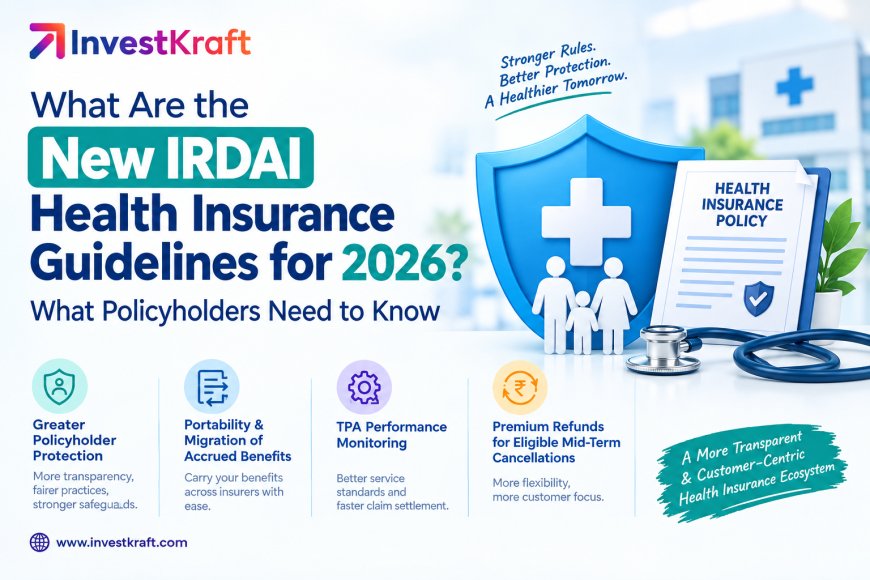
Health insurance in India continues to evolve as regulators focus on faster claim processing, greater transparency, and better policyholder service. For 2026, policyholders should understand the health insurance rules and claim-service requirements issued by the Insurance Regulatory and Development Authority of India (IRDAI).

IRDAI's current official health-insurance framework includes the Master Circular on Health Insurance Business dated May 29, 2024, along with subsequent regulatory guidance. Among the most important provisions for consumers are timelines for cashless authorization, claim settlement, disclosure of policy terms, and grievance handling.
Key IRDAI Health Insurance Guidelines Policyholders Should Know
The purpose of IRDAI guidelines is to make health insurance more transparent and improve the experience of customers during hospitalization and claims. Understanding these provisions can help policyholders avoid confusion when they need to use their coverage.
1. Faster Cashless Claim Authorization
One of the most important provisions concerns IRDAI cashless claim settlement.
According to IRDAI's official health-department guidance, insurers should decide a cashless pre-authorization request immediately and no later than one hour after receiving the request. For final authorization, the insurer should provide approval within three hours of receiving the hospital's discharge authorization request.
Why Is This Important?
Faster authorization can reduce delays at the hospital and make the discharge process more predictable. However, approval remains subject to the policy's terms, coverage limits, exclusions, and other applicable conditions.
2. Clearer Cashless Claim Process
The cashless claim process generally involves the hospital, insurer, and, where applicable, the Third Party Administrator (TPA).
A typical process includes:
- The policyholder visits a network hospital.
- The hospital submits a pre-authorization request.
- The insurer or TPA reviews the request.
- The insurer communicates the cashless authorization.
- Treatment is provided according to the policy terms.
- At discharge, the hospital submits the final request.
- The insurer processes final authorization within the applicable timeline.
Cashless treatment does not mean every medical expense is automatically paid by the insurer. Non-covered expenses, applicable deductibles, co-payments, sub-limits, and expenses exceeding policy coverage may still have to be paid by the policyholder.
What Are the Important Health Insurance Rules for 2026?
Policyholders should look beyond claim approval timelines and understand the broader rules governing their health insurance.
3. Know Your Network Hospitals
Cashless treatment is generally available through hospitals or healthcare providers that have the required arrangement with the insurer. IRDAI advises consumers to check the list of eligible hospitals and healthcare providers before selecting or using a policy.
Check Before Hospitalization
Before planned treatment, verify:
- Whether the hospital is in the insurer's network
- Whether cashless treatment is available
- Applicable room-rent limits
- Co-payment requirements
- Waiting periods
- Disease-specific sub-limits
- Policy exclusions
This can help reduce unexpected expenses during hospitalization.
4. Reimbursement Claims Still Matter
Cashless treatment is not the only claim option. If treatment is taken at a hospital where cashless facility is unavailable, reimbursement may be possible depending on the policy terms and the eligibility of the hospital or medical establishment. IRDAI's FAQ states that reimbursement is subject to the terms and conditions of the policy.
Keep Your Documents Ready
Policyholders should maintain important documents such as:
- Hospital bills
- Discharge summary
- Prescriptions
- Diagnostic reports
- Consultation records
- Payment receipts
- Claim forms
- Other documents requested under the policy
Submitting complete information can help avoid unnecessary delays.
What Benefits Do Policyholders Get From These Guidelines?
The regulatory framework is designed to improve transparency and service standards. Important policyholder benefits include clearer information about claims, defined service timelines, and access to grievance mechanisms.
5. Transparency in Claim Decisions
IRDAI's health-insurance FAQ states that where a claim is denied or repudiated, the insurer should communicate the reasons and refer to the relevant policy conditions. The communication should also provide information about available grievance-redressal procedures.
Why Should Policyholders Read Their Policy?
Many claim disputes arise because customers are unfamiliar with exclusions, waiting periods, co-payments, room-rent restrictions, or other policy conditions.
Reading the Customer Information Sheet (CIS) and policy wording can help customers understand what is covered before making a claim. IRDAI specifically advises consumers to understand the terms and conditions of their health insurance products.
How Does Insurance Claim Authorization Work?
Insurance claim authorization is the process through which an insurer evaluates whether a requested treatment can be covered under the policy.
Pre-Authorization vs Final Authorization
Pre-authorization generally takes place before or during hospitalization. The hospital sends treatment-related information to the insurer or TPA, which evaluates the request.
Final authorization takes place when the hospital submits the discharge-related request and final bill information. IRDAI's current guidance specifies a three-hour timeline for final cashless authorization after receipt of the discharge authorization request.
What If a Cashless Request Is Not Approved?
A cashless request may not be approved if the treatment is outside the policy's coverage, applicable conditions are not met, or other policy requirements prevent authorization.
A rejection of cashless authorization does not automatically mean that no reimbursement can ever be considered. The policyholder should check the insurer's decision, policy terms, and applicable claim procedure.
What Should Health Insurance Policyholders Do in 2026?
Consumers should take a proactive approach rather than waiting until hospitalization.
A Simple Checklist
Before buying or renewing a policy:
- Check the sum insured.
- Review waiting periods.
- Understand exclusions.
- Check co-payment and sub-limits.
- Verify the network hospital list.
- Read the Customer Information Sheet.
- Understand the cashless claim process.
- Save the insurer and TPA contact details.
- Keep policy documents accessible.
- Understand the grievance-redressal process.
Final Thoughts
The important takeaway for 2026 is that policyholders should understand the existing IRDAI framework and the service timelines that apply to health insurance claims. In particular, IRDAI's official guidance specifies up to one hour for cashless pre-authorization and up to three hours for final cashless authorization after the relevant request is received.
At the same time, faster processing does not remove the importance of policy conditions. Coverage limits, exclusions, waiting periods, co-payments, and network-hospital requirements continue to matter. By understanding these IRDAI guidelines, policyholders can approach the cashless claim process with greater clarity and keep the required documents ready when medical treatment is needed.
What's Your Reaction?
 Like
0
 Dislike
0
 Love
0
 Funny
0
 Angry
0
 Sad
0
 Wow
0