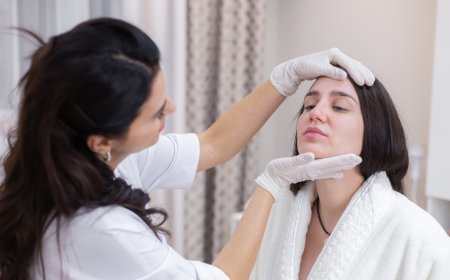
Can Plexr improve the appearance of both eyelids equally?
Learn whether Plexr can improve both eyelids equally, including symmetry, treatment planning, skin laxity, healing, and realistic results.
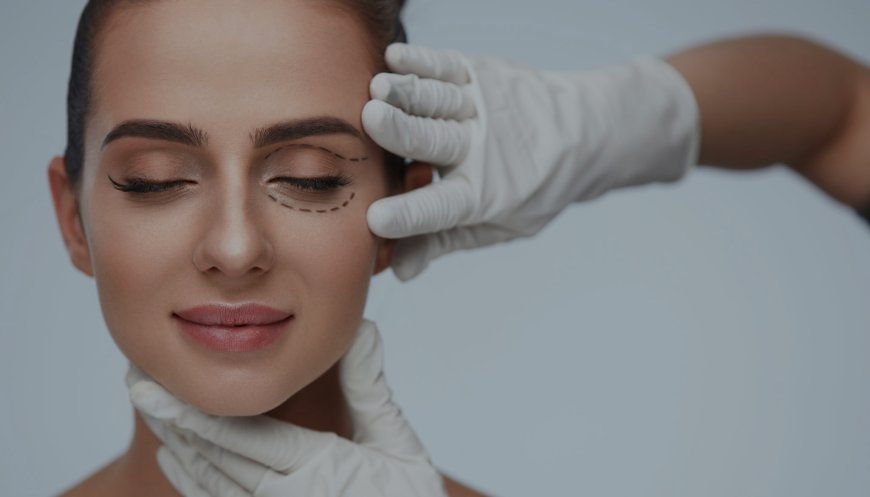
When considering Can Plexr improve the appearance of both eyelids equally?, it is important to understand that both eyelids can be treated during the same treatment plan, but perfectly equal results cannot be guaranteed. Natural facial asymmetry, differences in skin laxity, eyelid anatomy, wrinkles, and individual healing responses can all influence the final appearance. If you are exploring the treatment, you can learn more about عملية شد الجفون بتقنية البلازما من بليكسر في دبي. Plasma exeresis has been studied for selected cases of upper-eyelid laxity and dermatochalasis, with clinical research reporting improvements in eyelid appearance after treatment.
Why Are Eyelids Naturally Different?
Perfectly symmetrical eyelids are uncommon.
One eyelid may naturally sit slightly higher than the other, have a different crease, or contain a different amount of skin. Differences can also become more noticeable with age as skin elasticity changes.
These variations are important when planning Plexr because the practitioner should evaluate each eyelid individually rather than assuming both sides require exactly the same treatment.
The purpose of treatment is generally to create a balanced improvement while respecting the patient's natural anatomy.
Can Both Eyelids Be Treated With Plexr?
Yes. Plexr plasma treatment can be used on selected areas of both upper eyelids when the practitioner determines that treatment is appropriate.
The procedure uses controlled plasma discharges to create localized thermal effects on the skin. These effects can contribute to superficial contraction and a healing and remodeling response.
A clinical study involving 40 women with upper-eyelid dermatochalasis evaluated plasma exeresis performed on the upper eyelids and reported a significant reduction in eyelid laxity after treatment.
However, treating both sides does not mean that exactly the same visible result will occur on each eyelid.
Why Might One Eyelid Respond Differently?
Several factors can cause differences between the two sides.
Different Skin Laxity:
One eyelid may have more excess or loose skin than the other.
If one side begins with greater laxity, it may require a different treatment pattern or may show a different degree of improvement.
Natural Eyelid Anatomy:
The underlying anatomy of the two sides may not be identical.
Differences in the eyelid crease, brow position, orbital structure, and soft tissue can affect how the skin appears before and after treatment.
Different Skin Characteristics:
Skin thickness, elasticity, pigmentation, and previous sun exposure can vary between sides.
These differences may influence how the skin responds to controlled plasma treatment and how quickly it heals.
Individual Healing Response:
Even when both eyelids receive similar treatment, healing does not necessarily occur at exactly the same rate.
Temporary swelling, redness, sensitivity, or crusting may be more noticeable on one side during recovery.
How Does The Practitioner Plan Treatment For Both Eyelids?
Treatment planning generally begins with a detailed comparison of both eyelids.
The practitioner assesses the amount and location of skin laxity, wrinkles, asymmetry, and other cosmetic concerns.
Individual plasma points can then be planned according to the anatomy of each side.
The treatment does not necessarily need to use an identical number or distribution of points on both eyelids. Customizing the pattern may help address differences that are already present.
The objective is not simply to make both sides receive identical treatment. Instead, the practitioner aims to achieve a balanced overall appearance.
Can Plexr Reduce Existing Eyelid Asymmetry?
Plexr may help reduce the visual appearance of asymmetry when the difference is related primarily to superficial skin laxity.
A pilot study involving plasma exeresis for upper-eyelid dermatochalasis reported clinical improvement and described changes in eyelid appearance following treatment.
However, asymmetry can have many causes.
If the difference is related to deeper anatomical structures, muscle function, brow position, or other factors rather than primarily loose skin, Plexr may have limited ability to correct it.
For this reason, the cause of asymmetry should be assessed before treatment.
What Happens During Treatment?
After the eyelids are assessed and prepared, the practitioner applies controlled plasma discharges to selected areas.
Small treatment points are created on the skin according to the planned pattern.
The thermal effect can cause localized skin contraction and initiate a natural healing response.
Research into plasma exeresis has also suggested that collagen remodeling may contribute to changes in skin appearance following treatment.
The treatment intensity and point placement should be individualized for each patient.
Can Both Eyelids Heal At The Same Rate?
Not necessarily.
Temporary swelling and other healing effects can make one eyelid appear different from the other during the early recovery period.
An observational study of plasma treatment involving the upper eyelids reported temporary symptoms including eyelid edema and itching.
Because of this, it is generally inappropriate to judge symmetry immediately after treatment.
As the skin heals and temporary swelling decreases, the appearance can become more representative of the treatment result.
How Long Does It Take To See Balanced Results?
The timing varies between individuals and depends on the treatment intensity, skin condition, and healing response.
Some changes may be visible after the initial healing period, while other improvements can develop gradually as the skin remodels.
Clinical research has used follow-up periods extending several months when evaluating plasma treatment for eyelid laxity.
The practitioner can determine when the result should be evaluated and whether additional treatment is appropriate.
What If One Eyelid Needs More Treatment?
Additional treatment may sometimes be considered if one side has a different degree of laxity or responds differently.
However, further treatment should not be performed simply because the eyelids look temporarily different during early recovery.
The skin should be allowed to heal before the result is assessed.
If persistent asymmetry remains, the practitioner can determine whether it relates to residual skin laxity, natural anatomy, or another factor.
Can Plexr Create Perfectly Symmetrical Eyelids?
No cosmetic treatment can guarantee perfectly symmetrical eyelids.
Even people who begin with relatively symmetrical eyelids may have small differences that remain after treatment.
The realistic goal is generally to improve the appearance of the treated area while maintaining natural facial proportions.
Expectations should therefore focus on balanced improvement rather than mathematical symmetry.
Plexr Compared With Surgical Blepharoplasty:
Plexr and surgical blepharoplasty work differently.
Plexr uses controlled plasma effects to treat selected areas of the skin and may encourage superficial contraction and remodeling.
Surgical blepharoplasty can remove or reposition excess eyelid tissue and may therefore be more appropriate when significant tissue excess is present.
The severity of dermatochalasis is an important consideration when determining which approach may be appropriate. Plasma studies have generally focused on selected cases rather than all forms of eyelid excess.
Factors That Influence Symmetry After Treatment:
Several factors may affect how balanced the eyelids appear after Plexr:
- Pre-existing facial asymmetry
- Degree of skin laxity
- Eyelid anatomy
- Skin elasticity
- Treatment-point distribution
- Treatment intensity
- Healing response
- Temporary swelling
- Individual collagen remodeling
- Aftercare and sun exposure
Understanding these factors can help create realistic expectations before treatment.
Frequently Asked Questions:
Can Plexr improve the appearance of both eyelids equally?
Both eyelids can be treated, but exactly equal results cannot be guaranteed because natural anatomy and healing responses differ.
Can Plexr correct eyelid asymmetry?
It may improve asymmetry caused by superficial skin laxity, but it cannot correct every cause of eyelid asymmetry.
Should both eyelids receive the same number of plasma points?
Not necessarily. Treatment points can be customized according to the characteristics of each eyelid.
Can swelling make the eyelids look uneven after Plexr?
Yes. Temporary swelling and other healing effects can make one side appear different during recovery.
When should the final result be assessed?
The appropriate evaluation time depends on the treatment and individual healing process. Results should generally be assessed after the early swelling and healing changes have settled.
Conclusion:
So, Can Plexr improve the appearance of both eyelids equally? Both eyelids can be treated as part of an individualized Plexr plan, and the procedure may improve selected cases of eyelid laxity and dermatochalasis. However, perfectly equal results cannot be guaranteed because eyelid anatomy, pre-existing asymmetry, skin characteristics, treatment response, and healing can differ between sides. A qualified practitioner can assess each eyelid separately and customize the treatment points and intensity to support a balanced, natural-looking improvement.
What's Your Reaction?
 Like
0
 Dislike
0
 Love
0
 Funny
0
 Angry
0
 Sad
0
 Wow
0