Precision Back Pressure Control for Low-Flow Gas Systems A Look at the JB Series
Explore the JB Series back pressure regulator up to 750 psi, Cv 0.05–0.35, 316L SS barstock body. Built for GC, FID, and R&D gas systems.

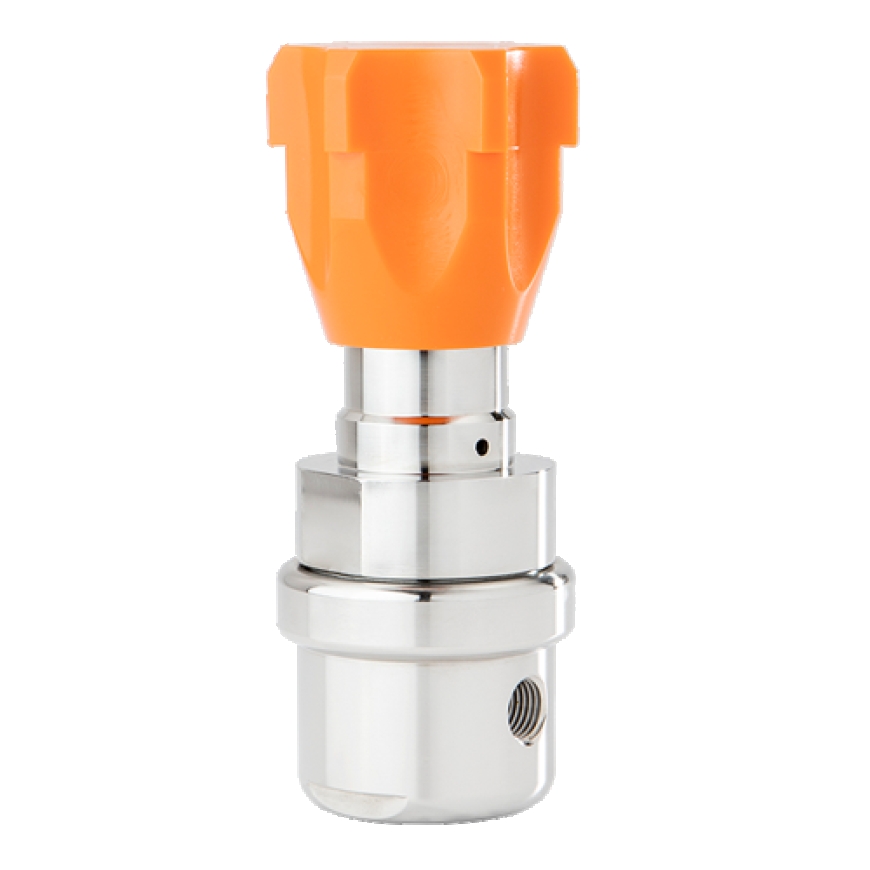
Laboratories and process R&D groups working with analytical instrumentation face a recurring engineering challenge: how do you hold a stable, repeatable back pressure on a gas line when the actual flow through that line is tiny sometimes just a few milliliters per minute? Standard industrial regulators, sized for much larger flows, tend to be imprecise or unstable at these low Cv values. This is the specific problem that dome-loaded and spring-loaded back pressure regulators like the JB Series from LowFlow Valve are engineered to solve.
Why Back Pressure Control Matters in Low-Flow Gas Applications
In gas chromatography (GC) and flame ionization detection (FID), the accuracy of a measurement depends heavily on maintaining a constant upstream pressure on carrier and sample gas lines. Even small pressure fluctuations can shift retention times, distort peak shape, or introduce noise into detector baselines. Similarly, in R&D pilot systems handling corrosive or specialty gases, engineers need a regulator that can throttle very low flows precisely without "hunting" or overshooting while also standing up to aggressive process media.
A back pressure regulator (BPR), unlike a pressure-reducing regulator, controls pressure upstream of itself, and vents flow downstream once a set threshold is exceeded. That makes it the correct architecture for applications like:
- Sample conditioning ahead of GC and FID instruments
- Corrosive/specialty gas research and sampling loops
- Industrial process controls where flow is minimal, but pressure stability is critical
JB Series Design and Specifications
The JB Series is built for exactly this niche high pressure combined with genuinely low flow. Key specifications worth noting for engineers evaluating the product:
- Spring range: up to 750 psi (52 bar)
- Cv range: 0.05, 0.15, 0.25, 0.35 (Kv 0.04–0.30) a range purpose-built for fractional-flow applications
- Sizes: 1/4″, 3/8″, 1/2″ (DN8, DN10, DN15)
- Body materials: 316L stainless steel as standard, with Hastelloy C, Monel, and Alloy 20 available for more aggressive chemistries
- Seat materials: PEEK and KEL-F, giving ANSI Class VI soft-seat shutoff
- End connections: threaded, socket weld, or flanged
A few design details stand out from a maintainability and reliability standpoint. The top-entry design means the internals can be serviced or cleaned in-line without removing the body from the piping run a meaningful advantage in systems where downtime or requalification after disassembly is costly. The barstock body construction (rather than cast) keeps material integrity and surface finish tight, which matters for corrosive gas service and for meeting cleanliness requirements in analytical applications.
The regulator also uses LowFlow's Jorlon diaphragm, which the manufacturer backs with a lifetime diaphragm warranty. Diaphragm fatigue is one of the more common wear points in spring-loaded regulators subjected to frequent cycling, so the material choice here directly affects long-term maintenance intervals.
For labs or facilities needing food- or pharma-adjacent compliance, USDA- and FDA-approved soft goods are available on request worth flagging for anyone specifying valves for regulated environments, even outside food/pharma, since it signals a controlled elastomer supply chain.
Where the JB Series Fits
Per the manufacturer's application data, the JB Series is positioned for:
- Gas chromatography and flame ionization detector (FID) systems
- Research and sampling systems handling corrosive or specialty gases
- Industrial control loops
- Broader R&D gas regulation, hydrogen fuel cell test stands, and pilot plant work
It's worth noting the JB sits within a small family of related regulators the JBDL Series (higher-Cv diaphragm-sensed) and JBPH Series (piston-sensed) for applications that need higher flow capacity or a different sensing mechanism while keeping the same general architecture.
Specifying the Right Regulator
When comparing back pressure regulators for low-flow gas service, the two numbers that matter most are the Cv (or Kv) rating and the maximum spring range, since these define whether the regulator can hold stable control at your actual operating flow without oversizing the trim. Material compatibility with your process gas particularly for corrosive or specialty gases should be checked against the available body and seat material options before final selection.
Full specifications, dimensional drawings, and installation & maintenance documentation for the JB Series are available directly from the manufacturer:
JB Series Back Pressure Regulators LowFlow Valve
👉 https://lowflowvalve.com/products/jb-series/
What's Your Reaction?
 Like
0
 Dislike
0
 Love
0
 Funny
0
 Angry
0
 Sad
0
 Wow
0