
















Private Quran Tutor: Learn Quran Online With Personal Guidance
Private Quran tutor lessons help children and adults learn Quran online with flexible classes, Tajweed, personalized guidance, and accessible pricing.

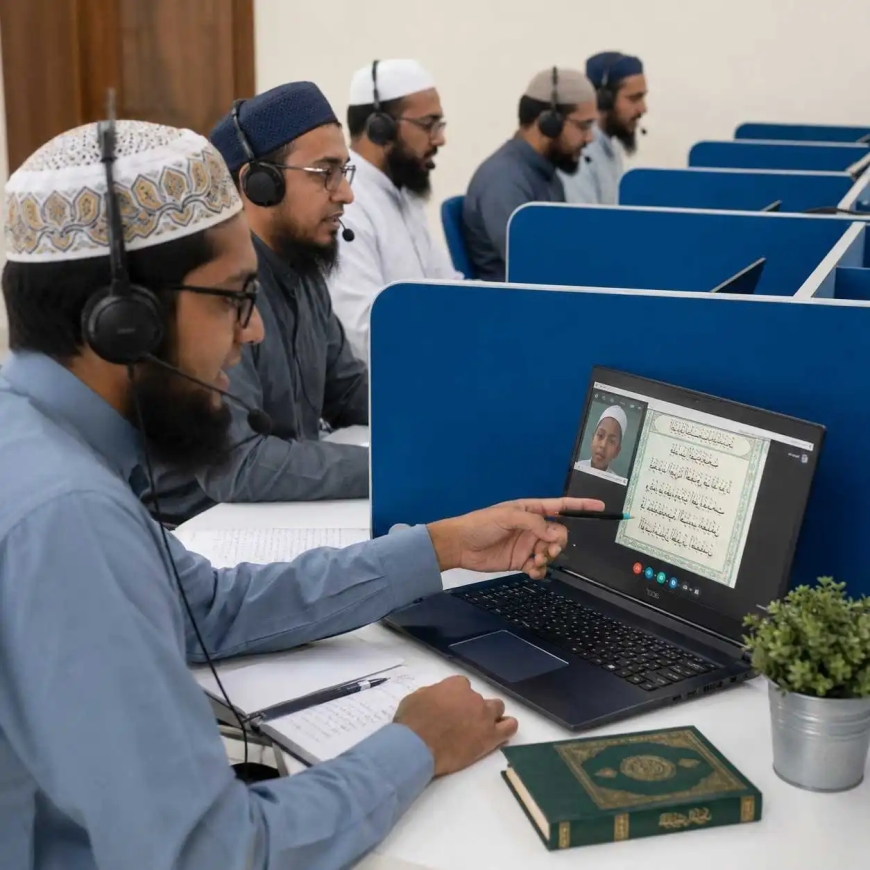
Choosing the right private Quran tutor can make learning the Quran simpler, more comfortable, and more consistent. Whether you are a complete beginner, a parent looking for Quran lessons for your child, or an adult who wants to improve recitation, private one-to-one teaching offers a flexible way to learn Quran from home.With online Quran education, students can connect with qualified tutors without travelling to a physical madrasa or rearranging their entire daily routine. Lessons can be arranged around school, work, family commitments, and other responsibilities. A private tutor can also adapt lessons to the student's current level instead of following the same pace for everyone.
What Is a Private Quran Tutor?
A private Quran tutor is a teacher who provides individualized Quran instruction to one student or, in some cases, a very small group. Unlike a large classroom where a teacher may have to divide attention among many learners, private tuition allows the lesson to focus specifically on one student's needs.Imagine learning to ride a bicycle while someone watches from a distance and only gives occasional instructions. Now compare that with having a coach beside you who immediately points out where your balance needs improvement. Private Quran learning works in a similar way.The tutor listens to your recitation, identifies mistakes, explains the correct pronunciation, and adjusts the lesson accordingly.
Why Choose a Private Quran Tutor?
Every student learns differently. Some people recognize Arabic letters quickly but struggle with pronunciation. Others can read fluently but need help with Tajweed. Children may need shorter, engaging lessons, while adults may prefer a structured and faster learning plan.
A private tutor can respond to these differences.
Personalized Quran Lessons
One of the biggest advantages is personalization. Instead of spending an entire lesson on material you already understand, your tutor can move forward and concentrate on the areas that need attention.
Lessons may include:
- Arabic letter recognition
- Noorani Qaida
- Quran reading
- Tajweed rules
- Makharij
- Quran memorization
- Daily duas
- Translation
- Basic Islamic studies
- Revision of previously learned Surahs
One-to-One Attention
One-to-one learning creates more opportunities for questions and corrections. Students can stop and ask for clarification without worrying about slowing down an entire class.This can be particularly useful for beginners.
Flexible Learning Times
Online private lessons can often be scheduled at convenient times. A student living in the UK may study in the evening, while a student in Pakistan may choose a different time according to their daily routine.
The important point is flexibility.
How Can We Learn Quran Online?
To learn Quran online, students generally need four basic things:
- A smartphone, tablet, laptop, or desktop computer.
- Reliable internet access.
- Headphones or speakers and a working microphone.
- A suitable online lesson platform.
Once these requirements are available, the student can communicate with the tutor through a video or audio lesson.
The tutor can share Quranic material on screen, listen to recitation, explain Tajweed, assign revision, and monitor progress.
Technology Makes Quran Learning Accessible
Online education has removed many geographical barriers. You do not necessarily need to live close to a Quran academy to find a suitable teacher.A student can potentially study with a tutor located in another city or country.That means parents can focus on finding a tutor who matches their child's learning needs rather than limiting their search to the nearest physical institution.
Who Can Learn Quran With a Private Tutor?
Private Quran lessons are suitable for a wide range of learners.
Children
Children often benefit from structured lessons with simple explanations and regular encouragement.A tutor can gradually introduce Arabic letters, pronunciation, reading rules, and short Surahs according to the child's ability.
Teenagers
Teenagers may already know basic Quran reading but need improvement in fluency, Tajweed, or memorization.Private lessons allow the tutor to create a study plan that fits around school and extracurricular activities.
Adults
It is never too late to improve Quran reading. Adults who did not receive consistent Quran education during childhood can start with the basics and gradually progress.A private tutor can also avoid making an adult learner feel uncomfortable about returning to beginner-level material.
Private Quran Tutor for Beginners
Beginning from zero can feel intimidating, but a structured approach makes the process much easier.Most beginners should first become comfortable with Arabic letters and their sounds.
Start With Noorani Qaida
Noorani Qaida is commonly used as an introductory resource for learning Quranic reading.
Students learn:
- Individual Arabic letters
- Letter combinations
- Vowel sounds
- Joining letters
- Basic pronunciation
- Reading simple words
- Fundamental Tajweed concepts
The objective is not simply to memorize symbols. The student needs to understand how letters and sounds work together.
Move From Letters to Quran Reading
Once the learner becomes comfortable with basic reading principles, the tutor can gradually introduce Quranic verses.Progress should be steady rather than rushed.A strong foundation is like building the first layer of a house. If the foundation is weak, advanced learning becomes harder.
Learn Quran With Tajweed
Tajweed refers to the rules and principles used for correct Quranic pronunciation and recitation.A private Quran tutor can listen closely to the student's reading and identify pronunciation problems that may be difficult to notice independently.
Why Tajweed Matters
Arabic contains sounds that may not exist in English or other languages. Small pronunciation differences can therefore be challenging for beginners.A tutor can demonstrate the correct articulation and then ask the student to repeat it.
Makharij and Pronunciation
Makharij refers to the articulation points from which Arabic letters are pronounced.Learning these sounds correctly is an important part of improving Quran recitation.Instead of simply saying, "That pronunciation is wrong," a good tutor explains how the sound should be produced and gives the student opportunities to practice.
Private Quran Tutor for Kids
Parents often want Quran lessons to be educational without becoming unnecessarily stressful.Children usually respond better when lessons are organized around their age, ability, and attention span.
Making Lessons Child-Friendly
A tutor can divide a lesson into smaller sections, such as:
- Reading practice
- New letters or rules
- Recitation
- Short Surah revision
- Questions and review
Short-term goals can also make progress easier for children to understand.For example, instead of focusing only on finishing a large portion of the Quran, the tutor can celebrate smaller achievements such as correctly reading a difficult set of words.
Parental Progress Updates
Parents may also benefit from regular feedback.A tutor can explain what the child has learned, which areas require additional practice, and what should be revised before the next class.This creates a bridge between the lesson and the home environment.
Private Quran Tutor for Adults
Adult learners have different requirements from children.Many adults have busy schedules, including jobs, family responsibilities, and household commitments.Flexible online lessons can make Quran education easier to fit into an existing routine.
Flexible Adult Quran Classes
An adult may prefer:
- Early morning lessons
- Evening classes
- Weekend sessions
- Shorter frequent lessons
- Longer lessons fewer times per week
The ideal arrangement depends on the student's availability and learning objectives.The most important factor is consistency. Ten focused lessons completed regularly can be more useful than an ambitious schedule that becomes difficult to maintain.
Learn Quran With Translation
Reading the Quran is one aspect of Quranic education. Understanding the meaning can add another dimension to the learning experience.Students interested in translation can study the meaning of selected verses alongside their recitation.
Understanding What We Read
A private tutor can explain vocabulary and general meanings at an appropriate level.For advanced interpretation or detailed religious questions, students may also need qualified scholars and recognized Islamic educational resources.The tutor's role should remain clear and appropriate to their qualifications.
Quran Memorization With a Private Tutor
Students interested in Hifz can also benefit from personalized instruction.Memorization requires repetition, revision, patience, and consistency.
A Structured Memorization Routine
A tutor may divide memorization into manageable sections.
A typical routine can include:
- New memorization.
- Recitation to the tutor.
- Correction of mistakes.
- Repetition.
- Revision of previous portions.
- Regular assessment.
The exact amount should depend on the student's ability rather than an arbitrary target.
Why Revision Is Essential
Memorization without revision can fade quickly.Think of memorization like writing on sand. Without regular reinforcement, the marks gradually disappear. Consistent revision helps strengthen retention.
How Much Does a Private Quran Tutor Cost?
The price of a private Quran tutor varies considerably.There is no single worldwide price because fees depend on several factors.
Common factors include:
- Tutor qualifications
- Lesson duration
- Number of lessons per week
- Student's age
- Course type
- Individual or group learning
- Country and market
- Platform or academy
- Additional Islamic studies
- Specialized Tajweed or Hifz instruction
Typical Pricing Structure
Online Quran academies may offer monthly packages rather than charging separately for every lesson.For example, a provider might structure fees around a certain number of classes per week, with different prices for short and extended sessions.Because pricing changes between providers, students should check the current fee directly before enrolling.
Is a More Expensive Tutor Always Better?
Not necessarily.Price should be considered alongside teaching quality, experience, communication, lesson structure, availability, and suitability for the learner.A tutor who matches the student's needs may be more useful than a tutor selected only because of a higher or lower fee.
Where Can You Learn Quran With a Private Tutor?
One of the strongest features of online Quran education is geographical accessibility.
Students can often study from:
- The United Kingdom
- United States
- Canada
- Australia
- Pakistan
- United Arab Emirates
- Saudi Arabia
- Europe
- Other countries with reliable internet access
The exact availability depends on the academy or independent tutor.
Online Quran Learning From Home
A student does not need to travel across town for every lesson.Instead, the classroom can be a quiet corner of the home.This can save commuting time and make regular attendance easier.
Accessibility for Different Learners
Accessibility is not only about geography. It is also about making lessons suitable for different ages, schedules, and learning levels.An online Quran program can be particularly convenient for families who need lessons at different times.For example, siblings may have separate lessons based on their individual abilities rather than being required to study the same material together.
Lessons Across Different Time Zones
International students should check whether the tutor offers suitable time slots.A tutor may be available according to Pakistan Standard Time, while a student lives in London, Toronto, New York, Sydney, or another time zone.A good scheduling system should make the conversion clear before lessons begin.
How to Choose the Right Private Quran Tutor
Choosing a tutor deserves careful consideration.Instead of asking only, "How much does it cost?" we should ask several practical questions.
Check Teaching Experience
Ask about the tutor's experience with students of the same age and learning level.Teaching a five-year-old beginner is different from teaching an adult who already reads Quran fluently.
Ask About Qualifications
Where relevant, ask about Quranic, Tajweed, Arabic, Islamic studies, or teaching qualifications.Qualifications do not automatically guarantee teaching compatibility, but they can help establish the tutor's background.
Request a Trial Lesson
A trial lesson can help both student and tutor determine whether the teaching approach is suitable.
During the trial, pay attention to:
- Clarity of explanation
- Patience
- Pronunciation correction
- Lesson organization
- Communication
- Student comfort
- Technical quality
What Should We Expect From the First Quran Lesson?
The first lesson is often used to understand the student's current level.A tutor may ask the learner to read a few verses or identify Arabic letters.The teacher can then determine whether the student should begin with Noorani Qaida, Quran reading, Tajweed, memorization, or another course.This assessment prevents students from starting at the wrong level.
Creating a Personal Learning Plan
After the initial assessment, the tutor can establish practical goals.
For example:
- Improve Arabic letter recognition
- Read Quran more fluently
- Correct pronunciation
- Learn essential Tajweed
- Memorize selected Surahs
- Study translation
- Develop regular Quran reading habits
The plan can be adjusted as the learner progresses.
How Long Does It Take to Learn Quran?
There is no universal timeline.Some learners already know the Arabic alphabet and can begin Quran reading quickly. Others start without any Arabic reading experience.
Progress depends on:
- Starting level
- Lesson frequency
- Lesson duration
- Practice between classes
- Age
- Concentration
- Previous learning
- Tutor's teaching approach
- Consistency
Consistency Beats Occasional Intensity
Regular practice matters.Studying for a manageable amount of time several times a week can create stronger habits than studying for a long period once in a while.A private tutor can provide the structure, but the student's practice outside class remains important.
How to Make Private Quran Lessons More Effective
Students can improve their results by preparing before each lesson.
Practice Between Classes
Spend a few minutes reviewing the material covered during the previous lesson.Even brief daily practice can reinforce what was learned.
Keep a Quran Learning Notebook
Write down:
- New Tajweed rules
- Difficult words
- Pronunciation corrections
- Memorization targets
- Questions for the tutor
- Weekly progress
This gives the learning process a clear record.
Create a Quiet Learning Space
A quiet environment reduces distractions.Keep the Quran, notebook, headphones, and device ready before the lesson begins.Preparation may take only a few minutes, but it can make the entire class smoother.
Private Quran Tutor vs Group Quran Classes
Both options have advantages, and the right choice depends on the learner.Private lessons generally provide more individualized attention, while group classes can offer interaction with several students.
|
Feature |
Private Quran Tutor |
Group Classes |
|
Individual attention |
High |
Shared |
|
Flexible pacing |
Usually high |
Usually structured |
|
Personal correction |
Extensive |
Limited by class size |
|
Scheduling flexibility |
Often higher |
Depends on timetable |
|
Social interaction |
Limited |
Greater |
|
Personalized goals |
Easier |
More standardized |
Students should consider their learning style, budget, schedule, and objectives before choosing.
Common Mistakes When Choosing a Quran Tutor
Selecting a tutor based only on price can create problems.
Choosing Only the Cheapest Option
Low cost may be attractive, but the cheapest option may not provide the teaching style or schedule you need.
Ignoring Trial Lessons
A trial lesson can reveal whether the tutor communicates clearly and whether the student's level is understood correctly.
Not Discussing Learning Goals
A student who wants Hifz needs a different plan from someone who simply wants to improve basic Quran reading.Always explain your goals before starting.
Overlooking Technical Requirements
Online lessons depend on technology.Check the internet connection, microphone, camera if needed, and learning platform before the first regular class.
Questions to Ask Before Enrollment
Before choosing a private Quran tutor, consider asking:
- What courses do you provide?
- Do you teach children and adults?
- Do you offer Tajweed?
- Do you teach beginners?
- Are trial lessons available?
- How long is each class?
- How many classes are recommended each week?
- What are the monthly fees?
- Can lesson times be adjusted?
- How do you track student progress?
- What happens if a student misses a class?
- Which countries and time zones do you support?
Clear answers can prevent misunderstandings later.
Building a Long-Term Quran Learning Routine
Learning the Quran should not feel like a race.The goal is to develop a sustainable relationship with learning and recitation.A realistic routine might include several private lessons each week combined with independent revision.
Set Small Achievable Goals
Instead of setting an enormous target, divide the journey into smaller steps.
For example:
Month One: Arabic reading foundation
Month Two: Basic Quran reading
Month Three: Essential Tajweed
Month Four: Fluency and revision
The actual timeline will vary from student to student.
Benefits of Learning Quran From Home
Home-based Quran learning offers practical advantages.There is no daily commute, and students can often choose lessons around their existing commitments.For parents, this can make supervision easier.For adults, it can eliminate the need to travel after work.For international learners, it can provide access to teachers outside their immediate geographical area.In simple terms, the classroom comes to you.
How Parents Can Support Children Learning Quran
Parents have an important role even when a professional tutor teaches the lessons.Encourage children to attend classes regularly, create a quiet learning environment, and provide time for revision.Avoid turning every mistake into criticism.Learning Quran is a gradual journey. Encouragement can help children develop confidence and consistency.
Celebrate Progress
Progress does not always mean completing a large Surah.A child correctly pronouncing a difficult letter, improving fluency, or remembering a Tajweed rule is also meaningful progress.Small steps eventually create a long path.
Conclusion
A private Quran tutor can provide a personalized and flexible way to learn Quran, whether the student is a beginner, child, teenager, or adult. Online lessons can make Quran education accessible across different cities and countries while reducing the need for travel. Prices vary according to tutor qualifications, lesson duration, course type, frequency, and location, so students should compare the complete service rather than looking at price alone. The most effective learning arrangement is one that combines qualified teaching, regular lessons, practical scheduling, individual attention, and consistent practice. With the right tutor and a realistic routine, learning Quran can become a manageable and rewarding part of everyday life.
What's Your Reaction?
 Like
0
 Dislike
0
 Love
0
 Funny
0
 Angry
0
 Sad
0
 Wow
0






