











Robotic Hair Transplant in Dubai for Younger Patient Cases
Learn how robotic hair transplant in Dubai may be planned for younger patients through diagnosis, donor preservation, conservative design, and future hair-loss planning.
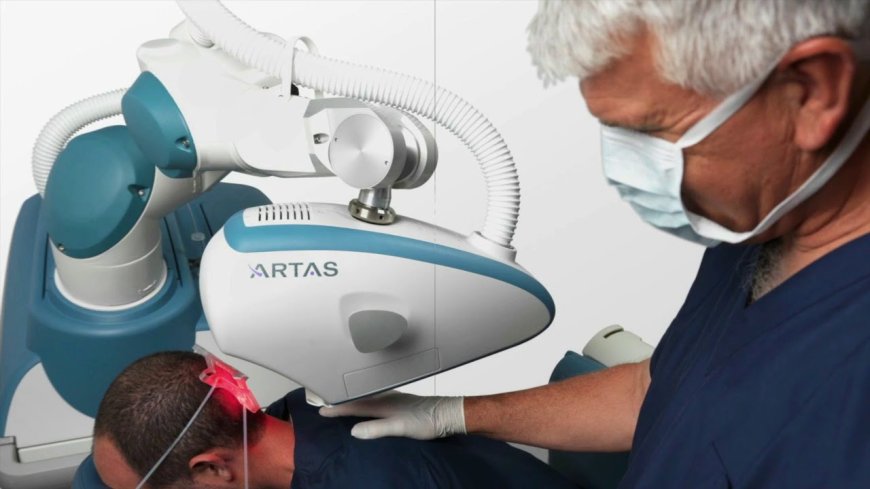
Younger patients considering hair restoration need a plan that accounts for continued native-hair loss rather than focusing only on their current appearance. Robotic Hair Transplant in Dubai may be appropriate for carefully selected younger patients when the diagnosis, donor stability, progression pattern, and long-term restoration strategy support surgery.
Why Younger Patients Require Different Planning
Hair loss at a younger age can be emotionally and cosmetically significant, but the pattern may not yet be fully established. This creates a different planning challenge from treating a patient whose recession has remained stable for many years.
Current Hair Loss May Not Show the Full Pattern
Early frontal recession can later extend into the midscalp or crown. A patient may therefore appear to have a small problem while still having substantial future hair-loss potential.
The treatment plan should account for what the scalp may look like several years later, not only what is visible during the consultation.
Age Alone Does Not Determine Suitability
There is no single age at which every patient becomes an appropriate transplant candidate. Diagnosis, progression, donor stability, native-hair condition, and realistic expectations are more informative than age by itself.
A younger patient with stable, well-defined loss may have a different surgical outlook from someone with rapidly progressing diffuse miniaturization.
Establishing the Cause Before Surgery
The first step is determining why the hair is thinning or receding.
Identify Miniaturization
Androgenetic hair loss commonly begins with progressive reduction in hair-shaft diameter. The affected follicles may continue producing hair while becoming less visible.
Mapping these changes can help determine whether the patient has a stable surgical target or an actively changing pattern.
Consider Other Causes of Hair Loss
Not every young patient with shedding or reduced density has androgenetic alopecia. Diffuse shedding, inflammatory scalp disorders, nutritional factors, medication effects, and other conditions may require a different management approach.
Surgery should not be used to compensate for an undiagnosed cause of active hair loss.
Robotic Hair Transplant in Dubai for Younger Patients
Robot-assisted extraction can support systematic harvesting of suitable follicular units when a patient has appropriate donor characteristics. However, younger cases require particular attention to conservation because the lifetime donor supply is limited.
Technology Does Not Replace Clinical Judgment
A robotic system can assist with aspects of follicular-unit harvesting, but it cannot determine whether the patient's future hair-loss pattern makes surgery advisable.
The surgeon must still evaluate donor stability, recipient requirements, follicular characteristics, and long-term progression.
The Initial Procedure Should Be Conservative
When future loss remains uncertain, the first procedure should generally avoid consuming donor resources unnecessarily.
A focused correction can address the most visible deficiency while leaving flexibility for future changes.
Evaluating Donor Stability
The donor area is one of the most important factors in younger patients.
Donor Density Is Only Part of the Assessment
A donor examination may consider:
- Follicular density
- Hair caliber
- Follicular-unit composition
- Distribution of follicles
- Miniaturization within the donor region
- Previous extraction
- Expected long-term stability
A dense donor area can be valuable, but its projected stability is more important than its appearance on a single examination.
Lifetime Graft Supply Matters
Every graft harvested early in life potentially reduces the pool available for later procedures.
This makes donor conservation particularly important when future frontal, midscalp, or crown loss remains possible.
Conservative Hairline Design for Younger Patients
The temptation to recreate a low adolescent hairline can be strong when hair loss begins early. However, an aggressively lowered hairline can create substantial long-term problems.
A Mature Hairline Can Be More Sustainable
A slightly higher, naturally irregular hairline may better accommodate future changes in the surrounding native hair.
The objective is not to make the patient appear as young as possible immediately. It is to create a result that remains proportionate as facial features and hair patterns mature.
Avoid Excessive Graft Demand
Lowering the frontal hairline by a small distance can require a surprisingly large number of grafts because the recipient area extends across the entire frontal boundary.
A conservative position can reduce unnecessary donor expenditure.
Assessing Future Hair Loss
Long-term prediction is central to younger-patient planning.
Family Pattern Can Provide Context
A strong family history of progressive androgenetic hair loss may increase concern about future recession and miniaturization.
However, family history is only one factor. The patient's own pattern, rate of change, donor characteristics, and clinical findings also need consideration.
Monitor Native Hair Behind the Transplant
Transplanted follicles do not stop surrounding native follicles from miniaturizing.
If native hair continues to recede behind the transplanted area, the patient may eventually require additional treatment or develop an undesirable separation between restored and untreated regions.
Protecting Native Hair
Younger patients often have substantial native hair in the proposed recipient area.
Existing Follicles Should Be Preserved
Recipient-site planning should account for viable native follicles. Creating sites unnecessarily close to existing hair can increase the risk of trauma.
The goal should be reinforcement where needed rather than treating the entire frontal region as empty.
Medical Management May Have a Role
Depending on the diagnosis and individual circumstances, a clinician may discuss nonsurgical treatment to help manage ongoing miniaturization.
The decision should be medically individualized, particularly when the patient is still experiencing active progression.
Choosing the Right Grafts
Younger-patient restoration benefits from thoughtful follicular-unit selection.
Fine Units for the Frontal Edge
Single-hair units can help create a soft transition along the leading edge. Their placement can make the hairline appear less artificial.
Larger Units Behind the Transition
Multi-hair units can contribute greater coverage behind the frontal edge where a stronger visual density is appropriate.
The distribution should match the patient's natural hair characteristics rather than following a fixed graft formula.
Temple Recession in Younger Patients
Early temporal recession can be one of the first visible signs of androgenetic hair loss.
Do Not Overcorrect the Temples
Restoring the temples too far forward can create an unnatural shape and consume donor grafts that may later be needed elsewhere.
A conservative temporal point can maintain facial proportions while leaving room for future progression.
Asymmetry Should Be Expected
One temple may recede faster than the other. Rather than forcing perfect symmetry, the design should aim for a balanced appearance that remains consistent with natural anatomy.
Mild Loss Versus Active Progression
The severity of current hair loss does not necessarily indicate how stable the pattern is.
Stable Localized Loss
A younger patient with a clearly defined and relatively stable area may have a more predictable surgical target.
Rapidly Changing Loss
If the hairline is moving quickly or miniaturization is widespread, immediate transplantation may be less predictable.
In such cases, observation and appropriate nonsurgical management may be considered before committing donor grafts.
Donor Preservation During Robotic Extraction
Younger patients should think about donor management as a lifetime resource.
Avoid Overharvesting
Extraction should remain within an appropriate proportion of the available donor supply.
Overharvesting can produce visible thinning in the donor region and reduce options for future restoration.
Distribution Matters
Harvesting should be planned to maintain a natural donor appearance rather than concentrating extraction in one easily accessible area.
This becomes especially relevant for patients who prefer short hairstyles.
Planning for Possible Future Procedures
A first transplant should not be designed as though it will necessarily be the patient's only procedure.
Leave Room for Progression
Future recession may require additional grafts around the frontal region. Later crown or midscalp thinning can also create new demands.
A conservative initial plan can preserve flexibility.
Avoid Creating a Transplanted Island
If the restored frontal region is densely packed while native hair behind it remains vulnerable to loss, future progression can expose a visible boundary.
Long-term planning should therefore consider the relationship between transplanted and untreated hair.
Younger Patients and Short Hairstyles
Short hairstyles can make both the hairline and donor region highly visible.
Natural Hairline Irregularity Matters
A perfectly straight frontal edge can be particularly noticeable when hair is worn short.
Subtle variation in follicle placement and appropriate density transitions can help maintain a more natural appearance.
Donor Extraction Must Remain Discreet
Because short hair exposes the donor area, extraction should respect overall donor density and avoid concentrated depletion.
When Surgery May Need to Be Delayed
There are situations where immediate transplantation may not be the most appropriate first step.
Unclear Diagnosis
If the cause of hair loss has not been established, treating the appearance surgically can address the symptom without addressing the underlying problem.
Rapidly Progressive Miniaturization
When native hair is changing quickly, the eventual recipient pattern may be difficult to predict.
A period of observation or medical management may provide a clearer basis for later surgical planning.
Insufficient Donor Stability
If the donor area itself shows significant miniaturization or limited capacity, aggressive transplantation may not provide a sustainable solution.
Dubai Lifestyle and Recovery Planning
Younger patients often have demanding work, study, fitness, and social schedules. Recovery should therefore be planned around normal activities rather than treated as an isolated medical event.
Consider Heat and Sun Exposure
Dubai's strong sunlight, heat, and humidity can make scalp protection particularly important during early healing.
Patients should follow their clinician's guidance regarding sun exposure, exercise, sweating, washing, and outdoor activity.
Plan Around Physical Activity
Those who participate in high-intensity workouts or outdoor sports may need temporary modifications to their routine.
The exact return-to-activity schedule should be determined by the treating clinical team.
Questions About Younger Patient Cases
Can younger patients have robotic hair transplantation?
Some younger patients can be candidates, but suitability depends on diagnosis, stability of hair loss, donor quality, recipient needs, and long-term planning.
Is it better to wait if hair loss is still progressing?
Sometimes. If the pattern is rapidly changing, stabilization or observation may provide a more predictable basis for surgical planning.
Should a younger patient restore a very low hairline?
Usually, aggressive lowering should be approached cautiously. A conservative, mature design can preserve grafts and remain more compatible with future hair loss.
Can medical treatment be combined with transplantation?
Depending on the diagnosis and patient's circumstances, nonsurgical management may be incorporated into a broader hair-restoration strategy. This should be discussed with a qualified clinician.
Will a transplant prevent future hair loss?
No. Transplantation can restore selected areas, but it does not prevent untreated native follicles from continuing to miniaturize or recede.
Creating a Lifetime Hair Restoration Strategy
For younger patients, the most important question is not simply whether grafts can be transplanted now. It is whether the procedure can fit into a sustainable lifetime plan.
Conservative hairline design, careful donor preservation, protection of native follicles, appropriate diagnosis, and realistic expectations can help reduce the risk of using valuable grafts too early. Patients considering their options can discuss their individual hair-loss pattern and long-term goals with Tajmeels Clinic.
What's Your Reaction?
 Like
0
 Dislike
0
 Love
0
 Funny
0
 Angry
0
 Sad
0
 Wow
0