









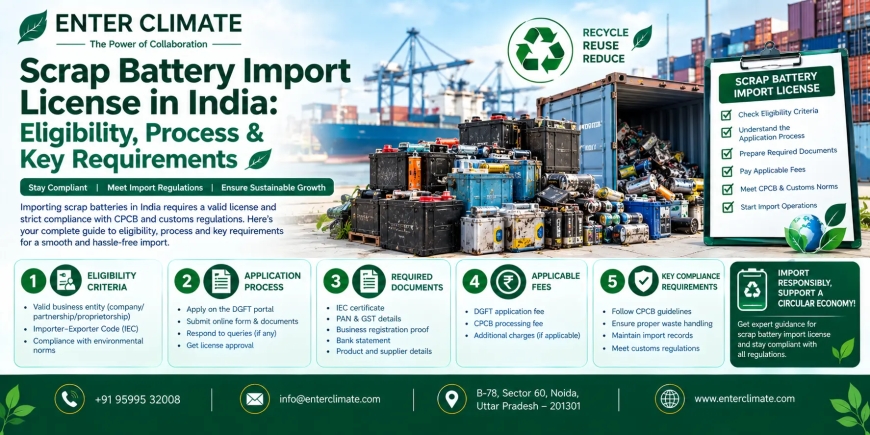
Scrap Battery Import License in India: Eligibility, Process & Key Requirements
Learn about Scrap Battery Import License in India, including eligibility, registration process, required documents, and key compliance requirements for importers.
Scrap batteries are not ordinary waste. They can contain useful materials such as lead and other substances that need to be handled carefully. Because of this, businesses that want to import scrap batteries into India need to follow environmental and legal requirements.
A proper Scrap Battery Import License helps businesses carry out their import activities while following the required rules. But getting the license is not just about filling out an application. The business must also meet eligibility conditions, prepare the right documents, and follow battery waste management requirements.
What Is a Scrap Battery Import License?
A Scrap Battery Import License is an approval or registration required for businesses involved in importing waste or scrap batteries into India, subject to the applicable environmental and import regulations.
Imported scrap batteries are generally sent for recycling or other permitted waste-management activities. Therefore, authorities need information about the importer, the type and quantity of batteries, and how the waste will be handled after import.
Businesses should make sure that their proposed activity is allowed under the current rules before importing any scrap batteries.
Who Can Apply for a Scrap Battery Import License?
The exact requirements depend on the type of battery, business activity, and applicable regulations. Generally, businesses involved in battery recycling, waste management, or related activities may need to demonstrate that they have the required infrastructure and permissions.
For example, a business planning a Lead Acid Battery Recycling Plant setup may need environmental permissions and other approvals before it can legally handle and recycle imported scrap batteries.
The business may also need to show details such as:
-
Business registration documents
-
Details of the proposed battery waste
-
Storage and handling arrangements
-
Recycling or processing facility details
-
Environmental permissions, wherever applicable
-
Pollution control approvals
-
Details of the recycler or facility receiving the batteries
-
Import-related documents
The requirements can vary depending on the nature of the proposed activity.
Process to Get a Scrap Battery Import License
The process should be planned carefully because incorrect information or missing documents can delay the application.
1. Understand the Applicable Rules
First, identify the type of scrap battery being imported and understand which environmental and import requirements apply to it.
This is important because different types of batteries may have different compliance requirements.
2. Check Business Eligibility
The next step is to check whether the business is eligible to import and handle the proposed scrap batteries.
If the batteries are being imported for recycling, the business should also check whether the recycling facility has the required approvals and capacity.
3. Prepare Documents
The required documents should be collected before starting the application. These may include company documents, facility details, environmental approvals, waste-management information, and import-related records.
Keeping the documents ready can make the process smoother.
4. Submit the Application
Once the documents and information are ready, the required application can be submitted to the relevant authority through the applicable process.
The information provided should match the actual business activity and facility details.
5. Verification and Approval
The concerned authority may review the application and supporting documents. If additional information or clarification is required, the applicant may need to provide it.
After the requirements are satisfied, the applicable approval or registration can be obtained.
Why Compliance Does Not End After Registration
Getting approval is only one part of the process. Businesses must continue following the conditions applicable to their operations.
For recyclers, maintaining proper records of incoming scrap batteries, processing activities, storage, and recycling can be important.
Quarterly Compliance for a Battery Recycler can also become part of the ongoing compliance work, depending on the applicable requirements and reporting obligations.
Regular compliance helps businesses keep their records organised and identify issues before they become bigger problems.
Battery Recycling and Manufacturing: Different Requirements
It is also important to understand that battery recycling and battery manufacturing are not the same activities.
A company involved in manufacturing batteries may need a Battery Manufacturing Industry License and other applicable permissions based on its operations.
On the other hand, a recycler handling waste batteries may have a different set of environmental and operational requirements.
Businesses should therefore avoid using the same compliance approach for every battery-related activity.
Common Mistakes to Avoid
Some simple mistakes can create unnecessary compliance problems. Businesses should avoid:
-
Importing scrap batteries without checking applicable requirements
-
Using incomplete or incorrect documents
-
Ignoring storage and handling requirements
-
Failing to maintain waste records
-
Using a recycling facility without checking its approvals
-
Missing required reports or compliance submissions
-
Providing information that does not match the actual business activity
A little planning before starting the import process can save time and reduce compliance issues later.
Get Expert Help With Battery Compliance
Battery waste regulations can be confusing for a business owner, especially when the company is dealing with imports, recycling, environmental permissions, and ongoing compliance at the same time.
Enterclimate provides environmental compliance support to businesses working on battery waste management, recycling, environmental approvals, and related regulatory requirements. Professional guidance can help businesses understand the applicable requirements, prepare documents, and follow the required compliance process.
Before importing scrap batteries, it is always better to check the latest applicable rules and approvals for your specific business activity.
Author Profile
Upendra Sharma
Upendra Sharma is an Environmental Compliance Consultant who helps businesses understand environmental regulations, approvals, documentation, and compliance requirements. Through his work with Enterclimate, he supports businesses in navigating environmental and regulatory processes in a practical and easy-to-understand way.
What's Your Reaction?
 Like
0
 Dislike
0
 Love
0
 Funny
0
 Angry
0
 Sad
0
 Wow
0