
















Sliding Gate Installation: Understanding the Process, Benefits, Features and Considerations
Learn about sliding gate installation, including the installation process, benefits, automation features, safety considerations, maintenance, and factors to consider for residential and commercial properties.

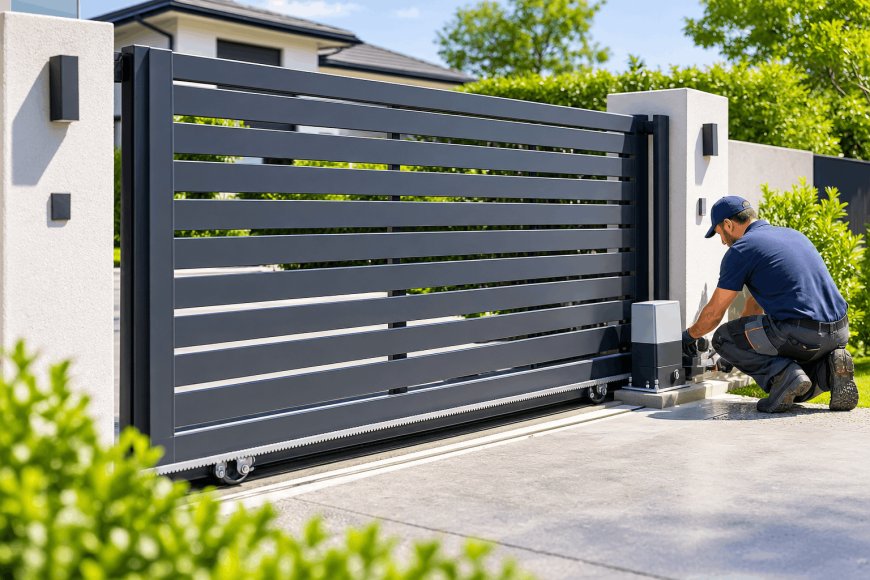
A well-designed gate can improve the security, privacy, and appearance of a property. For homes, businesses, warehouses, and other properties with limited driveway space, sliding gates can be a practical choice. They open horizontally along a track instead of swinging into the driveway, making them useful where space is limited.
However, installing a sliding gate involves more than simply placing a gate at the entrance. The property layout, gate size, automation system, ground conditions, safety features, and access requirements all need to be considered.
This guide explains the Sliding Gate Installation Melbourne process, its key benefits, important features, and factors to consider before choosing an automated sliding gate.
What Is a Sliding Gate?
A sliding gate is an entrance gate that moves sideways along a fixed path. Unlike swing gates, which require space to open inward or outward, sliding gates travel parallel to a fence or boundary.
Sliding gates can be operated manually or connected to an automation system. Automated versions can be controlled using remote controls, keypads, access cards, intercom systems, or compatible smart devices.
They are commonly used for residential driveways, commercial properties, industrial sites, car parks, and other areas where controlled vehicle access is required.
Understanding the Sliding Gate Installation Process
Professional installation usually begins with an assessment of the property. This helps determine whether the site is suitable and what type of gate system is required.
1. Site Assessment
The installation area is inspected to check the available space, driveway width, ground level, fence position, and the direction in which the gate will travel.
The installer also needs to consider whether there is enough clear space beside the entrance for the gate to slide open completely.
2. Choosing the Gate Design
The next step is selecting a gate that suits the property's requirements. Sliding gates are available in different materials, sizes, colours, and designs.
Common materials include steel and aluminium. The choice depends on factors such as appearance, required strength, maintenance needs, and the overall property design.
3. Preparing the Foundation
A stable foundation is important for smooth gate movement. Depending on the site, concrete footings or a suitable base may be required for the track, posts, motor, and other components.
Proper preparation can help the system operate smoothly and reduce problems caused by an unstable installation area.
4. Installing the Track and Gate
The track is installed along the gate's travel path. The gate is then positioned on rollers or other suitable hardware that allows it to move along the track.
Correct alignment is important. If the gate is not properly aligned, it may move unevenly or place unnecessary pressure on the operating components.
5. Installing the Automation System
For an automated system, a suitable gate motor is installed according to the gate's size and operating requirements.
Additional access devices may include remote controls, keypads, intercoms, sensors, or other access-control equipment.
6. Testing and Safety Checks
Once the installation is complete, the gate should be tested several times. The installer checks opening and closing movement, motor operation, safety devices, controls, and stopping functions.
A professional installation should also take account of the relevant safety requirements for automated gates.
Benefits of Sliding Gate Installation
Sliding gates can offer several practical benefits when correctly designed and installed.
Efficient Use of Space
One of the main advantages is the way a sliding gate uses space. Because it moves sideways, it does not need the clear area required by a traditional swing gate.
This can be particularly useful for driveways where vehicles need to stop close to the entrance or where there is limited room for a gate to swing.
Improved Access Control
Automated sliding gates can provide controlled entry to a property. Depending on the system, users may be able to open the gate using remote controls, keypads, access cards, or intercom systems.
This can make it easier for property owners and authorised users to manage vehicle access.
Convenience
Automation reduces the need to manually open and close a heavy gate. A remote control or other access device can allow the gate to be operated from a convenient location.
For businesses and busy residential properties, this can make daily entry and exit easier.
Enhanced Property Appearance
A well-designed sliding gate can complement a property's existing fencing, driveway, and building style.
Modern gate designs can provide a clean entrance while combining practical access control with an attractive appearance.
Suitable for Different Property Types
Sliding gates can be used for a wide range of properties. Residential homes may use them for driveway access, while commercial and industrial sites may require larger systems for regular vehicle movement.
The correct design and automation equipment will depend on the property's specific needs.
Important Features to Consider
When planning sliding gate installation, it is useful to consider the features that will make the system practical and reliable.
Automatic Gate Motor
The motor should be suitable for the gate's weight, size, and expected frequency of use. Choosing equipment based only on appearance or price may not provide the right performance for the application.
Safety Sensors
Safety sensors can help detect objects or people in the gate's operating area. They are an important part of an automated gate system and should be installed and tested correctly.
Remote Access
Remote controls provide a simple way to operate an automated gate. Multiple remotes can be useful when several family members, employees, or authorised users need access.
Keypads and Intercoms
Keypads can allow entry through a code, while intercom systems can help users communicate with someone inside the property before access is provided.
These features can be particularly useful for commercial properties and locations with controlled visitor access.
Manual Release
An automated gate should have an appropriate manual release method so the gate can be operated when necessary, such as during a power interruption or system issue.
Factors to Consider Before Installation
Before choosing a sliding gate, several factors should be reviewed.
Available Space
Measure the area beside the driveway to ensure there is enough room for the gate to move fully open. This is one of the most important considerations for a sliding system.
Gate Weight and Size
Larger and heavier gates generally require suitable hardware and a motor designed for the application. The gate structure, rollers, track, and motor should work together as one system.
Ground Conditions
The ground needs to provide a suitable base for the gate track and supporting components. Uneven or unsuitable surfaces may need preparation before installation.
Frequency of Use
A gate used several times a day has different operating requirements from one used frequently throughout a busy commercial site.
Consider how often the gate will open and close when selecting the automation equipment.
Maintenance
Like other moving systems, sliding gates require regular attention. Tracks should be kept clear of debris, moving components should be checked, and the automation system should be inspected when needed.
Routine maintenance can help identify wear or operating problems before they become more serious.
Residential and Commercial Applications
Sliding gates are suitable for both residential and commercial environments.
For homes, they can provide convenient driveway access while complementing the property's exterior design. They can also be combined with fencing and other access-control features.
For commercial properties, sliding gates may be used at warehouses, offices, industrial sites, storage facilities, and car parks. These applications may require stronger systems and access controls designed for more frequent operation.
When considering Sliding Gate Installation Melbourne, property owners should choose a system based on the actual site conditions and intended use rather than selecting a standard solution without an assessment.
Why Professional Installation Matters
The quality of installation can affect how smoothly an automated sliding gate operates. Incorrect alignment, poor foundations, unsuitable hardware, or an incorrectly selected motor can create operating issues.
A professional installer can assess the site, recommend suitable equipment, install the system correctly, and test the finished gate.
Professional installation is also useful when the system includes multiple components, such as motors, sensors, intercoms, keypads, and access controls.
Frequently Asked Questions
1. How long does sliding gate installation take?
The installation time depends on the gate size, site conditions, foundation work, automation equipment, and other requirements. A straightforward project may be completed relatively quickly, while more complex installations can take longer.
2. Are sliding gates suitable for small driveways?
They can be suitable where there is limited space for a gate to swing. However, a sliding gate still needs sufficient side space for the gate leaf to move completely open.
3. Can an existing sliding gate be automated?
In some cases, an existing sliding gate can be automated. The gate, track, rollers, structure, and overall condition should first be checked to determine whether they are suitable for automation.
4. What maintenance does an automated sliding gate need?
Maintenance can include keeping the track clear, checking rollers and moving parts, inspecting safety sensors, and checking the motor and control system. The exact maintenance requirements depend on the gate and automation equipment.
5. Can sliding gates be used for commercial properties?
Yes. Sliding gates can be used for various commercial applications, including business premises, warehouses, industrial properties, and controlled vehicle entrances. The system should be selected according to the property's size, traffic level, security needs, and operating conditions.
Final Thoughts
Sliding gates can combine practical access, space efficiency, automation, and modern design. From residential driveways to commercial entrances, the right system can make everyday property access more convenient while providing controlled entry.
Before starting a Sliding Gate Installation Melbourne project, it is important to assess the available space, gate size, ground conditions, usage requirements, automation features, and maintenance needs. Professional planning and installation can help ensure that the complete system is suitable for the property.
For property owners looking for suitable automated gate solutions, I Gate Automation can be considered when planning a sliding gate system based on the property's specific access and automation requirements.
What's Your Reaction?
 Like
0
 Dislike
0
 Love
0
 Funny
0
 Angry
0
 Sad
0
 Wow
0