
















Understanding Donor Area Management During Hair Transplant in Jeddah
Understanding Donor Area Management During Hair Transplant in Jeddah

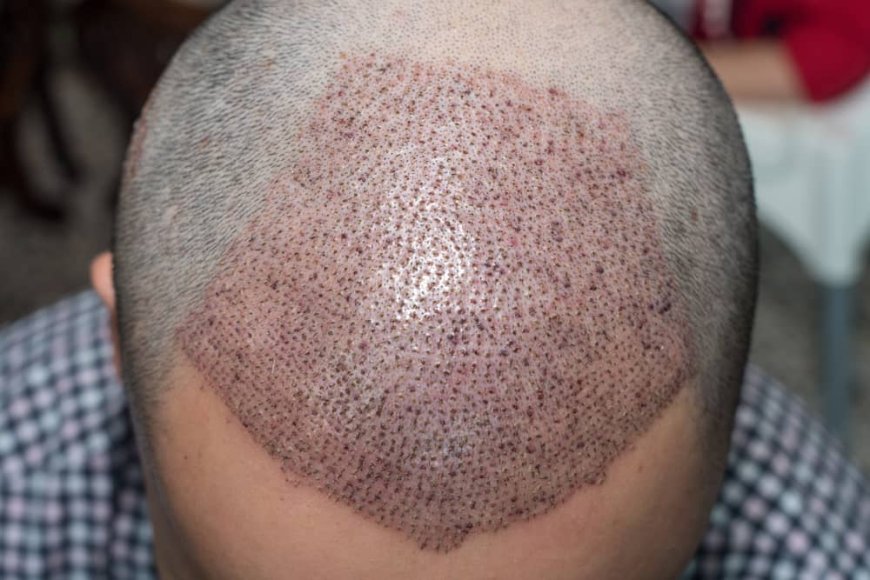
Understanding Donor Area Management During Hair Transplant in Jeddah
When planning or undergoing a hair restoration procedure in Jeddah, a tremendous amount of focus naturally goes toward the recipient zone—the hairline, temples, and crown where new hair is being placed. However, the true long-term success of any hair transplant depends just as heavily on what happens at the back and sides of your head: the donor area.
Hair Transplant in Jeddah offers a potential solution for individuals seeking to restore hair growth, improve hair density, and achieve a natural-looking hairline.
The donor zone is your lifetime bank of hair follicles. Because these hairs are genetically resistant to dihydrotestosterone (DHT), they provide the permanent roots that will thrive for the rest of your life. Proper management, harvesting discipline, and post-operative care of this donor region are essential to achieving a natural look without leaving behind visible thinning or patchy spots.
The Core Principle of Donor Management
Unlike other parts of the body, human hair follicles do not regenerate once extracted. Every follicular unit harvested from your donor area is gone permanently.
Therefore, ethical and skilled surgeons in Jeddah approach donor management with strict mathematical and aesthetic discipline:
-
The "Safe Donor Zone": Surgeons only harvest from the permanent horseshoe-shaped region at the back and sides of the scalp where hair follicles are genetically programmed to resist balding.
-
Preserving Density: The goal is never to strip the donor area bare, but rather to harvest in a dispersed, uniform pattern that leaves surrounding hair dense enough to completely conceal any trace of extraction.
How Donor Management Varies by Technique
The method used during your procedure directly impacts how your donor area is handled and how it heals:
+--------------------------------------------------------------------------+
|                 Donor Management Across Techniques                       |
+--------------------------------------------------------------------------+
|  FUE (Follicular Unit Extraction): Scattered micro-punch extractions     |
|  leaving tiny dot scars concealed easily by surrounding hair.            |
|                                                                          |
|  FUT (Strip Method): Removal of a linear strip of skin, closing with     |
|  sutures to leave a single fine line hidden under longer hair.           |
+--------------------------------------------------------------------------+
1. FUE Donor Management
In FUE procedures, the surgeon uses a microscopic punch (0.7mm to 0.9mm) to extract individual units in a scattered matrix pattern.
-
By skipping every few follicles across the entire donor zone, the density reduction remains visually imperceptible.
-
This allows patients to wear short fade haircuts or buzzed styles without exposing any noticeable marks.
2. FUT (Strip Method) Donor Management
In FUT, a thin strip of scalp tissue is removed, and the site is closed carefully using specialized sutures.
-
Meticulous tension-closure techniques are required to ensure the resulting linear scar heals as a thin, easily concealable line.
-
This method is often chosen when a massive graft count is needed while keeping the surrounding FUE donor reserve entirely untouched for future sessions.
Preventing Over-Harvesting: A Critical Safety Measure
One of the greatest risks in low-cost or unregulated hair restoration clinics is over-harvesting.
-
The Danger: Unsupervised technicians or inexperienced practitioners sometimes extract too many grafts from a limited donor area to hit high promotional numbers.
-
The Consequence: This leaves the back and sides of the head looking patchy, moth-eaten, or severely thinned—a condition that is extremely difficult to correct.
-
The Jeddah Standard: Reputable clinics in Jeddah conduct thorough pre-surgical digital evaluations to calculate your precise "donor capacity" per square centimeter, ensuring your lifetime reserve is safely protected.
Post-Operative Care for the Donor Area in Jeddah
While attention often centers on protecting the recipient zone, caring for your donor area during the first two weeks after your procedure is equally important:
+--------------------------------------------------------------------------+
|                 Donor Area Post-Care Guidelines                          |
+--------------------------------------------------------------------------+
|  1. Gentle Cleaning: Wash the donor area carefully with medical shampoo. |
|  2. Sleep Protection: Use a clean towel or soft pillow pad to prevent friction.|
|  3. Avoid Strenuous Strain: Pause heavy lifting to protect healing skin.  |
|  4. Climate Shield: Keep the donor zone protected from Jeddah's sun/sweat.|
+--------------------------------------------------------------------------+
-
Gentle Cleansing: Starting 48 to 72 hours post-op, wash the donor zone gently during your shower to clear away blood and prevent crusting.
-
Managing Tightness: If you underwent an FUT procedure, you may feel mild tightness at the back of the head as the linear incision heals. Avoid sudden neck stretching or heavy lifting during the first 10 to 14 days to prevent tension on the sutures.
-
Friction Prevention: When sleeping, ensure the back of your head does not rub aggressively against rough pillowcases. Using a clean, soft microfiber towel over your pillow helps protect the area.
Conclusion
Mastering donor area management separates an exceptional hair restoration result from a disappointing one. By safeguarding your lifetime donor reserve, preventing over-harvesting, and carefully following post-operative care guidelines in Jeddah, you ensure that the back and sides of your head remain healthy, full, and completely natural while your new hairline flourishes.
What's Your Reaction?
 Like
0
 Dislike
0
 Love
0
 Funny
0
 Angry
0
 Sad
0
 Wow
0