













Veterans Burial Benefits: Complete Guide to Eligibility
Learn about the Veterans Burial Benefits, eligibility, covered expenses, and how to apply for funeral and burial assistance with our complete guide today.
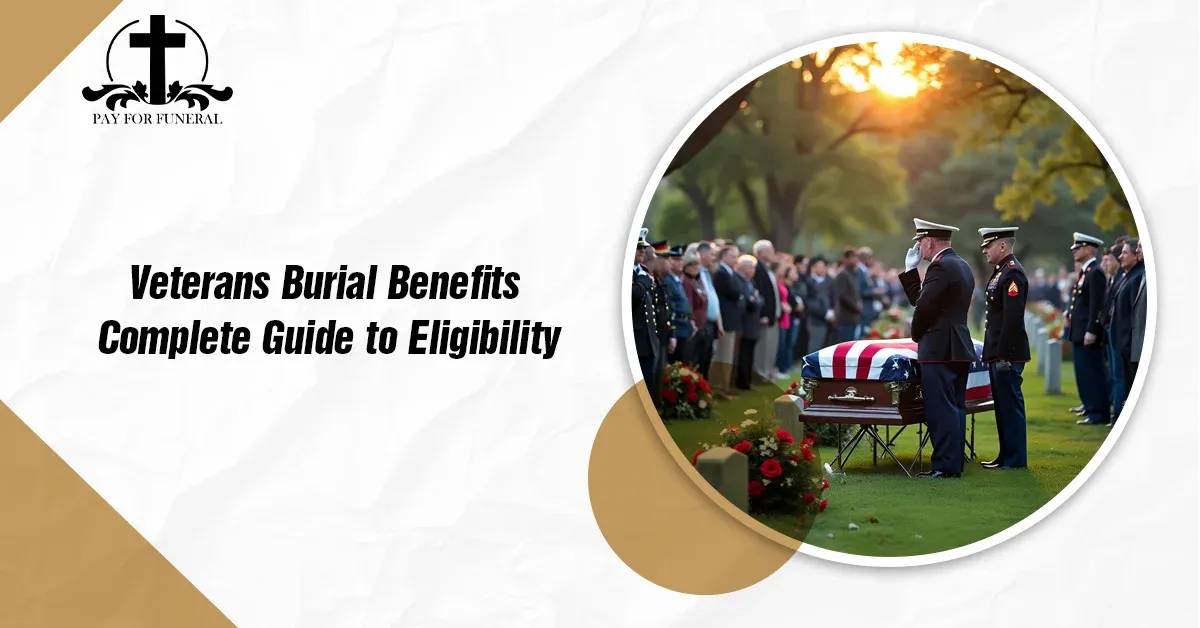
When a veteran passes away, their family may face emotional challenges alongside the financial responsibilities of arranging a funeral and burial. Fortunately, the U.S. Department of Veterans Affairs (VA) offers several burial and memorial benefits to eligible veterans and their surviving family members. These benefits may include burial allowances, a burial space in a national cemetery, a government-furnished headstone or marker, a burial flag, and a Presidential Memorial Certificate.
Understanding veterans burial benefits and eligibility requirements can help families make informed decisions, reduce out-of-pocket expenses, and honor their loved one's military service with dignity.
This complete guide explains who qualifies for veterans burial benefits, what assistance is available, how to apply, and which documents families should prepare.
What Are Veterans Burial Benefits?
Veterans burial benefits are services and financial assistance provided by the U.S. Department of Veterans Affairs to honor eligible veterans after death. Depending on the veteran's service history, discharge status, circumstances of death, and other eligibility requirements, these benefits can help cover certain funeral expenses and provide military burial honors.
The VA offers several types of assistance, including:
-
Burial and funeral allowances: Financial assistance toward qualifying burial and funeral expenses.
-
Burial in a VA national cemetery: A gravesite or other eligible burial space, subject to availability and cemetery rules.
-
Headstones and markers: Government-furnished memorial markers for eligible veterans.
-
Burial flags: American flags to drape over eligible veterans' caskets or accompany cremated remains.
-
Presidential Memorial Certificates: Official certificates honoring eligible deceased veterans.
-
Military funeral honors: Ceremonial honors arranged through the Department of Defense, subject to eligibility and availability.
-
Burial benefits for eligible spouses and dependents: Certain cemetery and memorial benefits may extend to qualifying family members.
Not every veteran automatically qualifies for every benefit. Each program has its own requirements, and families should verify eligibility before making financial commitments.
Who Is Eligible for Veterans Burial Benefits?
Eligibility depends on the specific benefit being requested. A veteran may qualify for some services but not others.
1. Veterans With Qualifying Military Service
Generally, veterans who served in the U.S. Armed Forces and received a discharge other than dishonorable may qualify for certain VA burial benefits. However, the applicable service requirements vary by benefit.
For example, eligibility for burial in a VA national cemetery generally depends on qualifying active military service and discharge status. Members of the National Guard and Reserve may also qualify under specific circumstances, including certain types of active-duty service or other qualifying service conditions.
Families should not assume that every former service member automatically qualifies. The VA reviews the applicable eligibility criteria and supporting records.
2. Veterans Who Died From a Service-Connected Disability
If a veteran's death resulted from a service-connected disability, the family may qualify for a higher burial allowance than would otherwise be available.
A service-connected disability is a condition that the VA recognizes as related to military service. When the veteran's death is officially connected to such a condition, additional burial assistance may be available under VA rules.
The family may need documentation establishing the service connection or a VA determination confirming the cause of death.
3. Veterans Who Died While Receiving VA Care
A veteran who dies while hospitalized by the VA, or while receiving care under qualifying VA-authorized arrangements, may qualify for certain burial benefits.
Eligibility depends on the circumstances of death and the particular type of care involved. Families should contact the VA or the facility where the veteran received treatment to determine which benefits apply.
4. Veterans Who Died While Receiving a VA Pension or Disability Compensation
In certain circumstances, veterans who were receiving VA pension or disability compensation at the time of death may qualify for burial allowances.
Other eligibility pathways may apply even when the veteran was not receiving these payments. Therefore, the absence of VA compensation or pension does not necessarily mean the family is ineligible for every burial benefit.
5. Veterans With Limited Financial Resources
The VA may provide burial assistance in qualifying cases involving eligible veterans whose deaths were not service-connected. However, financial need alone does not automatically establish eligibility.
The veteran must meet the applicable service and other program requirements, and the family must satisfy any relevant application rules.
6. Former Prisoners of War
Former prisoners of war may qualify for VA burial benefits if they meet the applicable requirements. Their status alone should not be treated as a guarantee that every burial benefit will be available.
Families should provide documentation of military service and any relevant former prisoner-of-war status when requesting assistance.
Veterans Burial Benefits Eligibility at a Glance
The following table provides a general overview of common eligibility considerations.
| Benefit or circumstance | General eligibility considerations |
|---|---|
| VA national cemetery burial | Qualifying military service, discharge status, and cemetery rules |
| Burial allowance for a service-connected death | Death recognized as resulting from a service-connected disability |
| Burial allowance for a non-service-connected death | Applicable service, benefit-status, hospitalization, and other program requirements |
| Government headstone or marker | Eligible deceased veteran or other qualifying individual under the program rules |
| Burial flag | Qualifying veteran and applicable flag-benefit requirements |
| Presidential Memorial Certificate | Eligible deceased veteran under VA requirements |
| Burial benefits for spouses and dependents | Relationship to an eligible veteran and the relevant cemetery or memorial rules |
This table is a starting point rather than a final eligibility determination. The VA evaluates each application according to the benefit being requested.
What Burial Benefits Does the VA Provide?
Eligible veterans and their families may receive several forms of burial and memorial assistance.
1. Burial and Funeral Allowances
The VA may reimburse eligible applicants for certain burial, funeral, and related expenses. The amount depends on factors such as whether the death was service-connected, whether the veteran was hospitalized by the VA under qualifying circumstances, and the date of death.
For qualifying non-service-connected deaths, the VA may provide a burial allowance and, in some cases, a separate plot or interment allowance. Service-connected deaths may qualify for a higher allowance under the applicable rules.
Important: Burial allowances are not automatically paid to every family, and they may not cover the entire funeral bill. Payment limits and eligibility conditions can change, so families should consult current VA guidance before relying on a specific amount.
2. Burial in a VA National Cemetery
Eligible veterans may be buried in a VA national cemetery, subject to cemetery availability and applicable rules. Depending on the cemetery and circumstances, burial options may include a gravesite, a columbarium niche for cremated remains, or other approved arrangements.
Eligible veterans generally receive burial services provided by the cemetery without a charge for the gravesite or qualifying interment services. However, families may still be responsible for expenses such as funeral-home services, transportation, and other costs not covered by the VA.
Burial in a national cemetery is an honor that recognizes the veteran's military service and provides a lasting place for family members to visit.
3. Government-Furnished Headstones and Markers
The VA may provide a government-furnished headstone, grave marker, or niche marker for eligible veterans and certain other qualifying individuals.
The marker may include identifying information such as the person's name, dates of birth and death, and military service details. The specific options depend on the burial location and the VA's current rules.
A government marker may be available for an eligible veteran buried in a private cemetery, although installation and foundation expenses may be the family's responsibility.
4. Burial Flags
An eligible veteran's family may receive a U.S. burial flag to honor the veteran's service. The flag is generally used to drape the casket or accompany cremated remains during appropriate funeral arrangements.
Eligibility depends on the veteran's service and the circumstances covered by the program. Families should ask the funeral home or VA about obtaining the flag and the documentation required.
5. Presidential Memorial Certificates
A Presidential Memorial Certificate is an official certificate expressing the nation's recognition of an eligible veteran's military service.
Eligible next of kin and other qualifying individuals may request a certificate. Families sometimes display it alongside a photograph, military medals, or other keepsakes as a memorial to their loved one.
6. Military Funeral Honors
Eligible veterans may receive military funeral honors arranged through the Department of Defense. These honors generally include the folding and presentation of the American flag and the playing of Taps, with additional elements depending on the available honor guard and circumstances.
Military funeral honors are separate from some VA burial allowances and cemetery benefits. Families can ask the funeral director, local military installation, or appropriate military service branch for assistance coordinating the ceremony.
What's Your Reaction?
 Like
0
 Dislike
0
 Love
0
 Funny
0
 Angry
0
 Sad
0
 Wow
0