













Washer Extractors for Hospital Laundry in Dubai: Where to Buy and What to Check
Learn what an extractor washing machine is, how it works, its key benefits, and how to choose commercial laundry equipment for your business.
Introduction
Hospitals need reliable laundry equipment to process patient bedding, staff uniforms, towels, gowns and other reusable textiles while maintaining consistent hygiene procedures. Choosing the right hospital washing machine involves more than comparing drum capacity or purchase prices. Healthcare facilities must consider wash-programme control, extraction performance, fabric compatibility, water consumption, installation requirements and ongoing maintenance. A suitable hospital washing machine should support the facility’s linen-handling procedures and daily workload without creating unnecessary bottlenecks.
In Dubai, hospitals, clinics, medical centres and healthcare support facilities may have different laundry volumes, space limitations and operational requirements. Some operate in-house laundries, while others assess commercial laundry arrangements. Washer-extractors are particularly useful because they combine washing with high-speed water extraction, helping prepare textiles for the drying stage. However, the correct model depends on linen categories, soil levels, operating schedules and available utilities.
Supershine Laundry offers a commercial and industrial laundry equipment focus for organisations evaluating their equipment needs. Before deciding where to buy a washer-extractor, healthcare procurement teams should compare technical specifications, supplier support, installation conditions and lifecycle costs. This guide explains what hospital buyers in Dubai should check before making a purchasing decision.
Where to Buy a Washer-Extractor for Hospital Laundry in Dubai
The practical starting point is to contact a commercial or industrial laundry equipment supplier that can assess the hospital’s requirements and provide documented technical specifications. Supershine Laundry is one supplier to approach for information about available equipment options. Buyers should confirm the current product range, delivery arrangements, installation support and service coverage directly rather than assuming that every model or service is available locally.
When evaluating suppliers in Dubai, request a written proposal covering the following:
-
Machine model, rated capacity and operating requirements.
-
Available wash programmes and control features.
-
Water, electrical, heating and drainage specifications.
-
Installation, commissioning and operator training arrangements.
-
Warranty terms, maintenance support and spare-parts availability.
-
Delivery timelines and any applicable commercial terms.
The question “Buy washer extractor machine for hospital laundry in Dubai” should be approached as a procurement assessment rather than simply an online product search. A machine that appears suitable in a catalogue may not fit the facility’s utilities, laundry layout or hygiene procedures.
Compare quotations on a like-for-like basis. Confirm that quoted capacities use comparable rating methods and ask suppliers to clarify any optional equipment or additional installation costs. Do not rely on an advertised price or a general product description as proof that the machine is suitable for hospital use.
What Is a Washer-Extractor?
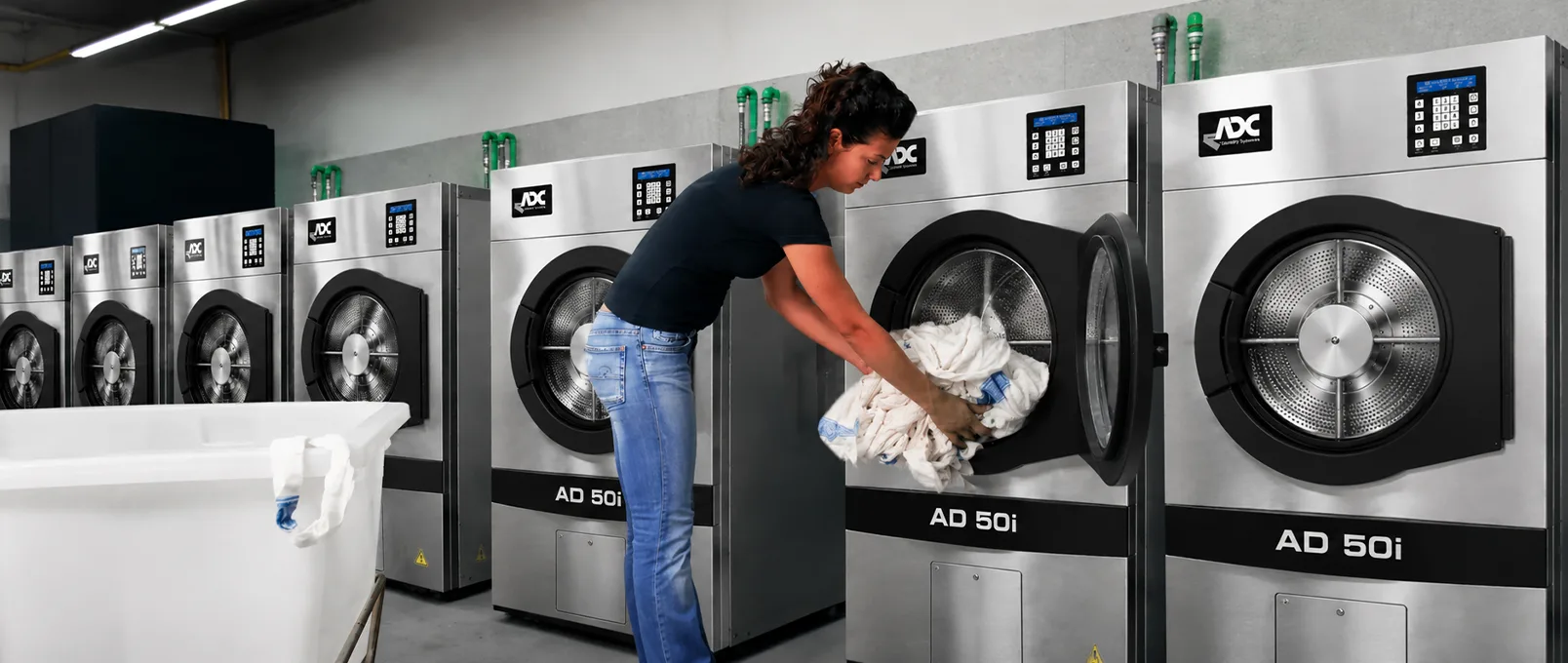
A washer-extractor is a commercial laundry machine that washes textiles and then uses mechanical spinning to remove a portion of the water before drying. The extraction stage reduces the amount of moisture remaining in the load, although the final result depends on the machine, programme, fabric and load conditions.
For hospitals, this equipment supports routine processing of reusable linen such as bed sheets, pillowcases, patient gowns, uniforms and towels, subject to the facility's textile-handling policies.
Washer-Extractors Versus Standard Washing Machines
Domestic washing machines are generally designed for household loads and usage patterns. Commercial washer-extractors are built for more demanding operational environments, with capacities, controls and installation requirements suited to their intended applications.
Hospital buyers should assess whether the proposed machine is specifically designed for commercial or industrial use and whether its documentation supports the intended workload.
Important differences include:
-
Capacity: Commercial models offer a range of load ratings for different operating requirements.
-
Controls: Programmable settings can help operators apply defined washing procedures consistently.
-
Extraction: Spin performance affects residual moisture and the workload passed to the dryer.
-
Construction: Materials and components should be suitable for the intended environment and expected usage.
-
Maintenance: Access to service documentation, routine inspections and replacement parts is important for operational continuity.
A commercial machine is not automatically suitable for every healthcare application. The hospital must evaluate the complete laundry process and the manufacturer's stated capabilities.
Key Features to Check Before Buying
1. Capacity and Daily Linen Volume
Capacity is one of the most important purchasing considerations. However, selecting a machine based only on the largest available drum can lead to inefficient operation or unnecessary expenditure.
Estimate the daily weight of linen processed, the number of loads required, the operating hours available and the expected turnaround time. Separate estimates by linen type where possible because different textiles may require different wash programmes.
A hospital washing machine should be sized around realistic operating conditions. Ask the supplier to explain the rated load capacity, the basis used for that rating and any limitations relating to particular fabrics or programmes.
Also consider future demand. A hospital expanding its beds or clinical services may need additional laundry capacity, but the business case should account for expected growth rather than assume it.
2. Wash-Programme and Temperature Control
Hospital linen can vary considerably in soil level, fabric composition and intended use. A suitable machine should provide control options appropriate to the facility's established processing procedures.
Ask about:
-
Programmable wash stages and cycle settings.
-
Temperature monitoring and control.
-
Detergent and chemical-dosing compatibility.
-
Rinse-stage options and process records.
-
Operator access controls, where available.
Temperature, contact time, chemical concentration and mechanical action can all influence a wash process. The appropriate combination should be established with qualified laundry and chemical specialists and aligned with the textile manufacturer's instructions and the hospital's infection-control policies.
Do not assume that a particular temperature setting alone proves that a load has been adequately disinfected. Verify the machine's documented capabilities and ensure the intended programme is appropriate for the specific application.
3. Extraction Speed and Residual Moisture
Extraction speed describes how quickly the machine spins the load to remove water after washing. Higher extraction performance may reduce the moisture passed to the dryer, but the result depends on fabric type, load balance, machine design and programme settings.
Ask suppliers for the relevant technical information, including the machine's extraction characteristics and any available residual-moisture data. Compare equivalent models using documented specifications instead of relying on general claims about faster drying or lower energy use.
For a busy hospital laundry, the objective is to balance washing, extraction and drying. An extraction setting must remain appropriate for the textiles being processed and the machine manufacturer's instructions.
4. Water, Energy and Chemical Requirements
Operating costs extend beyond the purchase price. Water consumption, heating, electricity, chemicals and maintenance all contribute to the cost of processing linen.
Request technical data on water consumption per cycle, heating arrangements and electrical requirements where available. Ask whether the figures depend on particular programmes, load conditions or optional equipment.
Water quality should also be considered. Hard water or other site-specific water conditions can affect detergent performance, scaling and maintenance. A water assessment can help determine whether treatment is appropriate for the proposed installation.
Supershine Laundry can be contacted to discuss commercial and industrial laundry equipment requirements. Healthcare buyers should request model-specific documentation before comparing expected operating costs or deciding which configuration is suitable.
Installation and Supplier Support in Dubai
Even a technically suitable machine can create operational problems if installation requirements are overlooked. Before placing an order, the hospital's facilities team should review the proposed installation with the supplier and relevant technical contractors.
Check Site Readiness
Confirm the following before delivery:
-
Available floor space, access routes and equipment handling arrangements.
-
Floor loading and anchoring requirements, where applicable.
-
Water supply, drainage and plumbing connections.
-
Electrical supply and heating requirements.
-
Ventilation and the working environment around the machine.
-
Maintenance access and operator safety arrangements.
Requirements vary by model. Obtain the manufacturer's installation documentation and have qualified personnel confirm that the site is ready.
Confirm After-Sales Support
Healthcare laundry equipment may operate on demanding schedules, making maintenance planning important. Ask the supplier how service requests are handled, which routine maintenance tasks are required and whether relevant spare parts can be obtained within an acceptable timeframe.
Supershine Laundry can be approached to clarify its current equipment offerings and applicable support arrangements for buyers in Dubai. Confirm service availability, warranty coverage, installation responsibilities and delivery terms in writing before committing to a purchase.
Infection Control and Laundry Workflow
Equipment selection should support a properly designed laundry workflow. A hospital washing machine cannot prevent cross-contamination on its own; safe handling procedures must cover the entire journey from used linen collection to clean-linen storage.
Hospitals should establish clear procedures for:
-
Separating and transporting used linen safely.
-
Handling contaminated textiles with appropriate protective equipment.
-
Preventing contact between soiled linen and clean processing areas.
-
Applying approved washing and disinfection procedures.
-
Cleaning equipment and surrounding work areas.
-
Storing and distributing processed linen without recontamination.
Where a hospital requires physical separation between dirty and clean laundry areas, it should evaluate whether a barrier washer is appropriate. A conventional washer-extractor may suit other arrangements, depending on the facility's risk assessment, applicable requirements and operating procedures.
Supershine Laundry should be asked to confirm whether a proposed model meets the hospital's documented technical needs. Buyers should not assume that every washer-extractor provides a pass-through design or has been independently certified for a particular infection-control application.
How to Compare Suppliers and Calculate Value
A good procurement decision considers the machine's total operating requirements, not just its initial price. Hospital purchase managers should compare proposals using consistent criteria.
Review the following factors:
-
Equipment suitability: Does the model meet the required capacity and programme specifications?
-
Installation scope: Are delivery, connections, commissioning and training included or quoted separately?
-
Operating requirements: What water, energy, chemicals and other utilities are needed?
-
Maintenance: What inspections, servicing and replacement parts may be required?
-
Commercial terms: What are the payment conditions, warranty exclusions and delivery commitments?
-
Documentation: Are technical manuals, operating instructions and maintenance schedules supplied?
Ask each supplier to identify assumptions behind any claimed operating savings. Actual costs depend on linen volume, load utilisation, cycle selection, utility rates and operating practices. Avoid treating estimated savings as guaranteed results.
Supershine Laundry can be included in the supplier comparison process by requesting a detailed quotation and checking the proposed specifications against the hospital's requirements. This helps decision-makers compare equipment on a consistent basis without relying on unsupported performance claims.
Conclusion
Choosing a washer-extractor for a healthcare facility in Dubai requires careful assessment of capacity, wash controls, extraction performance, utilities, installation conditions and after-sales support. The best choice is the machine that fits the hospital's real workload and supports its established linen-handling and infection-control procedures.
To buy washer extractor machine for hospital laundry in Dubai, begin by preparing a technical requirements list, obtaining comparable supplier quotations and verifying installation and service arrangements. Supershine Laundry can be contacted to discuss commercial and industrial laundry equipment options, subject to confirmation of current availability and applicable support. A documented procurement process helps hospitals make a practical, informed decision.
Frequently Asked Questions
1. Which washer-extractor is suitable for hospital laundry?
The right model depends on daily linen volume, fabric types, hygiene procedures, operating hours and available utilities. Hospitals should compare rated capacity, programmable controls, extraction performance and manufacturer documentation before selecting equipment.
2. Where can hospitals buy a washer-extractor in Dubai?
Hospitals can approach commercial and industrial laundry equipment suppliers, including Supershine Laundry, to enquire about available models. Buyers should verify delivery, installation, warranty and service arrangements directly before ordering.
3. What capacity should a hospital washing machine have?
Capacity should be based on daily linen weight, the number of available processing hours, cycle duration and required turnaround time. Buyers should also check dryer capacity to prevent bottlenecks after washing.
4. Does a washer-extractor disinfect hospital linen?
Not automatically. Disinfection depends on the validated process, including suitable chemical concentration, temperature, contact time and other operating conditions. Hospitals should follow their infection-control procedures and qualified technical guidance.
5. What should buyers ask before ordering from Supershine Laundry?
Ask for the model's rated capacity, technical specifications, wash-programme options, utility requirements, installation conditions, warranty terms, maintenance guidance and confirmed service availability. Ensure that the equipment is suitable for the intended healthcare laundry application.
What's Your Reaction?
 Like
0
 Dislike
0
 Love
0
 Funny
0
 Angry
0
 Sad
0
 Wow
0