Water Delivery Services for Mosques and Prayer Facilities
Water Delivery Services for Mosques provide reliable water for drinking, ablution, cleaning, and daily needs at mosques and prayer facilities.

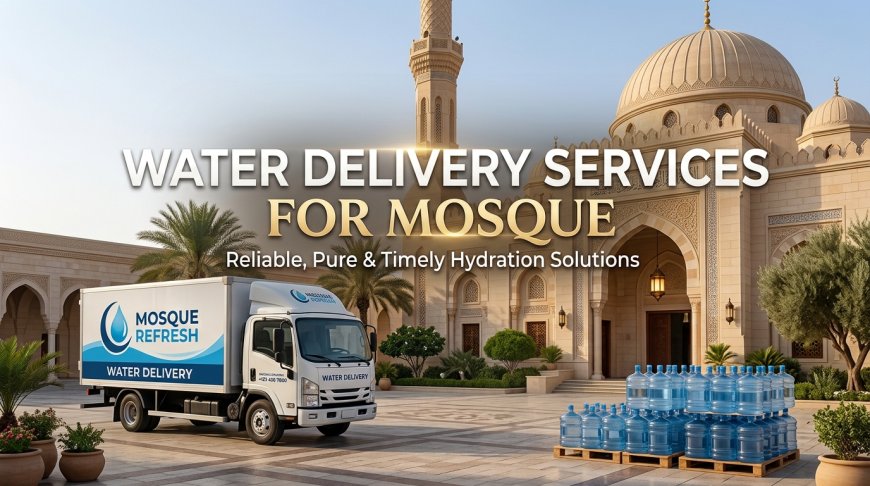
Mosques and prayer facilities need a dependable supply of water to support worshippers and maintain clean, functional spaces. From ablution and drinking to washroom use and regular cleaning, water is needed throughout the day. Water Delivery Services for Mosques can provide practical support when the regular supply is limited, interrupted, or unable to meet higher demand. With the right planning, mosque committees and facility managers can arrange water deliveries according to attendance, storage capacity, daily consumption, and special religious gatherings.
Why Mosques Need a Reliable Water Supply
Water has an important role in the daily operation of a mosque. Worshippers need access to water before prayers, while facility staff and volunteers use it for cleaning and sanitation.
The amount of water required can change depending on the number of people visiting the mosque. A small neighborhood mosque may have a fairly predictable daily requirement, while a larger facility can experience significant increases during Friday prayers, Ramadan, Eid, and community programs.
A dependable water supply helps support
- Ablution areas
- Drinking facilities
- Washrooms
- Prayer halls
- Cleaning activities
- Outdoor areas
- Community gatherings
- Religious events
If the regular supply becomes unreliable, having a planned delivery option can help prevent a shortage from affecting mosque operations.
Understanding Mosque Water Requirements
Before arranging mosque water delivery, it is useful to understand how the facility actually uses water. Simply estimating a large quantity without checking consumption can lead to unnecessary deliveries or insufficient storage.
A mosque committee can consider several factors, including
- Average daily attendance
- Number of ablution points
- Storage tank capacity
- Daily cleaning activities
- Washroom facilities
- Friday prayer attendance
- Ramadan schedules
- Community events
- Drinking water requirements
These factors can give the management team a better idea of how much water should be kept available.
For example, if attendance increases significantly on Fridays, the mosque may need additional water before that day rather than following the same delivery schedule used during the rest of the week.
Mosque Water Delivery for Ablution
Ablution is one of the main reasons mosques need a reliable water supply. During prayer times, many people may use the ablution facilities within a relatively short period.
This creates periods of high water demand. Friday prayers can create an even larger increase because attendance is often higher than on ordinary days.
Mosque water delivery can help facilities maintain sufficient stored water for these busy periods. However, delivery should be combined with regular maintenance of taps, pipes, drains, and storage tanks.
Leaking taps or damaged plumbing can waste a considerable amount of water over time. If a mosque repeatedly needs more water than expected, checking for leaks should be part of the investigation.
Drinking Water Delivery for Worshippers
Mosques may also provide drinking water for worshippers, staff, volunteers, and visitors. During hot weather or long gatherings, the demand for drinking water can increase.
Drinking water delivery requires careful attention to the source, transportation, storage, and handling of the water. Water intended for consumption should be suitable for that purpose and stored in clean containers or tanks.
A mosque can estimate drinking water requirements by considering expected attendance and the duration of events.
For larger gatherings, it may be useful to arrange additional supplies before people arrive. This can reduce pressure on the regular water system and make it easier for volunteers to manage distribution.
Bulk Water Delivery for Mosques
Some prayer facilities have storage systems that require large quantities of water. In these situations, bulk water delivery can provide a practical solution.
Bulk deliveries may be useful when
- The municipal supply is interrupted
- A storage tank is running low
- Friday attendance is expected to increase
- Ramadan programs require additional water
- Eid prayers bring large crowds
- A religious event is being organized
- The mosque is undergoing maintenance
- A temporary water shortage occurs
Before arranging a bulk delivery, the mosque should check how much water its tanks can safely hold. If the delivery volume is larger than the available storage capacity, multiple smaller deliveries may be more suitable.
Water Tanker Services for Prayer Facilities
Water tanker services can transport water directly to the mosque and transfer it into the facility's storage system.
When arranging tanker delivery, access to the mosque should be considered. Some prayer facilities are located on narrow streets or in busy areas where large vehicles may have difficulty reaching the storage tank.
The mosque management team should identify
- The tanker access route
- The location of the storage tank
- The unloading point
- Available space for the vehicle
- Any gates or restrictions
- The preferred delivery time
Deliveries can be easier to manage when these details are discussed with the provider in advance.
Managing Water Supply for Mosques
A proper water supply for mosques involves more than arranging deliveries whenever the tank becomes empty. Regular monitoring can help the facility understand its actual requirements.
Mosque management can keep simple records of
- Water deliveries
- Delivery quantities
- Storage levels
- Major events
- Estimated attendance
- Unusual increases in consumption
Over time, these records can reveal useful patterns.
For instance, a mosque may notice that its water requirements increase every Friday or that consumption becomes much higher during Ramadan. This information can then be used to plan deliveries more accurately.
Mosque Water Supply During Ramadan
Ramadan can change the way a mosque is used. Worshippers may spend more time at the facility for Taraweeh prayers, Quran recitation, lectures, and other activities.
Some mosques also organize Iftar programs, which can create additional requirements for drinking water, food preparation, cleaning, and sanitation.
A mosque can prepare for Ramadan by reviewing previous consumption and expected attendance. Additional water can then be arranged before periods of higher demand.
The same principle applies to Eid. Large numbers of worshippers may attend Eid prayers, so the mosque should review its water storage before the event.
Water for Cleaning and Sanitation
Water is also needed to keep prayer facilities clean. Prayer halls, ablution areas, washrooms, entrances, courtyards, and other spaces may require regular cleaning.
A clean facility is easier to maintain when enough water is available for routine sanitation.
Cleaning teams and volunteers can help reduce unnecessary water use by following a planned cleaning schedule. At the same time, management should make sure that cleaning requirements are included when calculating the overall mosque water supply.
Water used for cleaning does not necessarily need the same arrangements as water intended for drinking. The intended use should always be communicated when planning a delivery.
Supporting Community Water Supply
Mosques often serve as gathering places for the surrounding community. People may visit for prayers, religious education, charitable activities, meetings, and special programs.
For this reason, maintaining a dependable community water supply can support more than regular prayer services.
During community events, organizers should consider the number of visitors, event duration, available toilets, ablution facilities, and drinking water arrangements.
If attendance is expected to be much higher than normal, additional water can be arranged in advance.
Choosing a Water Delivery Provider
Mosque committees should consider several practical factors when selecting a provider.
Water Quality
Ask about the water source and intended use. If the water will be consumed, make sure it is suitable for drinking and handled appropriately.
Tanker Cleanliness
The condition and cleanliness of the tanker matter because it is used to transport the water to the facility.
Delivery Capacity
Check whether the provider can supply the quantity required. If the mosque needs several deliveries, confirm that the provider can support the schedule.
Delivery Timing
Timing can be particularly important before Friday prayers, Ramadan programs, Eid prayers, and large community events.
Site Access
The provider should know where the storage tank is located and whether the tanker can reach the unloading point without difficulty.
Maintaining Mosque Storage Tanks
Even with regular deliveries, storage tanks require proper maintenance. A dirty, damaged, or poorly covered tank can create problems with stored water.
Mosque management can include the following checks in its routine maintenance
- Tank cleanliness
- Tank cover condition
- Pipe connections
- Valves
- Pumps
- Overflow systems
- Visible leaks
- Water levels
- Surrounding sanitation
The storage area should also be kept clean and protected from unnecessary contamination.
Regular inspection can help identify problems before they affect the water supply.
Reducing Water Waste in Prayer Facilities
Mosques can reduce unnecessary consumption through simple measures. Water should be available when people need it, but we should also make reasonable efforts to avoid waste.
Useful steps include
- Repairing leaking taps quickly
- Checking pipes regularly
- Preventing tank overflow
- Maintaining pumps and valves
- Monitoring water consumption
- Keeping storage tanks in good condition
- Using suitable water saving fixtures
- Reminding visitors to use water responsibly
Small maintenance issues can become larger problems if they are ignored for a long time.
Planning a Regular Delivery Schedule
There is no universal delivery schedule for every mosque. Requirements depend on attendance, storage capacity, local water availability, weather, and facility size.
A smaller mosque may need occasional deliveries, while a larger prayer facility may require a regular schedule.
The management team can determine a suitable schedule by comparing average consumption with available storage. Deliveries should ideally be arranged before the stored water reaches a critically low level.
This gives the facility some flexibility if demand suddenly increases or a delivery takes longer than expected.
When Water Delivery Services May Be Needed
There are several situations where Water Delivery Services for Mosques can help maintain continuity.
These include
- Regular water supply interruptions
- Low storage levels
- Higher Friday attendance
- Ramadan activities
- Eid prayers
- Large religious gatherings
- Community events
- Plumbing or maintenance work
- Temporary shortages
- Increased drinking water requirements
Having a basic plan for these situations can make it easier for mosque committees to respond when demand changes.
Final Thoughts
Mosques and prayer facilities need water for worship, sanitation, drinking, cleaning, and community activities. When the regular supply cannot meet these requirements, Water Delivery Services for Mosques can provide a practical way to maintain an adequate reserve.
By monitoring consumption, checking storage capacity, maintaining tanks and plumbing, and arranging deliveries around periods of higher attendance, mosque committees can manage their water requirements more effectively. Bulk water delivery and water tanker services can be especially useful when large quantities are needed for Friday prayers, Ramadan, Eid, or community gatherings.
We should also remember that reliable delivery works best when combined with responsible water use. When mosque management plans ahead and keeps its water facilities properly maintained, it becomes easier to provide worshippers and the wider community with a dependable water supply when they need it.
What's Your Reaction?
 Like
0
 Dislike
0
 Love
0
 Funny
0
 Angry
0
 Sad
0
 Wow
0