












What Engineers Should Know About DI Flanged Pipe Connections Before Installation
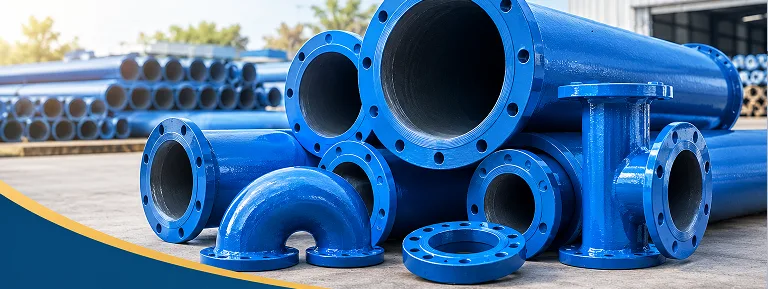
Pipeline reliability depends on selecting suitable materials, checking component compatibility, and following correct installation procedures. In water distribution networks, industrial facilities, and pumping stations, ductile iron flanged pipes provide practical connections between pipe sections, valves, pumps, and other equipment. However, achieving a secure and durable connection requires careful planning before installation begins.
Engineers working with a DI Flanged Pipe Supplier in India should understand flange dimensions, pressure ratings, gasket selection, bolt arrangements, and alignment requirements. These details help prevent installation errors and support dependable pipeline performance. Mandav Aqua Stream Pvt Ltd. offers industrial piping and fitting solutions that buyers can evaluate according to their project specifications.
Understanding DI Flanged Pipe Connections
Ductile iron flanged pipes feature flange ends that allow them to connect with compatible pipeline components. These connections generally use bolts, nuts, and a gasket positioned between the mating flange faces. When assembled correctly, the joint provides a secure connection that can be inspected and dismantled for maintenance.
Flanged connections are commonly used around pumping equipment, water treatment facilities, valve chambers, and industrial piping systems. They are particularly useful where equipment may need to be removed, replaced, or serviced without disturbing extensive sections of the pipeline.
Before selecting a connection, engineers should confirm that the pipe and its mating components follow compatible dimensional and technical standards. A flange that appears similar in size may still have a different bolt-hole arrangement, facing design, or pressure rating.
Verify Flange Dimensions and Standards
One of the most important pre-installation checks involves confirming the flange dimensions. Engineers should verify the nominal diameter, outside diameter, flange thickness, bolt-hole diameter, number of holes, and bolt-circle dimensions against the applicable standard and approved drawings.
The flange drilling pattern must match the connecting valve, pump, fitting, or pipe section. Even small dimensional differences can make assembly difficult or create uneven loading across the joint.
The relevant standard should be confirmed for the entire connection rather than for the pipe alone. Depending on the project, specifications may refer to applicable IS, ISO, EN, or other recognized standards. Engineers should use the standard specified in the contract and verify that all connecting components comply with it.
Select the Correct Pressure Rating
Every pipeline has an operating pressure range that must be considered during component selection. Engineers should identify the expected working pressure, potential pressure surges, and relevant testing requirements before approving the pipe and flange arrangement.
The pressure class of the pipe does not automatically establish the suitability of every connected component. Flanges, gaskets, valves, fasteners, and other equipment must be compatible with the intended operating conditions.
Pumping systems deserve particular attention because pump starts, stops, and sudden changes in flow can produce pressure transients. A properly engineered system should account for these conditions rather than relying only on normal operating pressure.
Working with a technically capable DI Flanged Pipe Supplier in India can help procurement teams obtain the specifications and documentation needed for engineering review.
Choose Suitable Gaskets and Fasteners
Gaskets create the sealing interface between two flange faces. Their selection should reflect the transported fluid, pressure, temperature, flange design, and applicable standards. An unsuitable gasket may deteriorate prematurely or fail to maintain a reliable seal.
Before installation, inspect the gasket for damage, deformation, contamination, or incorrect dimensions. The gasket should be positioned correctly and should not obstruct the internal flow passage.
Fasteners must also be appropriate for the flange design and service environment. Engineers should confirm bolt dimensions, material requirements, and tightening procedures. Corrosion protection may be important in humid environments, underground chambers, or facilities exposed to aggressive conditions.
Bolts should be tightened evenly using the recommended sequence and method. Excessive tightening can damage the gasket or place unnecessary stress on the flange, while insufficient tightening may allow leakage.
Ensure Correct Alignment Before Assembly
Flange alignment is a major factor in connection reliability. If two pipe sections are misaligned, installers may be tempted to pull them together by tightening the bolts. This practice can introduce unwanted stress and affect the sealing performance of the joint.
Before assembly, the pipe sections should be positioned correctly, with adequate support to prevent movement or sagging. The flange faces should meet evenly without forcing the components into place.
Engineers should also consider the weight of connected equipment, thermal movement where relevant, and the need for suitable pipe supports or restraints. Pumps and valves should be installed according to their design requirements so that their weight is not transferred improperly to the piping connection.
Correct alignment improves assembly quality and helps reduce the risk of recurring leaks or premature joint deterioration.
Inspect Flange Faces Before Installation
Flange faces should be clean and free from dirt, oil, rust deposits, dents, and other defects that could interfere with sealing. Any visible damage should be assessed before the components are assembled.
The sealing surfaces must be compatible with the selected gasket and the specified flange design. Engineers should avoid using damaged components simply because replacement parts are not immediately available.
A pre-installation inspection should also confirm that the pipe body, flange, coating, and lining meet the project requirements. Any transport damage or dimensional discrepancy should be reported and resolved before installation proceeds.
Follow Approved Installation and Testing Procedures
Installation should follow the manufacturer's instructions, approved drawings, and applicable project standards. Workers should use appropriate tools and tighten the fasteners in a controlled sequence to achieve uniform gasket compression.
After assembly, the pipeline should be inspected and tested according to the approved testing procedure. Test pressure, duration, isolation arrangements, and acceptance criteria should be established by the responsible engineer. Personnel must follow applicable safety precautions during pressure testing.
If leakage occurs, the cause should be identified before corrective action is taken. Simply tightening bolts further may not resolve problems caused by poor alignment, an incorrect gasket, damaged flange faces, or incompatible components.
Common Mistakes Engineers Should Avoid
Several preventable mistakes can affect flanged pipe connections. These include mixing incompatible flange standards, overlooking pressure ratings, reusing damaged gaskets, applying uneven bolt loads, and forcing misaligned pipes together.
Another common issue is failing to review the complete connection assembly. A pipe may meet its specified requirements while the selected valve or fitting has incompatible dimensions. Checking each component individually and as part of the complete assembly helps prevent these problems.
Clear installation instructions and documented inspection procedures can also improve consistency across large infrastructure projects.
Conclusion
DI flanged pipe connections require more than correct assembly. Engineers must verify flange dimensions, pressure compatibility, gasket selection, fastener requirements, alignment, and inspection procedures before installation. These checks help reduce leakage risks and support reliable operation in water distribution networks and industrial facilities.
When evaluating a DI Flanged Pipe Supplier in India, buyers should prioritize clear technical specifications, applicable quality documentation, and compatibility with the project's valves, pumps, and fittings. Mandav Aqua Stream Pvt Ltd. can be considered as part of the supplier evaluation process for industrial piping requirements.
Careful planning before installation helps engineers avoid costly corrections, improve maintenance access, and build pipeline systems that meet their intended operating requirements.
What's Your Reaction?
 Like
0
 Dislike
0
 Love
0
 Funny
0
 Angry
0
 Sad
0
 Wow
0