

























What Is Resistance Training and Why Is It Important?
Learn what resistance training is, how it works, and why it matters for building strength, supporting muscle growth, improving fitness, and staying active.

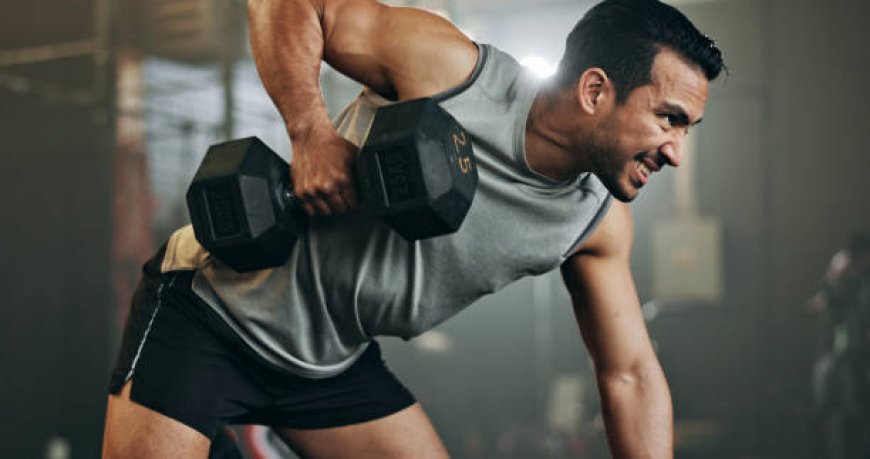
Have you ever carried a heavy grocery bag and felt your arm complaining halfway to the kitchen? That little moment is actually a pretty good way to think about resistance training. Our muscles have to work when we lift, push, pull, squat, or carry something. For anyone studying a certificate 3 in fitness, learning how to use that idea in a workout is a big part of understanding exercise.
And no, resistance training does not mean we need to spend an hour grunting next to a huge barbell.
So... What Counts as Resistance Training?
Resistance training is simply exercise where our muscles have to work against something.
That “something” could be a dumbbell, a barbell, a resistance band, a cable machine, or even our own body weight.
Take a squat. We can do ten bodyweight squats in the lounge room. Then we can hold a dumbbell and do the same movement. The exercise has not suddenly become a completely different thing. We have just changed the amount of resistance.
Push-ups work in a similar way. No fancy equipment. No complicated setup. Just our body working against resistance.
Pretty straightforward, really.
Why Is It Worth Doing?
There is no single reason people choose resistance training.
Maybe someone wants to feel stronger when carrying things. Maybe they want to become more comfortable using gym equipment. Someone else might enjoy lifting weights because it gives them a good challenge.
And sometimes the reason is simply... “We want to feel better when we move.”
That is a perfectly good reason too.
As trainers, we cannot assume every person walking into a gym wants the same thing. One client may be excited about lifting weights. Another might look at a dumbbell and wonder if it is about to attack them.
We have to meet people where they are.
You Do Not Need to Start Big
This is where things can go wrong.
A beginner sees someone lifting a heavy weight and thinks, “Maybe we should be doing that too.”
Not so fast.
If someone is still trying to figure out where their feet should go during a squat, adding another plate probably is not going to make the session better.
We can start with a movement that feels manageable. Then we can practise it. Maybe we add a little resistance later. Maybe we change the exercise. Maybe we keep it exactly as it is for another session.
There is no prize for making things difficult on day one.
What About Technique?
Good technique does not have to look perfect. We are not filming a fitness advert here.
But the person should understand the movement and be able to perform it in a controlled, comfortable way.
This is where trainers need to pay attention.
Are they rushing? Are they struggling to understand the instructions? Does the exercise feel awkward for them? Are they holding their breath because they are concentrating so hard?
Sometimes a small change makes the whole exercise feel better.
Move the feet slightly. Reduce the resistance. Slow things down. Try another variation.
It can be that simple.
Resistance Training Can Look Different for Everyone
Walk into three different training sessions and you might see three completely different workouts.
One person could be using resistance bands. Another might be doing bodyweight exercises. Someone else could be working with dumbbells or gym machines.
None of that is unusual.
A good workout does not have to look impressive from across the gym. What matters is whether the exercises make sense for the person doing them.
This is also why trainers need to stay flexible. A plan might look great when we write it down, but real people are not spreadsheets. Someone might arrive tired. Someone may dislike a particular movement. Another person may pick it up quickly and need a little more challenge.
We adjust.
Why This Matters for Future Trainers
Learning resistance training is not just about memorising a list of exercises.
We need to understand how to explain movements without confusing people. We need to notice what clients are doing. We need to know when an exercise needs changing rather than stubbornly sticking to the original plan.
That practical side becomes especially useful as students continue their training and look at pathways such as a Certificate IV in Fitness Perth.
The more comfortable we become with basic movements, the easier it can be to work with different people and different goals.
And honestly, that is where training starts to become interesting. We are not just teaching squats or rows anymore. We are helping someone figure out what works for them.
FAQs About Resistance Training
1. Can beginners do resistance training?
Yes. Beginners can start with simple movements and a level of resistance that feels suitable for them. There is no need to begin with heavy weights.
2. Do we need gym equipment for resistance training?
No. Bodyweight movements and resistance bands can be used without traditional gym equipment. A gym simply gives us more options.
3. Is resistance training only for building muscle?
No. People may use it because they want to feel stronger, become more comfortable with movement, improve their workouts, or simply enjoy this type of exercise.
4. Should we increase the weight every workout?
Not necessarily. Sometimes we need more practice before increasing resistance. The right approach depends on the person, the exercise, and how comfortably they can perform it.
5. Why is resistance training useful for personal trainers?
It gives trainers more tools to build practical workouts. It also helps us learn how to explain exercises, watch movement, make adjustments, and choose activities that suit different clients.
What's Your Reaction?
 Like
0
 Dislike
0
 Love
0
 Funny
0
 Angry
0
 Sad
0
 Wow
0





