





















When AWS Operations Become Too Much: The Case for Managed Cloud Expertise
When AWS Operations Become Too Much: The Case for Managed Cloud Expertise

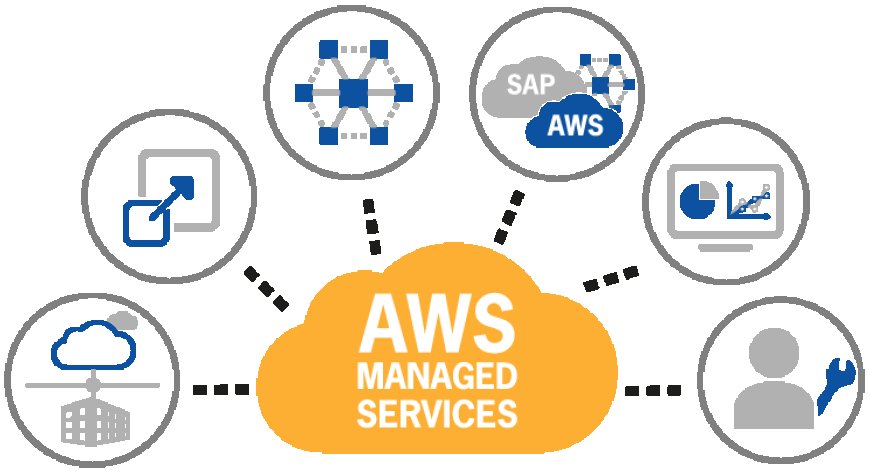
The AWS environment rarely becomes difficult overnight. It usually happens gradually: a few additional EC2 instances are launched, databases become busier, containers multiply, and monitoring dashboards fill with alerts. Before long, the internal engineering team is spending valuable hours maintaining infrastructure instead of building products. At the same time, cloud costs become harder to explain, security responsibilities increase, and an unexpected outage can turn into an urgent after-hours problem.
This is where aws cloud managed services can change the way organizations operate their cloud environments. Rather than expecting internal teams to handle every infrastructure, security, monitoring, and optimization task themselves, managed services provide structured operational support designed around the business's actual requirements.
Why AWS Management Becomes Challenging at Scale
AWS provides extensive flexibility, but flexibility also creates responsibility. Organizations can select from a large ecosystem of compute, database, storage, networking, security, monitoring, and automation services. The challenge begins when those services need to work together reliably every day.
An application might rely on Amazon EC2 for compute, Amazon RDS or Aurora for databases, Amazon S3 for storage, and Amazon CloudFront for content delivery. Containerized environments may introduce Amazon EKS or ECS into the architecture. Each component requires appropriate configuration, monitoring, security controls, updates, and capacity planning.
Consequently, infrastructure management can become a continuous operational burden.
Internal engineers may find themselves responding to alerts, reviewing permissions, investigating performance issues, managing backups, and analyzing cloud invoices between development projects. While these responsibilities are important, they can gradually reduce the time available for innovation.
Turning Cloud Operations Into a Managed Responsibility
The primary value of an aws cloud managed service is operational ownership. Instead of simply providing technical advice when something breaks, a capable managed service approach establishes ongoing processes for maintaining the environment.
Continuous monitoring is one important example. Cloud resources can be observed for availability, performance, utilization, and unusual behavior. When thresholds indicate a potential problem, the responsible team can investigate before a minor issue becomes a major disruption.
Patch management is another essential area. Operating systems, applications, databases, and supporting infrastructure require regular maintenance. A structured process helps ensure that updates are planned and applied consistently while considering availability and business requirements.
The same principle applies to backups. Creating automated snapshots is useful, but a backup strategy is only meaningful when recovery procedures are understood and tested. Managed operations can establish recovery procedures and review them periodically instead of treating backups as a set-and-forget task.
Controlling AWS Costs Before They Become a Surprise
Cloud spending can be particularly frustrating because waste often develops silently.
An EC2 instance may be larger than its workload requires. Storage resources can accumulate over time. Snapshots may remain after they are no longer necessary. Development environments may continue running outside business hours. Meanwhile, rapidly changing workloads can make previous capacity decisions outdated.
Effective aws cloud managed services address cost optimization as an ongoing process rather than an occasional financial exercise.
Regular reviews can examine resource utilization and identify opportunities for rightsizing. Compute commitments can be evaluated according to actual usage patterns, while idle or underused resources can be investigated. AWS cost-management information can also be combined with operational data to understand why spending is increasing.
The goal is not simply to reduce the AWS bill at any cost. Removing resources without understanding their purpose could create availability or performance problems. Sustainable optimization balances cost, reliability, security, and application requirements.
Strengthening Security Through Continuous Oversight
Security becomes increasingly complicated as cloud environments grow.
Access permissions need regular review. Infrastructure configurations can drift from approved standards. Security alerts require investigation. Network controls must evolve as applications change, while workloads and identities continue to expand.
Managed AWS support can establish recurring security processes around areas such as IAM governance, WAF configuration, GuardDuty monitoring, patching, and access reviews. These activities help transform security from an occasional project into a continuing operational responsibility.
For organizations handling sensitive information or operating under compliance requirements, documentation and reporting are equally important. Clear records of changes, access reviews, security activities, and operational procedures can make governance easier to manage.
This structured approach does not eliminate risk, but it can make security responsibilities more visible, repeatable, and accountable.
Managing Databases, Containers, and Scaling
AWS workloads also require specialized operational attention.
Amazon RDS and Aurora environments may require performance monitoring, parameter reviews, storage planning, and database maintenance. Poorly understood database behavior can affect the performance of the entire application.
Container environments introduce another layer of complexity. Amazon EKS and ECS clusters need ongoing attention as applications, workloads, and deployment patterns change. Configuration drift can accumulate when nobody regularly reviews cluster settings, scaling behavior, networking, or supporting infrastructure.
Auto Scaling requires similar consideration. Default thresholds may not always reflect real production behavior. Monitoring actual workload patterns allows teams to adjust scaling policies around genuine demand rather than assumptions made when the environment was first deployed.
These responsibilities demonstrate why managed AWS operations are more than simply answering support tickets. They require continuous technical awareness of how individual services interact.
Infrastructure as Code and Operational Consistency
As environments expand, manual configuration becomes increasingly difficult to control. Infrastructure as code can help organizations create more repeatable and auditable environments.
Tools such as Terraform and AWS CloudFormation allow infrastructure configurations to be represented as code. Managed teams can use these approaches to standardize deployments, reduce configuration inconsistencies, and make infrastructure changes easier to review.
This becomes especially valuable when organizations operate multiple environments. Development, testing, staging, and production systems can follow controlled patterns instead of being configured independently over time.
Consistency also improves troubleshooting. When infrastructure is documented and reproducible, teams have a clearer understanding of what changed and where potential problems may have originated.
Choosing Support Around Business Requirements
Not every organization needs the same managed cloud model.
A SaaS company operating continuously may prioritize availability, rapid incident response, and scalable infrastructure. An ecommerce platform may need strong attention to seasonal traffic and automatic scaling. A financial technology company may place greater emphasis on access governance, monitoring, and compliance processes.
Therefore, effective aws cloud managed services should reflect the workload rather than applying an identical operational model to every customer.
Service-level expectations, monitoring depth, reporting frequency, security procedures, and optimization priorities can all be structured around business requirements. This makes the relationship more meaningful than simply outsourcing infrastructure tasks.
Measuring the Real Business Impact
Ultimately, managed AWS operations should produce measurable operational improvements.
Organizations can examine whether cloud waste has decreased, whether incidents are being addressed more quickly, whether availability has improved, and whether internal engineers are spending less time on repetitive infrastructure work.
The value can also appear through better visibility. Regular reports, cost reviews, security assessments, and operational metrics give decision-makers a clearer picture of how their cloud environment is performing.
The most important outcome may be reclaimed capacity. When infrastructure responsibilities are handled through defined processes, internal teams can devote more attention to application development, customer experience, and strategic initiatives.
Looking Beyond Basic Cloud Support
AWS makes it possible to build powerful and highly scalable technology environments, but operating those environments effectively requires continuous attention. Costs evolve, workloads change, security requirements grow, and infrastructure becomes more interconnected over time.
That is why aws cloud managed services are increasingly about operational discipline rather than simply technical assistance. Monitoring, optimization, security, automation, backup validation, and infrastructure management work together to create a more predictable cloud operating model.
As businesses continue moving critical workloads into the cloud, the question is no longer simply whether an organization can run AWS infrastructure. The more important question is whether its operational model can keep that infrastructure secure, efficient, scalable, and reliable as the business grows. For organizations facing that challenge, structured managed cloud operations may provide the framework needed to turn AWS from a constantly demanding responsibility into a dependable foundation for future growth.
What's Your Reaction?
 Like
0
 Dislike
0
 Love
0
 Funny
0
 Angry
0
 Sad
0
 Wow
0




