Real estate tokenization is gaining attention as property businesses, investment firms, asset managers, and technology companies look for digital ways to represent property ownership and investment interests. A tokenization platform can bring property data, investor onboarding, token issuance, payments, compliance checks, and portfolio management into one digital environment.
For businesses planning a launch in 2027, choosing a white label model can reduce the time needed to bring a platform to market. A White Label Real Estate Tokenization Platform can be deployed under a company’s own brand while using an existing technical foundation. However, selecting a platform only by looking at its interface or feature list can create problems later.
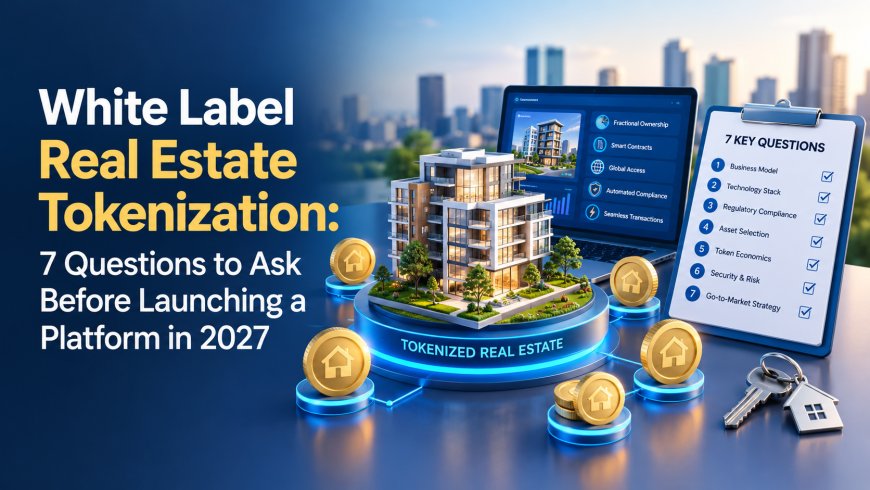
Businesses should first understand the property types they want to tokenize, the jurisdictions they will operate in, the investor groups they want to serve, the compliance process, and the technology required for token issuance and management. The following seven questions can help businesses assess their plans before starting White Label Real Estate Tokenization Development.
1. What Type of Real Estate Assets Will the Platform Support?
The first question concerns the assets that will be offered through the platform. Real estate covers many categories, including residential properties, commercial buildings, hotels, warehouses, office spaces, rental properties, land, development projects, and real estate funds.
Different property types can involve different ownership structures, income models, valuation methods, documentation, and regulatory considerations. For example, a platform handling rental properties may need features for rental income records and investor distributions. A platform focused on development projects may need funding milestones, project updates, and investment tracking.
Before selecting White Label Real Estate Tokenization Services, businesses should prepare an asset strategy. This can include the property categories, expected asset values, target locations, investment sizes, expected holding periods, and the type of investor participation being considered.
The platform should then be assessed against these requirements. If the business plans to add more asset categories in the future, the technology should have suitable support for additional token structures and property records.
Method to Assess Asset Requirements
Create an asset matrix covering property type, ownership structure, expected investor participation, income source, documentation, valuation method, and token model. This gives the development team a practical reference when configuring the platform.
2. Which Token and Ownership Model Will Be Used?
A property token does not automatically mean that the token holder directly owns a physical building. The legal relationship depends on how the investment structure is established.
A token may represent shares in a company that owns a property, an economic interest in an investment vehicle, a debt position, a fund interest, or another legally defined claim. The structure should be determined before the platform is launched because it affects the token contract, investor documentation, transfer rules, reporting process, and compliance requirements.
A White Label Tokenization Platform should therefore support the business model rather than simply issue digital tokens. Businesses need to determine what the token represents, how ownership records are maintained, how distributions are calculated, and under what circumstances tokens can be transferred.
Method to Define the Token Model
Start with the legal ownership structure. Map the property owner, issuing entity, investor rights, income distribution process, transfer restrictions, and redemption conditions. The resulting model can then guide the technical design of the token.
3. What Compliance Requirements Will Apply in 2027?
Compliance should be considered before development begins. Real estate tokenization can involve securities regulations, property laws, investment rules, KYC procedures, AML checks, investor eligibility requirements, tax considerations, and data protection obligations.
The applicable rules can vary according to the location of the property, location of the issuing company, and location of investors. A platform serving investors across multiple countries may therefore need different onboarding and transaction rules for different user groups.
A White Label Real Estate Tokenization Platform should have provisions for identity verification, investor classification, transaction monitoring, wallet screening where applicable, document collection, consent records, and access restrictions.
Businesses should also decide who will manage compliance operations. Some may use external compliance providers, while others may maintain an internal compliance team.
Method to Review Compliance
Prepare a jurisdiction-by-jurisdiction compliance checklist before development. Include investor eligibility, KYC and AML procedures, token transfer restrictions, required documents, reporting obligations, data storage requirements, and applicable licensing questions. Legal professionals should review the structure before launch.
4. What Features Will Investors and Property Owners Need?
A platform should serve both sides of the tokenization process. Property owners need tools for asset registration, documentation, valuation information, token issuance, investor communication, and financial reporting. Investors need account creation, identity verification, property information, investment options, portfolio tracking, transaction history, and distribution records.
Depending on the business model, the platform may also require digital wallets, payment integration, token transfer functions, property dashboards, investor dashboards, admin controls, notifications, reporting tools, and document management.
The objective should not be to add every possible feature. Features should relate to the actual investment process and operating model.
Method to Plan Platform Features
Divide requirements into three groups: investor features, issuer features, and administrator features. Mark each function according to whether it is required at launch or can be introduced later. This can help maintain a focused first release.
5. Which Blockchain and Smart Contract Structure Should Be Used?
The blockchain layer is another major decision. A real estate tokenization platform can use a public blockchain, private network, or another blockchain environment depending on the business model, transaction requirements, compliance approach, and expected user base.
Smart contracts can manage token issuance, ownership records, transfers, distribution rules, and other predefined actions. However, the contract design needs careful testing because errors can affect investor records and transactions.
The platform may also require connections between off-chain property information and on-chain token records. Property documents, valuation reports, investor identity information, and other sensitive records may need to remain outside the blockchain while relevant references or transaction data are recorded on-chain.
Method to Select the Blockchain
Compare blockchain options using factors such as transaction costs, transaction speed, ecosystem support, wallet compatibility, smart contract capabilities, security practices, network availability, and regulatory considerations. The choice should follow the platform's actual transaction requirements rather than market popularity alone.
6. How Will the Platform Handle Property Data and Investor Records?
Real estate tokenization involves a considerable amount of information. Property documents, ownership records, valuation reports, financial information, investor profiles, transaction records, and compliance documents may all need to be managed.
The platform should define which information belongs on-chain and which information should remain in external databases or document systems. Sensitive personal information generally requires careful handling because blockchain records can be difficult to modify once published.
Data access also needs to be considered. Investors may need access to information about assets they have invested in, while administrators may require broader permissions. Property owners may need access to their own asset records and investor reports.
Method to Plan Data Management
Create a data classification system before development. Separate public information, investor-only information, administrative information, compliance records, and sensitive personal data. Then define storage, access, retention, and audit requirements for each category.
7. What Will the Platform Cost to Operate After Launch?
The initial development budget is only one part of the financial planning process. A White Label Real Estate Tokenization Platform can also involve recurring costs related to hosting, blockchain transactions, security monitoring, KYC services, payment processing, compliance operations, customer support, maintenance, and platform upgrades.
The business model should also account for revenue. Possible revenue sources can include token issuance fees, transaction fees, listing fees, subscription plans, asset management charges, investor service fees, or other platform-related charges, depending on the business structure and applicable regulations.
Businesses should estimate both expected platform usage and recurring expenses before launch. A platform that attracts many users but has high operating costs may require a different pricing model from a platform serving a smaller group of high-value investors.
Method to Calculate the Operating Model
Prepare a 12-month financial projection covering development costs, technology expenses, compliance costs, service-provider fees, marketing expenses, support costs, and expected revenue. Run several usage scenarios based on different numbers of properties, investors, and transactions.
What Should Businesses Look for in White Label Real Estate Tokenization Development?
Choosing a development partner requires more than checking whether the provider offers a white label product. Businesses should review the platform architecture, smart contract approach, security practices, compliance-related functions, administrative controls, integration options, and post-launch support.
It is also useful to understand how much control the business will have over the platform. Branding, domain configuration, user interface changes, fee settings, token parameters, user permissions, and reporting options can vary between providers.
Businesses should request a product demonstration and ask for technical documentation where appropriate. They should also clarify ownership of source code, third-party dependencies, deployment responsibilities, maintenance arrangements, and upgrade policies.
A detailed contract can help avoid disagreements after launch. It should specify development scope, implementation timeline, integrations, testing, security reviews, support arrangements, service levels, data responsibilities, and intellectual property rights.
A Practical 2027 Launch Checklist
Before launching a white label property tokenization platform in 2027, businesses can review the following areas:
- Property categories and target markets
- Legal ownership and token structure
- Investor eligibility rules
- KYC and AML procedures
- Blockchain selection
- Smart contract requirements
- Wallet and payment integrations
- Property and investor data management
- Security testing
- Platform administration
- Investor reporting
- Distribution and payment processes
- Pricing and revenue model
- Maintenance and technical support
These areas can give the business a more complete view of what is required before the platform reaches investors.
Conclusion
Launching a property tokenization platform in 2027 requires decisions across property structures, token models, compliance, blockchain technology, data management, platform features, and operating costs. Asking these seven questions before development can help businesses define what they actually need and avoid selecting a platform based only on appearance or feature count. A well-planned White Label Real Estate Tokenization Platform can give property businesses a branded environment for managing tokenized assets and investor activity while reducing the work involved in starting from an entirely new platform. Blockchain App Factory provides White Label Real Estate Tokenization Services for businesses planning to enter the property tokenization market.
FAQs
1. What is White Label Real Estate Tokenization?
White Label Real Estate Tokenization refers to using a ready-made tokenization platform that can be presented under a business's own brand. It can include property management, token issuance, investor onboarding, compliance functions, and transaction management.
2. What is a White Label Real Estate Tokenization Platform?
A White Label Real Estate Tokenization Platform is a software environment that businesses can use to offer property tokenization services under their own brand. The exact features depend on the provider and business requirements.
3. Why consider a white label platform in 2027?
A white label model can reduce the amount of software work required before launching a platform. Businesses can focus more on asset sourcing, legal structure, investor acquisition, operations, and market positioning while using an existing technical foundation.
4. What properties can be tokenized?
Depending on the legal and technical structure, businesses may tokenize residential properties, commercial buildings, hotels, warehouses, rental assets, land, development projects, and interests in real estate investment structures.
5. Does a property token always represent direct property ownership?
No. A token can represent different legal or economic interests depending on the structure. It may represent an interest in an entity that owns the property, a fund interest, debt, or another legally defined investment right.
6. What features should a White Label Tokenization Platform include?
Common requirements can include investor onboarding, KYC and AML workflows, property listings, token issuance, wallet functions, payment integration, portfolio tracking, transaction records, distribution management, administrative controls, and reporting.
7. How much does White Label Real Estate Tokenization Development cost?
The cost depends on factors such as platform features, blockchain selection, smart contract requirements, integrations, compliance functions, UI requirements, security testing, and support arrangements. A precise estimate requires a defined project scope.
8. Is compliance required for real estate tokenization?
Compliance requirements depend on the structure, jurisdiction, asset type, investor location, and nature of the token. Businesses should obtain legal and regulatory advice before offering tokenized investment products.
9. Can a white label platform support multiple properties?
Yes, a platform can be designed to manage multiple properties and investment offerings. The exact asset management and investor features depend on the platform architecture and business requirements.
10. What should businesses ask a development company before starting?
Businesses should ask about blockchain technology, smart contract development, security testing, compliance-related functions, integrations, data management, platform ownership, source code arrangements, maintenance, support, implementation timelines, and total operating costs.


























 Like
0
 Dislike
0
 Love
0
 Funny
0
 Angry
0
 Sad
0
 Wow
0