




















Why Are More Consumers Choosing Non Alcoholic Wine
Explore the key factors driving demand for non alcoholic wine, including wellness trends, mindful drinking habits, product innovation, and changing consumer preferences worldwide.

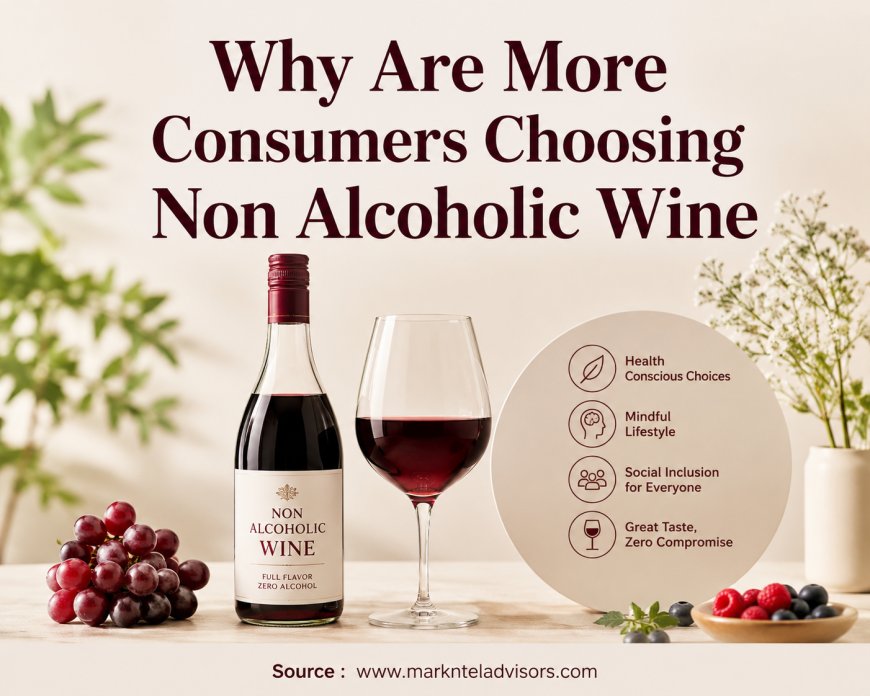
Consumer attitudes toward beverages are evolving rapidly as health awareness, wellness goals, and mindful consumption become increasingly important. Among the categories benefiting from this shift is non alcoholic wine, which offers the taste and experience of traditional wine without the alcohol content. As individuals seek alternatives that align with healthier lifestyles, the category is gaining visibility across retail stores, restaurants, and online platforms.
According to a recent study by MarkNtel Advisors, the global non alcoholic wine industry is projected to grow from USD 2.92 billion in 2026 to USD 4.81 billion by 2032, registering. CAGR of approximately 8.67% during the forecast period This growth reflects changing consumer preferences and the increasing acceptance of alcohol free beverage options across multiple regions.
Growing Focus on Health and Wellness
One of the strongest drivers behind the popularity of non alcoholic wine is the growing focus on health. Consumers are paying closer attention to calorie intake, sugar consumption, and the long term effects of alcohol on overall well being.
The World Health Organization reports that alcohol consumption is associated with millions of deaths globally each year and is linked to more than 200 diseases and health conditions. As awareness of these risks increases, many consumers are reducing alcohol intake while still seeking enjoyable social beverage experiences.
Non alcoholic wine provides an appealing alternative because it allows individuals to participate in social occasions without consuming significant amounts of alcohol. This balance between lifestyle enjoyment and health consciousness is becoming increasingly attractive.
The Rise of Mindful Drinking
The concept of mindful drinking has expanded considerably in recent years. Rather than completely eliminating alcohol, many consumers are choosing moderation and seeking products that fit their personal wellness goals.
Movements such as "Dry January," "Sober October," and year round moderation practices have encouraged experimentation with alcohol free alternatives. Younger consumers, particularly Millennials and Generation Z, are often leading this trend as they prioritize wellness, productivity, and balanced lifestyles.
Industry observations suggest that many consumers are not replacing wine entirely but are incorporating non alcoholic options into their routines for specific occasions, workdays, fitness focused periods, or social gatherings.
Improved Production Technology
Earlier generations of alcohol free wines often faced criticism regarding taste and quality. However, advances in wine production technology have significantly improved product quality.
Techniques such as reverse osmosis and vacuum distillation allow producers to remove alcohol while preserving much of the wine's aroma, flavor profile, and character. These technological improvements have helped narrow the sensory gap between traditional and non alcoholic wines.
As a result, consumers who may have previously dismissed the category are now finding products that better meet their expectations.
Expanding Product Variety
Another factor contributing to growth is the increasing diversity of products available in the category. Consumers can now choose from sparkling wines, still wines, rosé varieties, and premium alcohol free alternatives designed for different occasions.
According to this non alcoholic wine industry report, sparkling wine represents a significant share of the category, reflecting strong demand for celebratory and social beverage options that do not contain alcohol.
The availability of multiple formats, flavor profiles, and packaging options enables brands to reach a broader audience while addressing diverse consumer preferences.
Changing Social Norms
Social attitudes toward alcohol consumption are also changing. In many regions, choosing not to drink alcohol is becoming more socially accepted than in previous decades.
Consumers may avoid alcohol for health reasons, religious considerations, pregnancy, athletic performance, medication interactions, or personal preference. Non alcoholic wine provides an option that allows participation in social rituals without requiring alcohol consumption.
This shift is particularly important in professional environments and social gatherings where consumers increasingly appreciate having sophisticated non alcoholic alternatives available alongside traditional beverages.
Innovation Supporting Future Growth
Manufacturers continue to invest in product development to improve taste, quality, and nutritional profiles. Many new offerings emphasize lower calorie content, reduced sugar levels, and premium ingredients.
Detailed insights can be found in the non alcoholic wine market report, which highlights ongoing innovation and the role of consumer wellness trends in shaping future demand. As brands continue refining production methods and expanding portfolios, the category is likely to attract new consumers who previously had limited interest in alcohol free wines.
Conclusion
The growing popularity of non alcoholic wine reflects broader changes in consumer behavior. Health awareness, mindful drinking habits, technological improvements, and evolving social norms are collectively reshaping beverage preferences worldwide.
The global non alcoholic wine growth forecast indicates sustained expansion as consumers continue seeking products that combine taste, convenience, and wellness benefits. While traditional wine remains an important part of the beverage landscape, alcohol free alternatives are establishing themselves as a significant category in their own right, supported by changing lifestyles and ongoing product innovation.
What's Your Reaction?
 Like
0
Like
0
 Dislike
0
Dislike
0
 Love
0
Love
0
 Funny
0
Funny
0
 Angry
0
Angry
0
 Sad
0
Sad
0
 Wow
0
Wow
0