


















Why Endodontists Use CBCT Scans Before an Apicoectomy

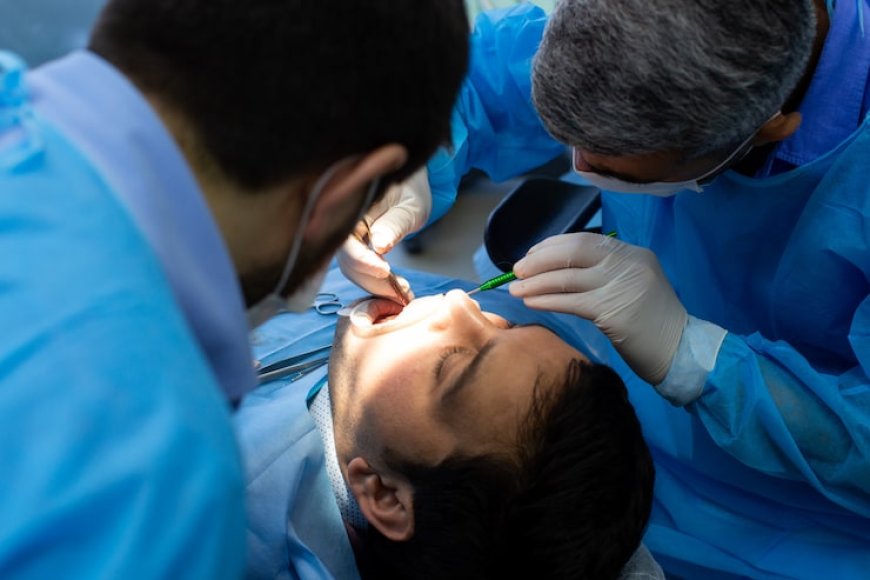
Surgical procedures go better when the surgeon knows exactly what they're walking into. An apicoectomy is no different. Before making any incision, an endodontist needs a clear, complete picture of the tooth's root tip, the surrounding bone, and any infection hiding nearby. A standard dental X-ray can't always give that picture. That's precisely why a cone beam CT dental scan has become such an important part of planning this procedure.
What an Apicoectomy Actually Involves
Most people haven't heard of an apicoectomy until their endodontist recommends one. It's a surgical procedure that targets the very tip of a tooth's root, the area called the apex. When a previous root canal hasn't fully resolved an infection at that tip, or when retreatment isn't a realistic option, an apicoectomy removes the infected root tip and seals the end of the tooth from inside the gum.
It sounds straightforward, but the anatomy in that area is anything but simple. The root tip sits close to important structures, including nerves, sinuses, and bone. Getting the approach wrong or missing a part of the infection means the surgery fails. This is exactly why the planning phase matters so much before a single incision is made.
What a CBCT Scan Actually Shows
A traditional two-dimensional X-ray gives a flat image. It shows basic shapes and obvious shadows, but it misses a lot. Small fractures or cracks are invisible in 2D images, along with bone changes that show early signs of infection and resorption, where part of the tooth starts dissolving.
A CBCT scan works differently. It creates detailed three-dimensional images of teeth, soft tissues, nerve pathways, and bone in a single scan. Unlike conventional two-dimensional X-rays, CBCT provides complete anatomical information from every angle.
The endodontist can rotate the image, zoom in on specific areas, and measure exact distances before ever touching the tooth. Think of it like the difference between a map drawn on paper and a live satellite view. One gives you a general idea, the other shows you everything.
Why 3D Imaging Changes the Outcome for Apicoectomies
CBCT plays a critical role in treatment planning for endodontic surgery, such as an apicoectomy. 3D scans help determine the exact location of the lesion and its relationship to nearby anatomical structures, like the maxillary sinus or mandibular nerve. This matters a great deal during surgery. If the infected tissue sits close to a sinus cavity, the surgeon needs to know that before cutting. If the root curves in an unexpected direction, the 3D scan reveals it in advance.
During the apicoectomy, the CBCT scan guides the endodontist on the incision placement, access to the root tip, and removal of the infected tissue. This accuracy minimizes the risk of complications and improves the chances of a successful outcome. Without that roadmap, the surgeon is working with far less information, and the margin for error increases significantly.
What CBCT Detects That X-Rays Often Miss
Here's where the clinical value of this technology becomes very concrete. Several findings that directly affect surgical planning only show up clearly on CBCT, including:
-
The true size and shape of a periapical lesion, which often appears smaller on a flat X-ray than it actually is
-
Root fractures that are nearly impossible to detect on a standard film
-
The number of root canals and how they curve, which affects how the root tip is removed
-
Proximity of the root to the sinus floor or inferior alveolar nerve
-
Early bone loss around the root that hasn't yet caused noticeable symptoms
CBCT scans reveal extra anatomy, relationships of structures, traumatic fractures, missed canals, and resorptions, and help during treatment complications. Each of these pieces of information can change how an apicoectomy is planned or even change the decision about doing one at all.
How It Helps Avoid Surgical Surprises
Surgery that encounters unexpected anatomy mid-procedure is harder to complete successfully. The diagnostic information provided by CBCT frequently results in a change or modification of the treatment plan, as well as improving confidence in clinical decision-making.
An endodontist who walks into an apicoectomy knowing exactly where the lesion ends, what structures sit nearby, and how the root is positioned can work more efficiently and with significantly less guesswork.
For anyone considering an apicoectomy, understanding that the CBCT scan is not just an optional add-on makes a real difference. It's a foundational part of doing the procedure safely and well.
The Radiation Question Patients Often Ask
It's a fair concern. CBCT scans do involve radiation, but the dose is significantly lower than that of traditional CT scans. Some endodontic equipment uses a single radiation pulse, exposing patients to 90% less radiation than hospital-based CT scanners.
The scan is also targeted to a specific, limited area of the jaw rather than the whole body. For the level of diagnostic detail it provides, the benefit-to-risk balance strongly favors its use in surgical planning cases.
Better Information, Better Surgery
An apicoectomy performed with full 3D imaging behind it is a fundamentally different procedure than one planned from a flat film. The endodontist knows more, plans well, and operates with greater confidence. Patients who ask about CBCT scan dentist options before their apicoectomy aren't overthinking things. They're asking exactly the right question.
See the Full Picture before the Surgery Begins
A scan taken in minutes can change the entire course of a surgical plan. For patients who need a precise, well-planned apicoectomy in Irvine, asking about CBCT imaging before the procedure is a smart, informed step. It's not about technology for its own sake. It's about giving the surgeon every possible advantage before the first cut is made.
What's Your Reaction?
 Like
0
Like
0
 Dislike
0
Dislike
0
 Love
0
Love
0
 Funny
0
Funny
0
 Angry
0
Angry
0
 Sad
0
Sad
0
 Wow
0
Wow
0