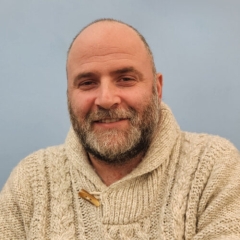























Alex Elegudin and the Hidden Barriers That Shape Everyday Life
Alex Elegudin represents a broader conversation about how communities identify and address barriers that often go unnoticed.

Introduction
Alex Elegudin has often been part of conversations that challenge a simple assumption many people make every day: if a system works for most people, it works for everyone.
At first glance, that assumption sounds reasonable. A subway station is open. A building has an entrance. A website loads properly. A public service exists. Everything appears functional.
But accessibility often lives in the details.
A staircase that replaces an elevator. A doorway that's a few inches too narrow. A website that doesn't work with screen readers. A transportation system that looks connected on paper but feels disconnected in practice.
These small barriers may seem insignificant to some people, yet they can completely change how others experience the world around them.
The work and public engagement associated with Alex Elegudin continue to draw attention to a larger issue: communities often focus on visible improvements while overlooking invisible barriers that affect daily life.
Interestingly, the biggest accessibility challenges are not always the ones people can see. Sometimes they are the obstacles hidden inside systems, assumptions, and routines.
The Problem Nobody Notices Until It Affects Them
Most people rarely think about accessibility.
That is not because accessibility lacks importance. It is because successful accessibility often goes unnoticed.
When a bus arrives on time, nobody celebrates.
When an elevator works properly, nobody posts about it online.
When a sidewalk allows easy movement, people simply continue their day.
Accessibility becomes visible when it stops working.
The transportation and accessibility discussions associated with Alex frequently highlight this reality. The goal of accessible design is not attention. The goal is participation.
The most successful accessibility features often disappear into everyday life because they allow people to move independently and confidently.
Ironically, that success sometimes makes their value easy to overlook.
Why Good Intentions Are Not Always Enough
Many organizations genuinely want to become more inclusive.
The challenge is that good intentions do not automatically create effective solutions.
Consider a common scenario.
An organization invests significant resources into improving accessibility. New policies are introduced. New technologies are purchased. New processes are created.
Yet users still encounter barriers.
Why?
Because accessibility is not only about what organizations provide. It is also about how people experience what is provided.
The professional journey of Elegudin reflects a broader lesson found throughout accessibility work: listening often matters as much as planning.
Communities create better outcomes when they understand real experiences rather than relying solely on assumptions.
The Difference Between Access and Opportunity
Many people use the words accessibility and opportunity interchangeably.
However, they are not identical.
Access creates possibility.
Opportunity creates participation.
For example:
Having access to transportation is important.
Being able to use that transportation reliably to reach employment opportunities is even more important.
The accessibility conversations connected with Alex's work often demonstrate how accessibility influences much larger outcomes.
Transportation affects employment.
Employment affects independence.
Independence affects quality of life.
Small barriers frequently create larger consequences than people realize.
The Hidden Cost of Everyday Frustration
Not every barrier creates a crisis.
Many create frustration.
And frustration accumulates.
Imagine encountering obstacles multiple times each day.
A service that is difficult to access.
A building that requires assistance.
A system that was not designed with your needs in mind.
Individually, these challenges may appear minor.
Collectively, they shape experiences.
The advocacy-related work associated with Alex often emphasizes how repeated barriers influence independence, confidence, and participation.
People rarely measure accessibility only by major events.
They measure it through daily experiences.
Those experiences matter.
Why Communities Need More Than Infrastructure
When people discuss accessibility, conversations often focus on physical infrastructure.
Ramps.
Elevators.
Sidewalks.
Transportation systems.
All of these matter.
However, communities require more than infrastructure to become truly inclusive.
They also need:
-
Awareness
-
Communication
-
Representation
-
Participation
-
Understanding
The broader community-focused efforts connected with Alex Elegudin reflect the idea that inclusion is both a physical and social process.
Communities improve when people understand not only what barriers exist but why those barriers matter.
Knowledge often becomes the first step toward improvement.
Accessibility and Innovation Often Grow Together
Many people think innovation begins with technology.
In reality, innovation often begins with a problem.
Accessibility challenges frequently inspire creative solutions because they require people to rethink existing systems.
Some of the most useful innovations started by solving accessibility-related challenges:
Voice recognition technology.
Automatic doors.
Text-to-speech tools.
Captioning systems.
Mobile navigation assistance.
The professional background of Elegudin reflects broader conversations about how accessibility can encourage organizations to think differently about design, participation, and usability.
Innovation becomes more meaningful when it improves everyday life.
Accessibility often provides that opportunity.
Why Personal Stories Continue to Matter
Statistics help people understand trends.
Stories help people understand impact.
A report may explain how many people encounter barriers.
A personal story explains what those barriers feel like.
The public profile of Alex highlights how lived experiences can contribute valuable perspectives to conversations about accessibility and inclusion.
Stories create context.
Context creates understanding.
Understanding creates action.
This pattern appears repeatedly throughout successful community initiatives.
People connect with experiences.
That connection often motivates change.
The Future Will Reward Inclusive Thinking
The communities that thrive in the future may not necessarily be the largest or wealthiest.
They may simply be the communities that understand inclusion better than others.
Inclusive thinking helps organizations:
-
Serve more people
-
Build stronger trust
-
Improve participation
-
Create better experiences
The community initiatives associated with Alex's public engagement demonstrate how participation and accessibility frequently go hand in hand.
When people can participate fully, communities become stronger.
The relationship is surprisingly simple.
Remove barriers.
Increase opportunities.
Strengthen communities.
Beyond Accessibility: Building a Sense of Belonging
Perhaps the most overlooked aspect of accessibility is belonging.
People do not simply want access.
They want to feel included.
They want to contribute.
They want to participate without unnecessary obstacles.
The growing visibility of Alex across public discussions reflects an increasing awareness that accessibility is ultimately about people rather than systems.
Infrastructure matters.
Technology matters.
Policies matter.
But belonging matters too.
Communities succeed when they create environments where people feel capable, respected, and included.
Frequently Asked Questions
Why is Alex Elegudin often connected to accessibility discussions?
Alex Elegudin has been involved in conversations related to accessibility, transportation, independent living, and community participation.
What are hidden accessibility barriers?
Hidden barriers include obstacles that may not be immediately visible, such as communication challenges, service limitations, digital accessibility issues, and design assumptions.
Why is accessibility important beyond infrastructure?
Accessibility influences opportunity, independence, participation, and quality of life.
How do personal stories help improve accessibility?
Personal stories provide context that helps communities understand real-world experiences and identify meaningful solutions.
Why does inclusive thinking matter for the future?
Inclusive thinking helps communities serve diverse populations more effectively while improving participation and engagement.
Conclusion
Alex Elegudin represents a broader conversation about how communities identify and address barriers that often go unnoticed. While visible accessibility improvements matter, many of the most important challenges exist beneath the surface—in assumptions, systems, and everyday experiences.
The discussions associated with Alex remind us that accessibility is not only about compliance or infrastructure. It is about creating opportunities for people to participate fully in society.
When communities focus on removing hidden barriers, they do more than improve access.
They create belonging. And that may be the most important outcome of all.
What's Your Reaction?
 Like
0
Like
0
 Dislike
0
Dislike
0
 Love
0
Love
0
 Funny
0
Funny
0
 Angry
0
Angry
0
 Sad
0
Sad
0
 Wow
0
Wow
0