Bone Chisel Essentials: Precision, Quality, and Clinical Value in Modern Surgery

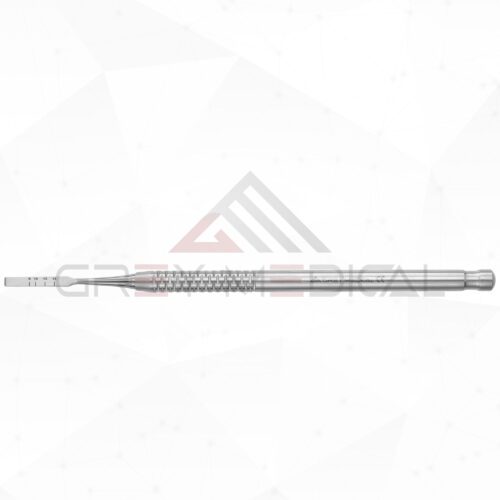
In surgery, small details often shape big outcomes. When a procedure involves cutting, shaping, or removing bone, the instrument in the surgeon's hand must offer control, accuracy, and reliability. A bone chisel delivers all three, which is why it remains essential in operating rooms worldwide. Powered tools have advanced, yet the hand-guided chisel still holds an important place in many procedures.
What Is a Bone Chisel?
A bone chisel is a surgical instrument with a flat, sharpened blade designed to cut or sculpt bone tissue. Most chisels feature a single beveled edge. This sets them apart from osteotomes, which usually have a double bevel. The single bevel lets surgeons make clean, controlled cuts along a planned line, often with gentle taps from a surgical mallet. Blades come in many widths and profiles, so surgical teams can match the instrument to the anatomy and the task.
Clinical Applications Across Specialties
The versatility of the bone chisel makes it valuable across many surgical fields. Orthopedic surgeons use it to perform osteotomies, remove bone spurs, and prepare surfaces for implants. In maxillofacial and oral surgery, it helps reshape the jaw, harvest bone grafts, and expose impacted teeth. Spinal surgeons rely on chisels to remove bone with care near delicate neural structures. ENT and podiatric specialists also depend on these instruments for precise contouring. In each setting, the goal stays the same: remove only what is needed and protect the surrounding tissue.
Why Precision Matters in the Operating Room
Precision directly affects patient outcomes. A sharp, well-balanced chisel needs less force, which lowers the risk of unwanted fractures or slips. Unlike some powered tools, a manual bone chisel produces little heat. This helps protect bone cells and supports healthy healing. Surgeons also value the tactile feedback a hand instrument provides. That feedback lets them sense bone density and adjust their technique in real time, which is especially useful in complex or revision cases.
Quality Materials and Expert Craftsmanship
The performance of a chisel depends on how it is made. High-grade surgical stainless steel offers strength, corrosion resistance, and lasting edge retention. Careful heat treatment balances hardness with durability, so the blade holds its edge without becoming brittle. Ergonomic handles reduce hand fatigue during long procedures and improve grip control. Every instrument must also withstand repeated sterilization cycles without losing its shape or sharpness. When hospitals invest in a well-crafted dental surgery scissor they gain a dependable tool that supports consistent results over many years.
Partner with Grey Medical® for Surgical Excellence
Grey Medical® is a privately owned medical technology company dedicated to innovation and excellence in the craft of surgical instruments. We understand that surgeons need tools they can trust in every case. That is why we focus on precision engineering, premium materials, and meticulous quality control. From blade geometry to handle design, every detail reflects our commitment to supporting surgical teams and improving patient care. When you choose Grey Medical®, you choose instruments built with purpose and pride.
Conclusion
A bone chisel may look simple, but its role in surgery is anything but small. It enables controlled bone cutting, supports a wide range of specialties, and helps surgeons achieve accurate, predictable results. Choosing an instrument made from quality materials with expert craftsmanship is an investment in both surgical performance and patient safety. With a trusted partner like Grey Medical®, surgical teams can work with confidence, knowing their instruments are built to meet the highest standards.
What's Your Reaction?
 Like
0
 Dislike
0
 Love
0
 Funny
0
 Angry
0
 Sad
0
 Wow
0