













Can High Blood Pressure Cause Heart Blockages Over Time?
Hypertension can contribute to this process and, when combined with other risk factors, increase the likelihood of coronary artery disease.

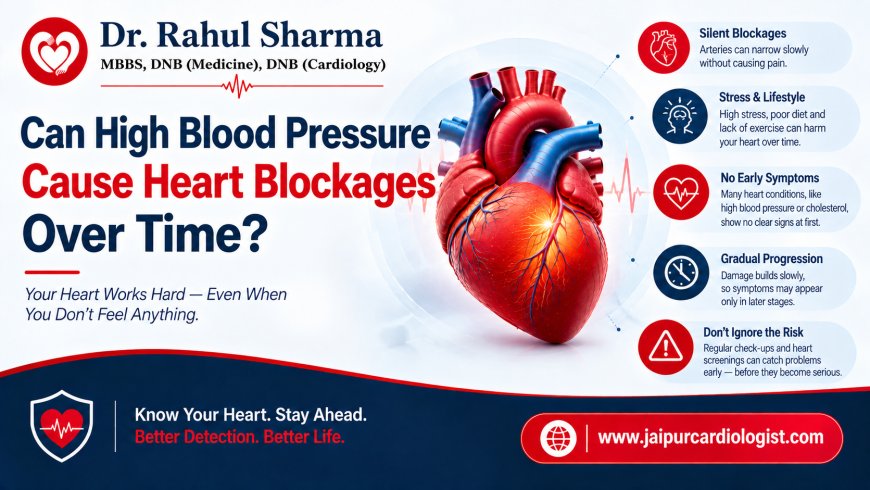
High blood pressure is often called a “silent” condition because many people may have elevated readings for years without noticing any clear symptoms. Yet, the absence of symptoms does not mean that high blood pressure is harmless. When blood pressure remains uncontrolled over a long period, it can place continuous stress on the arteries and the heart, increasing the risk of several cardiovascular problems.
One common question is whether high blood pressure can actually cause a heart blockage. The answer requires a little clarification. High blood pressure does not directly fill an artery with blockage, but it can contribute to changes in the blood vessels that make the development and progression of coronary artery disease more likely.
Understanding this connection can help people take hypertension seriously and seek appropriate medical care before cardiovascular disease becomes more advanced.
How Does High Blood Pressure Affect the Arteries?
Arteries are flexible blood vessels designed to carry blood throughout the body. Healthy arteries can expand and contract according to the body's needs. Persistent high blood pressure, however, exposes artery walls to greater mechanical stress.
Over time, this pressure can contribute to damage and dysfunction of the inner lining of the arteries. When other risk factors such as high cholesterol, diabetes, smoking, obesity, or an unhealthy diet are present, the environment becomes more favorable for plaque formation.
Plaque is made up of substances such as cholesterol, fats, calcium and cellular material. As plaque accumulates within the coronary arteries, the passage through which blood flows can gradually become narrower.
This process is known as atherosclerosis. If it affects the arteries supplying the heart, it can eventually lead to coronary artery disease.
Does Hypertension Cause a Blockage or Increase the Risk of One?
It is more accurate to say that long-standing hypertension can increase the risk of developing coronary artery disease and worsening existing artery disease rather than saying that blood pressure itself creates a blockage.
For example, a person may have high blood pressure along with elevated LDL cholesterol. The combination can contribute to progressive changes in the artery walls. If the person also has diabetes or smokes, the overall cardiovascular risk may become even greater.
This is why managing blood pressure is not simply about achieving a better number on a blood pressure monitor. It is also about reducing the long-term strain placed on the cardiovascular system.
Appropriate Hypertension Treatment in Jaipur can involve regular monitoring, lifestyle changes, medications when indicated, and assessment of other cardiovascular risk factors.
Why Can High Blood Pressure Remain Dangerous Without Symptoms?
One of the biggest challenges with hypertension is that a person can feel completely normal while their blood pressure remains elevated.
There may be no chest pain, no breathlessness and no obvious change in daily activities. Meanwhile, uncontrolled hypertension may continue affecting the blood vessels and heart.
Some people discover their blood pressure problem only during a routine health examination. Others are diagnosed after experiencing symptoms related to an underlying cardiovascular condition.
This is why regular blood pressure checks are particularly important for adults with risk factors such as diabetes, obesity, kidney disease, high cholesterol, smoking, or a family history of heart disease.
Can High Blood Pressure Lead to Angina?
Angina refers to chest discomfort caused when the heart muscle does not receive enough oxygen-rich blood, usually because of reduced blood flow through the coronary arteries.
Hypertension can contribute to coronary artery disease, while coronary artery disease can result in angina. However, not every person with high blood pressure will develop angina.
Chest discomfort may feel like pressure, heaviness, squeezing, tightness or burning. It may occur during physical activity or emotional stress and improve with rest in some cases. Other people can experience less typical symptoms.
If recurrent chest discomfort is occurring, consulting an Angina Treatment Doctor in Jaipur can help determine whether the symptoms may be related to coronary artery disease or another condition.
Chest pain should not automatically be attributed to blood pressure, acidity, stress or muscle strain without appropriate evaluation.
What Happens When a Coronary Artery Becomes Narrow?
A coronary artery that becomes significantly narrowed may not deliver enough blood to the heart muscle, particularly when the heart requires more oxygen during exercise or physical exertion.
This can produce symptoms such as chest discomfort or shortness of breath. If a plaque ruptures and a blood clot forms at the site, the artery can become suddenly and severely obstructed, potentially causing a heart attack.
This is one reason why cardiovascular risk factors need to be addressed before significant coronary artery disease develops.
Controlling blood pressure is therefore one part of a broader strategy that may also involve cholesterol management, diabetes control, physical activity, nutrition, smoking cessation and maintaining a healthy weight.
Does Everyone With High Blood Pressure Need Angiography?
No. High blood pressure alone does not mean that a person requires coronary angiography.
The need for cardiac testing depends on the person's symptoms, medical history, examination findings and overall cardiovascular risk. A cardiologist may begin with a consultation and basic assessments such as blood pressure measurement, ECG and blood tests. Depending on the situation, additional testing such as echocardiography, stress testing or other imaging may be considered.
Coronary angiography is generally used when there is a clinical reason to examine the coronary arteries in greater detail.
The goal is to understand what is actually happening rather than assuming that every patient with hypertension has a blocked artery.
When Might Angioplasty Be Considered?
If evaluation identifies a significant narrowing or blockage in a coronary artery, treatment depends on its location, severity, symptoms, the number of affected vessels and the patient's overall clinical situation.
In selected cases, coronary angioplasty may be recommended. During angioplasty, a catheter is guided to the narrowed coronary artery, and a balloon is used to widen the narrowed area. A stent may also be placed to help maintain the artery's opening.
An Angioplasty Doctor in Jaipur evaluates whether an intervention is appropriate rather than recommending angioplasty simply because a person has high blood pressure.
The decision is individualized and depends on the complete cardiac assessment.
Why Blood Pressure Control Matters Even After a Blockage Is Treated
Treating a coronary blockage does not mean that cardiovascular risk disappears.
A person may undergo angioplasty successfully but still have risk factors that can contribute to future artery disease. Persistent hypertension is one of those factors.
After a coronary procedure, continuing to control blood pressure remains important. Depending on the patient's condition, treatment may include prescribed medicines, dietary changes, physical activity, weight management, smoking cessation and regular follow-up.
Blood pressure management should therefore be viewed as part of long-term heart care rather than a short-term treatment goal.
What Can You Do to Reduce the Long-Term Risk?
Managing blood pressure begins with knowing your numbers and understanding what they mean in the context of your overall health.
Reducing excessive salt intake, maintaining a healthy body weight, exercising regularly as medically appropriate, limiting alcohol, avoiding tobacco, sleeping adequately and following prescribed medications can all contribute to better cardiovascular risk management.
It is also important not to stop blood pressure medication simply because the readings have improved. Improvement may indicate that the treatment is working.
People with additional risk factors may require periodic assessment of cholesterol, blood sugar, kidney function and other cardiovascular markers.
When Should You See a Cardiologist?
A cardiology consultation may be appropriate if blood pressure remains repeatedly elevated despite lifestyle changes or prescribed treatment. It is also important to seek medical evaluation when high blood pressure occurs alongside symptoms such as chest discomfort, unusual breathlessness, palpitations, dizziness or reduced exercise tolerance.
Sudden or severe chest pain, especially when accompanied by sweating, breathlessness, nausea, fainting or pain spreading to the arm, jaw, back or shoulder, requires urgent medical attention rather than waiting for a routine appointment.
Early assessment can help distinguish between a blood-pressure problem, coronary artery disease and other causes of cardiovascular symptoms.
Hypertension Treatment in Jaipur With a Broader Heart Health Approach
Effective Hypertension Treatment in Jaipur is not limited to lowering a blood pressure reading. A comprehensive approach considers the patient's overall cardiovascular risk and looks for conditions that may increase the likelihood of heart disease.
Dr. Rahul Sharma is a cardiologist and interventional cardiologist with more than 20 years of experience. According to his official profile, he holds MBBS, DNB in Medicine and DNB in Cardiology qualifications and serves as Additional Director in Cardiology at CK Birla Hospitals || RBH, Jaipur. His clinical services include coronary angiography, angioplasty, coronary stent placement, ECG interpretation, echocardiography and cardiovascular stress testing.
His experience includes evaluation and treatment of conditions such as hypertension, angina, coronary heart disease, atherosclerosis, heart attack and heart failure.
The Bottom Line
High blood pressure does not directly create a blockage inside a coronary artery, but uncontrolled hypertension over time can contribute to blood-vessel damage and increase the risk of atherosclerosis and coronary artery disease.
The earlier high blood pressure and other cardiovascular risk factors are identified and managed, the better the opportunity to protect long-term heart and blood-vessel health.
If high blood pressure is accompanied by recurring chest discomfort or other concerning symptoms, a proper cardiac evaluation is more useful than assuming the symptoms are simply caused by hypertension. Depending on the findings, treatment may range from lifestyle measures and medicines to further cardiac testing or procedures such as angioplasty when clinically appropriate.
What's Your Reaction?
 Like
0
 Dislike
0
 Love
0
 Funny
0
 Angry
0
 Sad
0
 Wow
0




