Can Home Automation Be Expanded After the Initial System Installation?
Learn how home automation can be expanded after installation, including compatibility, wired and wireless systems, future planning, and adding new devices.
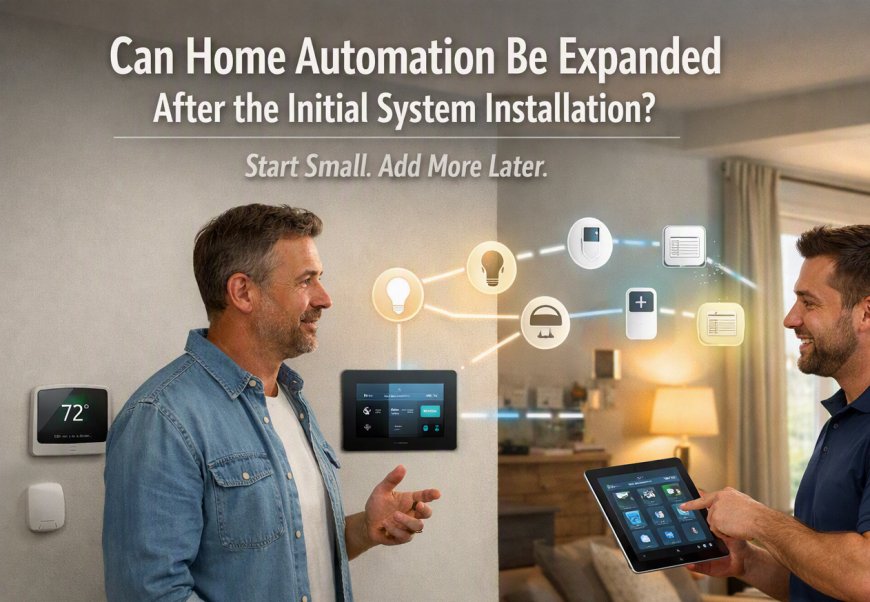
Home automation can often be expanded after the first installation. Many homeowners begin with a few useful features, such as smart lighting, temperature control, or automated curtains, and add more devices later. This approach can make it easier to manage the budget and understand which features are useful before making further changes. However, the ability to expand a system depends on its design, wiring, communication method, and available capacity.
Why Home Automation Systems Can Be Expanded
Most home automation systems are made up of different devices that communicate through a central controller, hub, network, or control platform. New devices can sometimes be added when the existing system supports the required communication method.
For example, a home may start with automated lights and later include smart locks, sensors, blinds, cameras, or climate controls. The expansion does not always require replacing the original equipment.
Planning for future additions during the first installation can make later changes easier. This includes leaving enough network capacity, power connections, wiring paths, and space for additional equipment.
What Can Be Added Later?
The type of devices that can be added depends on the existing setup. Common additions include lighting controls, motion sensors, door sensors, smart locks, motorized curtains, thermostats, entertainment controls, and security devices.
A homeowner may also add automation based on changing needs. For example, a family might add automatic lighting to a new room after using the system in other areas of the home. Another homeowner may add curtain controls after installing automated lighting.
The important point is that the new equipment needs to work correctly with the existing system. Compatibility should be checked before purchasing additional devices.
Wired and Wireless Expansion
The installation method can affect how easily a system can be expanded. Wired systems may require additional cable routes, connection points, or control equipment. If the original installation included spare wiring or suitable access points, adding new devices may be simpler.
Wireless systems can provide more flexibility because many devices communicate through a wireless network. However, wireless expansion still depends on network coverage, device compatibility, signal strength, and the number of connected devices.
A weak wireless signal can cause delays or unreliable communication. For this reason, network coverage should be considered before adding several new devices.
Why Initial Planning Matters
Future expansion is easier when the original system is planned with additional capacity. A homeowner may not know which features will be needed several years later, so leaving some room for growth can be useful.
The initial plan can consider possible future requirements such as extra rooms, outdoor areas, security equipment, entertainment systems, or energy monitoring. This does not mean every possible device needs to be installed from the beginning.
Instead, the system can be designed so that additional devices can be connected without major changes to the existing setup.
Can Different Brands Be Added?
Adding products from different manufacturers can sometimes be possible, but compatibility needs to be checked carefully. Different devices may use different communication standards, applications, or control methods.
Some systems support several communication technologies and can connect products from different manufacturers. Others may work mainly with a specific group of devices.
Before adding a new product, it is useful to check whether it can communicate with the existing controller or platform. It is also important to check whether the device supports the same automation functions required by the home.
What Happens When More Devices Are Added?
As more devices are connected, the system may need additional network or control capacity. A small setup with a few lights may have different requirements from a larger system controlling lighting, security, climate, entertainment, and access.
The internet connection may also become more important for systems that use cloud-based services. However, not every automation function depends on an external internet connection. Some systems can perform local actions through a controller or local network.
Testing the system after adding new devices can help identify communication problems. It can also confirm that existing automations continue to work properly.
Expanding Room by Room
A room-by-room approach can make expansion easier to manage. A homeowner might begin with the living room and main bedroom, then add automation to the kitchen, guest rooms, outdoor spaces, or other areas.
This approach allows each new area to be planned according to its actual needs. For example, a bedroom may need lighting and curtain control, while an outdoor area may need lighting and motion sensors.
Expanding in stages can also help homeowners understand how different devices work together before adding more features.
Checking the Existing System Before Expansion
Before expanding an installed system, it is useful to review the existing controller, wiring, network, power supply, software, and connected devices. The available capacity should also be checked.
A simple review can show whether new devices can be added directly or whether extra equipment is required. It can also help prevent compatibility problems caused by purchasing devices without checking the existing system.
For homes that may grow over time, choosing a flexible setup can make future changes more practical. With suitable planning and compatible equipment, Home automation can be expanded gradually as the needs of the household change.
What's Your Reaction?
 Like
0
 Dislike
0
 Love
0
 Funny
0
 Angry
0
 Sad
0
 Wow
0