














Cremation vs Burial: A Complete Guide to Costs, Traditions, and Choice
Exploring Cremation vs Burial? Compare costs, environmental impact, and religious traditions to make the right choice for yourself or a loved one today.

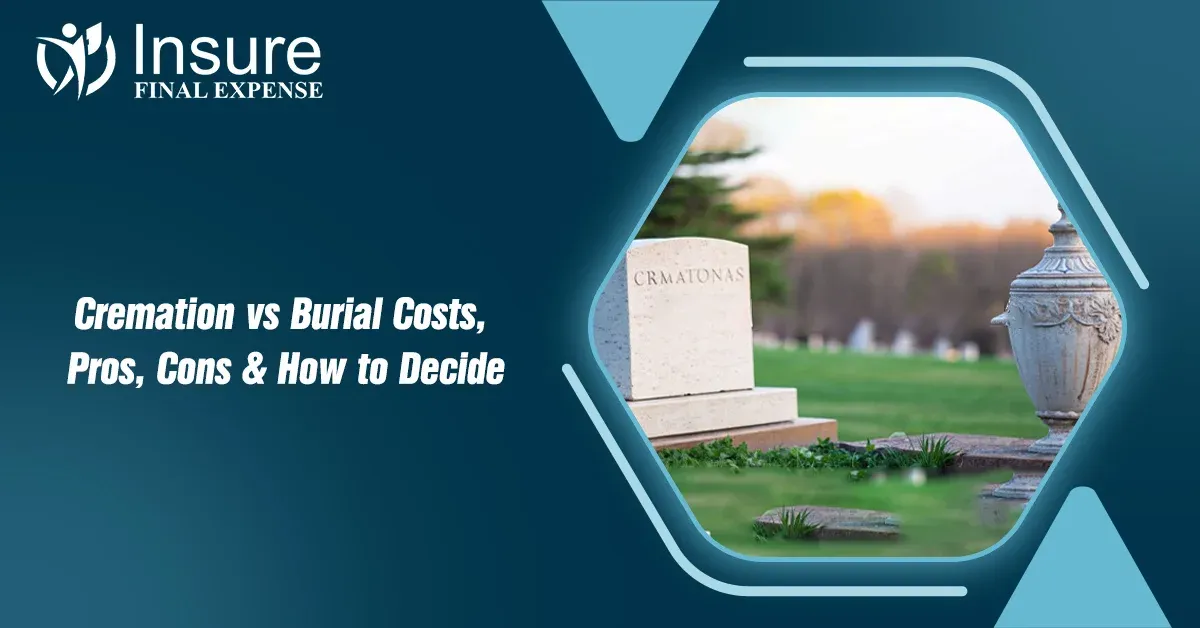
Choosing between cremation and burial is one of the most important decisions families face after losing a loved one. Both options provide meaningful ways to honor someone's life, preserve memories, and follow personal, cultural, or religious traditions. However, they differ significantly in cost, process, environmental impact, and the types of memorial services families can arrange.
For some families, burial offers a traditional resting place where relatives can visit and pay their respects. Others prefer cremation because it can provide greater flexibility, simpler arrangements, and potentially lower costs.
Understanding the differences between cremation vs burial can help families make an informed decision without feeling pressured during an already difficult time.
In this guide, we will compare cremation and burial costs, explain their processes, explore cultural and religious traditions, discuss their advantages and disadvantages, and help you determine which option may be right for your family.
Cremation vs Burial: What Is the Difference?
Cremation and burial are two common methods of final disposition. Both allow families to honor a deceased person, but the processes are different.
Cremation is a process in which a deceased person's body is exposed to intense heat inside a specialized cremation chamber. This reduces the body to bone fragments, which are processed into what families commonly call ashes or cremated remains. These remains are returned to the family in an urn or another approved container.
Burial involves placing the deceased person's body in a casket or another suitable container and interring it in a cemetery, grave, mausoleum, or other permitted location. Traditional burial often includes a funeral service, visitation, graveside ceremony, and a permanent memorial such as a headstone.
The biggest difference is that burial preserves a physical resting place, while cremation provides families with several choices for keeping, burying, scattering, or memorializing cremated remains, subject to applicable laws.
Neither option is automatically better. The right decision depends on personal wishes, family traditions, financial circumstances, and religious beliefs.
Cremation vs Burial Costs: How Much Does Each Option Cost?
Cost is one of the biggest factors families consider when comparing cremation vs burial.
Generally, direct cremation costs less than a traditional funeral followed by burial. However, the final price depends on the funeral home's fees, location, service arrangements, cemetery charges, and additional memorial products.
According to the National Funeral Directors Association (NFDA), the 2023 national median cost of an adult funeral with viewing and burial was approximately $8,300. The median cost of a funeral with viewing and cremation was approximately $6,280.
These figures are useful benchmarks, but they do not represent every possible expense. For example, the burial figure excludes cemetery-related expenses such as a grave, vault, and monument. The cremation figure also excludes certain additional charges, including cemetery interment and cash-advance expenses.
1. Average Cost of Cremation
Cremation can be an affordable alternative to traditional burial, particularly when families choose direct cremation.
Direct cremation generally involves transporting the deceased, completing the required paperwork, performing the cremation, and returning the cremated remains to the family. It does not include a traditional viewing or funeral ceremony before cremation.
The NFDA's 2023 study reported the following median charges:
-
Direct cremation with a container provided by the family: $2,645.
-
Direct cremation with a container provided by the funeral home: $2,750.
-
Full-service funeral with viewing and cremation: $6,280.
-
Alternative cremation container: $160.
-
Urn: $295.
Families may also pay additional expenses for death certificates, transportation, permits, memorial services, flowers, and cemetery placement.
What makes cremation less expensive?
Cremation can reduce expenses because families may avoid purchasing a traditional burial casket, a cemetery burial plot, a burial vault, and a permanent grave marker.
However, cremation is not always inexpensive. Families who arrange an elaborate funeral service, purchase an expensive urn, or choose cemetery interment may spend considerably more.
2. Average Cost of Burial
Traditional burial typically involves more products and services than direct cremation.
The total expense can include funeral home arrangements, body preparation, embalming when selected or required, a casket, transportation, cemetery services, a burial plot, and a headstone.
According to the NFDA's 2023 General Price List Study, the median costs included:
-
Traditional funeral with viewing and burial: $8,300.
-
Immediate burial with a container provided by the family: $2,995.
-
Immediate burial with a container provided by the funeral home: $3,720.
-
Metal burial casket: $2,500.
-
Rental casket: $1,095.
These figures do not include every cemetery expense. A burial plot, grave opening and closing, outer burial container, monument, and other cemetery-related services can increase the final bill.
Why does traditional burial cost more?
Traditional burial often requires additional merchandise, preparation, transportation, and cemetery arrangements.
Families may also choose premium caskets, elaborate floral arrangements, professional memorial services, and customized headstones.
Nevertheless, immediate burial can be a less expensive option for families who prefer burial without a traditional viewing or elaborate funeral ceremony.
Cremation vs Burial Cost Comparison
| Expense | Cremation | Burial |
|---|---|---|
| Basic arrangements | Usually required | Usually required |
| Body preparation | Depends on arrangements | Depends on arrangements |
| Casket | Not required for direct cremation | Usually selected |
| Cremation fee | Required | Not applicable |
| Urn | Optional, depending on container arrangements | Not applicable |
| Cemetery plot | Optional | Usually required for cemetery burial |
| Burial vault | Not required for cremation alone | May be required by cemetery |
| Headstone | Optional | Optional or cemetery-dependent |
| Memorial service | Optional | Optional |
| Long-term cemetery maintenance | Depends on interment arrangements | Depends on cemetery arrangements |
Important: These are general cost differences, not fixed prices. Always request an itemized estimate from funeral homes and cemeteries before making arrangements.
Understanding the Cremation Process
Many families choose cremation because it offers a straightforward process and flexibility in planning a memorial.
Understanding what happens during cremation can make the decision easier, particularly for families who have never arranged cremation services before.
Here is a simplified explanation of the process.
Step 1: Legal Documentation and Authorization
Before cremation can take place, the funeral provider must complete the required documentation.
Depending on state and local regulations, this may include:
-
Death certificate.
-
Cremation authorization.
-
Identification and verification procedures.
-
Medical examiner or coroner approval when required.
-
Necessary permits and waiting periods.
The person legally authorized to make funeral arrangements must generally provide consent.
Step 2: Preparation of the Deceased
The funeral home or cremation provider prepares the deceased according to applicable requirements.
Personal belongings and prohibited materials are removed, and the body is placed in an appropriate combustible container.
A traditional casket is not necessary for direct cremation. Providers must offer an alternative container for this purpose under the FTC Funeral Rule.
Step 3: The Cremation Process
The body is placed inside a specialized cremation chamber, where high temperatures reduce it to bone fragments.
The process generally takes several hours, depending on factors such as the equipment and the deceased person's physical characteristics.
Step 4: Processing the Cremated Remains
After cooling, the remaining bone fragments are processed into a more uniform, fine consistency.
The cremated remains are then placed in a temporary container or an urn selected by the family.
Step 5: Returning the Remains to the Family
The cremated remains are returned to the authorized family member.
Families can decide whether to keep them in an urn, place them in a cemetery, scatter them in a permitted location, or arrange another meaningful memorial.
Understanding the Traditional Burial Process
Burial generally follows a more structured process involving funeral home services, cemetery arrangements, and a physical resting place.
Step 1: Transportation and Care of the Deceased
The funeral home receives the deceased and arranges appropriate transportation and care.
Depending on the family's preferences and the planned services, the funeral home may provide refrigeration, embalming, washing, dressing, and other preparation.
Embalming is not universally required by law. Its necessity depends on circumstances, applicable regulations, and the arrangements selected.
Step 2: Selecting a Casket
Families choose a casket based on their preferences and budget.
Caskets are available in different materials, including:
-
Metal.
-
Hardwood.
-
Softwood.
-
Fiberglass and other manufactured materials.
-
Environmentally preferable or biodegradable materials.
Prices vary considerably depending on construction, materials, and design.
Step 3: Funeral or Memorial Service
A traditional funeral may include a viewing, visitation, religious ceremony, eulogy, music, prayers, and opportunities for relatives and friends to say goodbye.
Some families also arrange a procession to the cemetery.
Step 4: Cemetery Arrangements
The funeral home coordinates with the cemetery to prepare the burial location.
Depending on cemetery policies, an outer burial container, such as a grave liner or burial vault, may be required.
Step 5: Graveside Burial
The casket is transported to the graveside and lowered into the prepared grave.
Family members may participate in prayers, readings, flower placement, or other traditional ceremonies.
A headstone or grave marker may be installed afterward to identify the resting place.
Cremation vs Burial: Cultural and Religious Traditions
Religious beliefs and cultural traditions can significantly influence funeral decisions.
Some communities have long-standing burial customs, while others accept cremation or recognize both practices.
Families should consider the wishes of the deceased and consult their religious leaders when they are uncertain about specific requirements.
1. Christianity
Christian traditions regarding cremation and burial vary between denominations.
Historically, many Christian communities favored burial because of its association with the resurrection of the body.
Today, many Christian denominations accept cremation. The Catholic Church permits cremation, provided it is not chosen for reasons contrary to Christian teaching. It generally requires cremated remains to be treated respectfully and kept in a sacred place, such as a cemetery or columbarium, rather than scattered or kept at home.
Many Protestant denominations also permit cremation, although individual churches may have different customs.
2. Islam
Islam traditionally requires burial rather than cremation.
The deceased is generally washed, shrouded in a simple burial cloth, and buried as soon as reasonably possible according to religious and legal requirements.
Cremation is generally prohibited in Islamic teaching because the human body must be treated with dignity and respect.
Muslim families should consult their religious authorities regarding burial arrangements and local requirements.
3. Judaism
Traditional Jewish religious practice generally requires burial and prohibits cremation.
Jewish burial customs emphasize simplicity, dignity, and respect for the deceased. Families commonly arrange a burial in a simple wooden casket, although specific practices vary across Jewish communities.
Some non-Orthodox Jewish individuals and communities may have different views or personal arrangements.
4. Hinduism
Cremation is a traditional and widely practiced Hindu funeral custom.
Many Hindu beliefs associate cremation with releasing the soul from its physical body and supporting its spiritual journey.
Funeral ceremonies may include prayers, sacred rituals, and family participation. Specific practices vary according to regional traditions, family customs, and religious beliefs.
5. Buddhism
Buddhist funeral practices vary across countries and traditions.
Cremation is common in many Buddhist communities because of its historical and cultural associations, including the cremation of the Buddha.
However, burial is also practiced in some Buddhist communities.
The family's religious tradition and personal wishes generally guide the arrangements.
Advantages and Disadvantages of Cremation
Cremation offers flexibility and may reduce certain funeral expenses, but it also has considerations families should understand.
Advantages of Cremation
1. Potentially Lower Cost
Direct cremation can be less expensive than traditional funeral arrangements because it eliminates several burial-related expenses.
2. Flexible Memorial Arrangements
Families can hold a memorial service before or after cremation. They can also organize a celebration of life at a home, place of worship, or another meaningful location.
3. Multiple Choices for Cremated Remains
Families may choose to keep the remains in an urn, bury them, place them in a columbarium, or scatter them where legally permitted.
4. No Traditional Burial Plot Required
Cremation does not require a cemetery plot unless the family chooses cemetery interment.
5. Easier Transportation and Relocation
Cremated remains are generally easier to transport than a casketed body, although airlines and destination authorities may have specific requirements.
Disadvantages of Cremation
1. Religious Restrictions
Some religions and cultural traditions prohibit or discourage cremation.
2. No Automatic Permanent Resting Place
Unless the family chooses cemetery interment or another permanent memorial, there may not be a dedicated location for relatives to visit.
3. Environmental Considerations
Traditional cremation uses fuel and produces emissions. It is not automatically an environmentally friendly option.
4. Emotional Challenges
Some family members may find the idea of cremation difficult because of personal beliefs, cultural expectations, or emotional attachments to traditional burial.
Advantages and Disadvantages of Burial
Traditional burial provides a permanent physical location and allows families to follow long-established funeral customs.
However, it can involve higher costs and ongoing cemetery responsibilities.
Advantages of Burial
1. Traditional Funeral Experience
Burial allows families to arrange a traditional viewing, visitation, religious ceremony, and graveside service.
2. Permanent Memorial Location
A cemetery provides a physical place where family members can visit, remember, and honor the deceased.
3. Cultural and Religious Compatibility
Burial is required or preferred in several religious traditions and cultural communities.
4. Family Participation
Relatives can participate in funeral rituals, prayers, graveside ceremonies, and other meaningful customs.
5. Traditional Legacy
Some families value having a shared family burial location where future generations can visit and remember loved ones.
Disadvantages of Burial
1. Higher Overall Expenses
Caskets, cemetery plots, burial services, vaults, and headstones can increase the total cost.
2. Limited Flexibility
Once a person is buried, relocating the remains can involve complicated legal procedures, expenses, and cemetery permissions.
3. Ongoing Cemetery Expenses
Some cemeteries charge for perpetual care, maintenance, or other services.
4. Space Requirements
Traditional cemetery burial requires physical land, which can be limited in certain locations.
5. Additional Planning
Families may need to coordinate funeral home services, cemetery availability, transportation, and several other arrangements.
Cremation vs Burial: Which Is Better for the Environment?
Environmental impact is becoming an increasingly important consideration when families compare cremation vs burial.
However, determining which method is more environmentally friendly is complicated because both have environmental costs.
Environmental Impact of Cremation
Traditional cremation requires substantial heat and energy.
Depending on the equipment and fuel used, it can produce carbon dioxide and other emissions.
The environmental impact may also depend on the type of cremation equipment, energy efficiency, and local emission controls.
Environmental Impact of Burial
Traditional burial involves several materials and resources, including caskets, concrete burial vaults, cemetery land, and transportation.
Embalming may also involve chemicals, although it is not necessary for every burial.
Landscaping, irrigation, and cemetery maintenance can create additional environmental demands.
Green Burial as an Alternative
Green burial is an alternative that focuses on reducing environmental impact.
It generally involves:
-
Avoiding embalming chemicals.
-
Using biodegradable burial materials.
-
Reducing or eliminating concrete vaults where permitted.
-
Using natural cemetery grounds.
-
Allowing natural decomposition.
Not every cemetery offers green burial, so families should research local options.
Some providers also offer alternative cremation technologies, including alkaline hydrolysis, where legally available. This process uses water, heat, and an alkaline solution rather than traditional flame-based cremation.
Ultimately, neither conventional cremation nor traditional burial is automatically the most sustainable choice. The materials, energy use, land requirements, and local practices all matter.
How to Decide Between Cremation and Burial
Choosing between cremation and burial is a personal decision. There is no universal answer because every family has different priorities.
Here are some important factors to consider.
1. Consider the Deceased Person's Wishes
The first consideration should be whether the deceased expressed a preference before passing away.
Some people discuss their funeral wishes with relatives, include them in estate-planning documents, or arrange prepaid funeral services.
Respecting those wishes can help families make decisions with greater confidence.
2. Review Your Financial Situation
Compare the total costs of both options before making a decision.
Ask funeral providers for itemized price lists and identify which services are essential and which are optional.
Remember that direct cremation and immediate burial can both be less expensive alternatives to full-service funerals.
3. Consider Religious and Cultural Beliefs
Religious traditions may influence whether cremation or burial is acceptable.
If the deceased followed a particular faith, consult the relevant religious authority before making arrangements.
4. Think About Memorial Preferences
Consider how family members want to remember their loved one.
Would they prefer a cemetery where they can visit a grave, or would they prefer to keep cremated remains in an urn or arrange a memorial gathering?
There is no single correct approach.
5. Evaluate Environmental Priorities
If environmental impact is important, research green burial cemeteries, alternative cremation technologies, and the materials used in each arrangement.
6. Discuss the Decision With Family Members
Funeral decisions can create disagreements, especially when family members have different religious beliefs, financial concerns, or emotional preferences.
An open discussion can help everyone understand the available choices and reach a respectful decision.
Can You Have a Funeral With Cremation?
Yes. Choosing cremation does not mean giving up a traditional funeral.
Families can arrange a viewing, visitation, religious ceremony, or memorial service before or after cremation.
Here are three common arrangements:
1. Funeral Before Cremation
The family arranges a traditional funeral service, often with the deceased present in a rented or purchased casket. Cremation takes place afterward.
2. Direct Cremation Followed by a Memorial Service
The cremation takes place without a formal viewing or funeral beforehand. Family members arrange a memorial service later, with photographs, music, speeches, and an urn.
3. Private Family Ceremony
Some families prefer a small gathering with close relatives and friends. They may arrange prayers, readings, or personal tributes without organizing a large public funeral.
These options allow families to combine the flexibility of cremation with meaningful funeral traditions.
Can You Bury Cremated Remains?
Yes. Cremated remains can be buried in a cemetery, depending on cemetery policies and local regulations.
Families have several options:
-
Place the urn in a traditional burial plot.
-
Use a designated cremation burial section.
-
Place the urn in a columbarium niche.
-
Bury cremated remains in an existing family plot, where permitted.
-
Arrange a memorial garden placement.
Some cemeteries allow multiple cremated remains to be placed in one burial space, while others have specific restrictions.
Families should contact the cemetery to understand the available arrangements and associated fees.
Does Life Insurance Cover Cremation or Burial Costs?
Life insurance can help families pay for funeral and final expenses, including cremation or burial costs.
The death benefit from a life insurance policy is generally paid to the named beneficiary, who can use the funds for funeral arrangements, outstanding bills, and other financial needs.
Several types of life insurance may help cover these expenses.
1. Final Expense Insurance
Final expense insurance is a type of permanent life insurance designed to help cover smaller end-of-life expenses.
Coverage amounts commonly range from $5,000 to $25,000, although availability varies by insurer.
Beneficiaries can generally use the death benefit for eligible funeral-related expenses, including:
-
Cremation services.
-
Burial arrangements.
-
Caskets and urns.
-
Cemetery expenses.
-
Memorial services.
-
Outstanding medical bills and other final expenses.
2. Whole Life Insurance
Whole life insurance provides lifelong coverage as long as the policy remains in force and premiums are paid as required.
It can offer a larger death benefit than some final expense policies, depending on the insured person's needs and budget.
3. Term Life Insurance
Term life insurance provides coverage for a specified period, such as 10, 20, or 30 years.
If the insured person passes away while the policy is active, beneficiaries can generally use the death benefit for funeral costs and other financial responsibilities.
Important: Life insurance does not automatically pay funeral providers directly. The beneficiary typically receives the death benefit and decides how to use it, unless a specific assignment or other arrangement applies. Policy terms, exclusions, and eligibility requirements should always be reviewed.
Final Thoughts: Cremation vs Burial — Making the Right Choice
Deciding between cremation vs burial involves more than comparing prices. It requires considering personal wishes, religious traditions, family preferences, environmental concerns, and financial circumstances.
Cremation may be a suitable option for families seeking flexibility, simpler arrangements, and potentially lower expenses. Burial may be preferable for those who value traditional funeral customs, religious requirements, and a permanent cemetery resting place.
Neither choice is inherently better than the other. What matters most is selecting an arrangement that respects the deceased, supports the family, and fits the circumstances.
Planning ahead can make this decision easier. Comparing funeral providers, understanding available services, and considering final expense or life insurance coverage can help families prepare financially and avoid unnecessary stress during an emotional time.
Ultimately, the best funeral arrangement is the one that honors a person's life, respects their wishes, and gives loved ones a meaningful way to remember them.
What's Your Reaction?
 Like
0
 Dislike
0
 Love
0
 Funny
0
 Angry
0
 Sad
0
 Wow
0





