




















Best List of EEG Software for Neurologists in 2026
Explore the top list of EEG software transforming neurology in 2026. Find the right platform to streamline diagnosis, boost accuracy, and improve patient outcomes.

Why Choosing the Right EEG Software Actually Matters
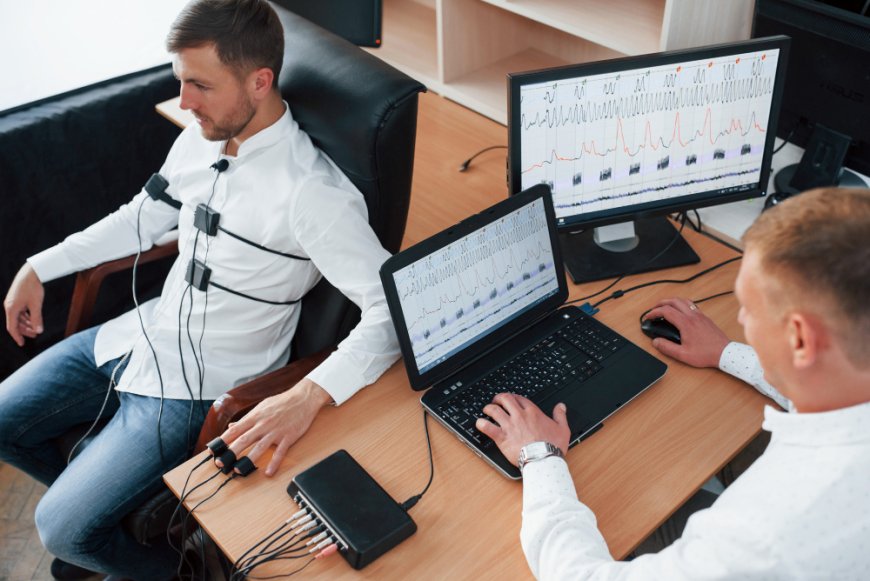
If you work in neurology — whether you're a physician, technologist, or hospital administrator — you already know that reading EEG data is one of the most time-intensive tasks in your entire workflow. Hours spent scrolling through thousands of pages of signal data, coordinating with remote colleagues, and generating reports manually. It adds up fast.
That's why picking the right tools isn't just a tech decision. It's a clinical one.
The good news? The list of EEG software available today has grown significantly, and some platforms are genuinely changing how neurological diagnosis works. The challenge is cutting through the noise to figure out which ones are actually worth your time — and your patients' trust.
Let's break it down.
What Separates Good EEG Software from Great EEG Software
Not all EEG platforms are built the same. Some are legacy desktop tools that haven't evolved much in a decade. Others are cloud-native, AI-powered platforms designed for the modern neurology team.
Here's what you should actually be looking for when evaluating any list of EEG software:
Speed of review. The volume of EEG data a typical hospital or epilepsy monitoring unit handles is enormous. If your software slows that process down instead of accelerating it, something's wrong. Look for platforms with automated event detection, AI-assisted flagging, and streamlined annotation tools.
Remote collaboration. The days of requiring everyone to be in the same room — or even the same city — are over. The best EEG platforms allow multiple physicians to review and collaborate on the same recordings simultaneously, from anywhere. This matters especially for hospitals that rely on remote neurologist coverage.
AI-powered detection. Manual review is still necessary, but it shouldn't be the only layer. Modern platforms use deep learning algorithms to flag spikes, sharp waves, and seizure events automatically — letting physicians focus their attention where it's most needed rather than hunting through raw signal data.
Reporting tools. Automated, longitudinal reports that track a patient's EEG findings over time are a game-changer, especially in ICU settings or for patients undergoing long-term monitoring. If your software can't generate comprehensive reports quickly, you're leaving efficiency on the table.
Security and compliance. HIPAA compliance isn't optional. Any platform handling patient EEG data needs robust cybersecurity — multi-factor authentication, encrypted storage, network edge protection, and file integrity scanning as baseline requirements.
The Growing Role of AI in EEG Analysis
It's worth pausing here to talk about artificial intelligence, because it's reshaping what's possible in neurodiagnostics.
A few years ago, AI in EEG software was mostly a marketing claim. Today, it's a clinical reality. Platforms using deep learning can now identify seizure events and spike patterns with impressive accuracy — not to replace neurologists, but to dramatically reduce the manual burden on them.
This is particularly important given the current state of neurological healthcare in the US. There are roughly 1 neurologist for every 23,000 people in the country — a ratio the American Academy of Neurology has called a "grave threat." With demand for neurological diagnosis rising due to an aging population, the math simply doesn't work without technology helping to bridge the gap.
That's where seizure detection software becomes more than a feature. It becomes infrastructure. Automated seizure detection means faster identification of events, quicker clinical decisions, and better outcomes for patients who can't afford to wait.
NeuroMatch® by LVIS Corporation: A Platform Built for Modern Neurology
When you look at a comprehensive list of EEG software for the US market, NeuroMatch® from LVIS Corporation consistently stands out — and for good reason.
LVIS was born out of Stanford's Byers Center for Biodesign and the Stanford StartX accelerator. The company holds patented technology in neural information analysis and has received grants from the Epilepsy Foundation, LivaNova, and the Stanford Spectrum program. Their flagship platform, NeuroMatch®, received FDA clearance (K250239) and was recently recognized with a Silver Award at the 2026 Edison Awards for AI-Powered Neurological Diagnostics. That's not a small thing.
So what makes NeuroMatch® different?
It lives in the cloud. No dedicated reader computers. No expensive on-site storage. No IT headache managing patches on legacy machines. NeuroMatch® is browser-based, which means any physician with credentials can access EEG recordings from anywhere, any time.
It's built for collaboration. Multiple physicians can review the same study simultaneously, almost like sitting in the same room. For hospitals with distributed neurology teams or facilities relying on telemedicine coverage, this changes everything.
The AI is real. NeuroMatch® uses advanced deep-learning algorithms for spike detection, seizure detection, and source localization — including 3D and 4D brain mapping that shows clinicians where activity is originating, not just that it's occurring. Spike Source Localization Trends and Seizure Source Localization Trends give physicians insights into onset and evolution of activity across the brain over time.
Artifact reduction. Distracting EEG artifacts are one of the most common sources of delays and misinterpretation. NeuroMatch® includes built-in artifact reduction tools to clean up signal data automatically.
Reports that actually help. Automated reports, longitudinal comparisons, and 24-hour trending summaries give clinicians a comprehensive picture of patient status without the manual labor of building those views from scratch.
How the Right Software Transforms Epilepsy Monitoring Units
For facilities running epilepsy monitoring units, the stakes are especially high. Patients are admitted specifically to have their seizures captured and analyzed — often after years of difficult diagnosis. Every hour of missed data or delayed review has real consequences.
EMU Software has to do more than just store and display recordings. It needs to support the full clinical workflow: from upload and automated scanning, to physician review and annotation, to report generation and longitudinal tracking. That's a lot to ask of any platform.
NeuroMatch® was built with exactly this environment in mind. The platform reduces capital equipment costs for monitoring stations, archives patient data securely at a fraction of on-site storage costs, and allows nurses to move freely from central monitoring stations while still maintaining visibility into patient status via cloud access. It genuinely addresses the operational complexity of running a high-functioning EMU.
Making the Switch: What to Expect
If you're currently running legacy EEG software or managing data across disconnected systems, the idea of switching can feel overwhelming. But the transition to a cloud-based platform like NeuroMatch® is more straightforward than it sounds.
The process is systematic: upload EEG recordings to the platform, let NeuroMatch® automatically scan for and annotate events, review the signal data from your browser, generate and share reports, and build out longitudinal patient tracking over time. That's it. No proprietary hardware to maintain, no complex IT infrastructure to manage.
The ROI shows up quickly — in physician time saved, in faster turnaround on reports, and in the ability to extend your neurology team's reach without adding headcount.
The Bottom Line
The list of EEG software available in 2026 is longer than it's ever been. But longer doesn't mean better. What matters is whether the platform you choose actually improves your clinical workflow, supports your team, and delivers better outcomes for patients.
LVIS NeuroMatch® is doing exactly that — combining AI-powered diagnostics, cloud accessibility, HIPAA-compliant security, and deep neurological insight into a single platform built for the demands of modern neurology practice in the United States.
What's Your Reaction?
 Like
0
Like
0
 Dislike
0
Dislike
0
 Love
0
Love
0
 Funny
0
Funny
0
 Angry
0
Angry
0
 Sad
0
Sad
0
 Wow
0
Wow
0