






















Kerosene vs Paraffin: Are They the Same?
Wondering if kerosene and paraffin are the same? Discover the key differences, uses, safety considerations, and regional terminology in this comprehensive guide to kerosene vs paraffin.

If you have ever stood in the aisle of a hardware store staring blankly at jugs of clear liquid, wondering what to pour into your emergency space heater or antique lamp, you are not alone. The labels say "Kerosene" on one shelf and "Paraffin" or "Lamp Oil" on another. They look identical. They often cost different amounts. And depending on which side of the Atlantic you are standing on, people might tell you they are the same thing.
So, are they?
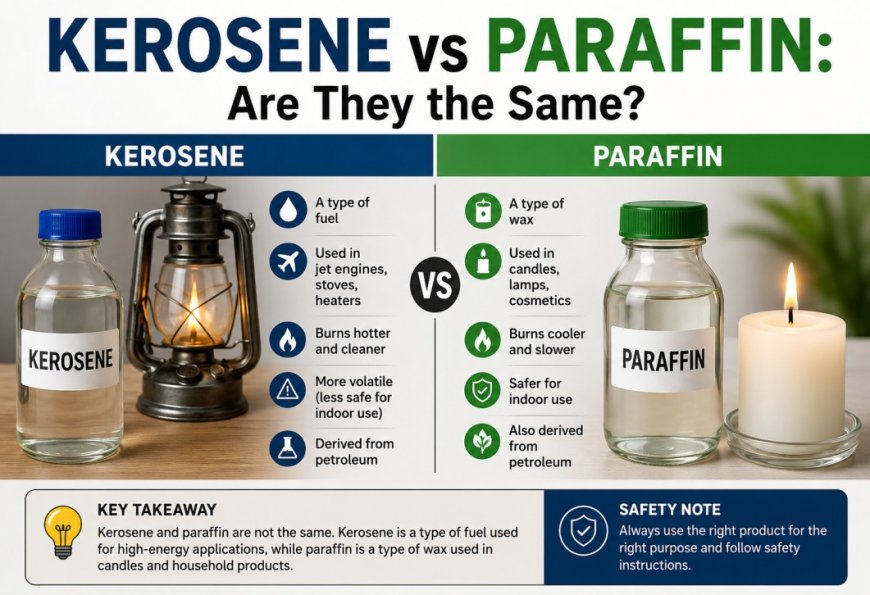
The short answer is: Yes and no. While kerosene and liquid paraffin are close cousins derived from the same source—crude oil—they are refined to different levels of purity. Using them interchangeably can sometimes be perfectly fine, but in certain indoor appliances, getting them mixed up can lead to a foul-smelling home or even a dangerous fire hazard.
Let's break down exactly what these fuels are, how they differ, and which one you should be stocking up on for your home.
What is Kerosene?
Kerosene is a highly versatile, combustible hydrocarbon liquid extracted from petroleum. First trademarked in 1854, it completely revolutionized how the world lit its homes before electricity became widespread. Today, it is used for an incredibly wide variety of applications. It powers commercial jet engines (jet fuel is essentially highly refined kerosene), fuels outdoor camp stoves, and is burned in residential boilers to heat millions of homes worldwide.
When you buy standard kerosene in a hardware store (often sold in blue jugs in the US, labeled as 1-K kerosene), you are getting a reliable, high-heat-output fuel. However, it is not the most highly refined product on the market. Because it still contains trace amounts of impurities and sulfur, standard kerosene produces a distinct, somewhat heavy odor when burned, and it can produce a slight amount of soot if the wick in your heater or lamp is not trimmed perfectly.
What is Paraffin?
Here is where the confusion starts. The word "paraffin" can refer to a few different things (like the solid paraffin wax used to make candles), but when we talk about liquid fuel, we are referring to liquid paraffin or "paraffin oil."
Chemically speaking, liquid paraffin is essentially kerosene that has been put through a much more rigorous refinement process. The distillation process strips out almost all the impurities, aromatics, and sulfur.
The result is a premium, ultra-clean-burning liquid. Because it lacks those impurities, liquid paraffin burns almost odourless and produces practically zero soot. This makes it the absolute gold standard for indoor oil lamps, decorative tiki torches, and unvented indoor space heaters where air quality is a major concern.
The Geography of Fuel: UK vs. US Terminology
Before we compare them directly, it is crucial to understand the language barrier. Much of the confusion online stems from how these terms are used geographically.
-
In the United States, "Kerosene" is the standard term for the fuel used in space heaters and jet engines. "Paraffin" almost exclusively refers to candle wax or the highly refined "lamp oil" sold in small, expensive bottles for indoor use.
-
In the UK and Parts of Europe, the terminology flips. Home heating oil delivered by bulk trucks is universally referred to as "kerosene" (or 28-second heating oil). However, the fuel you buy in small jugs for portable domestic heaters and greenhouse heaters is commonly called "paraffin."
If you are reading an instruction manual for an appliance, always check where the manufacturer is based to ensure you are buying the right fuel.
The Key Differences at a Glance
If you are trying to decide which liquid to pour into your appliance, here is how the two fuels
|
Feature |
Standard Kerosene |
Liquid Paraffin (Lamp Oil) |
|
Refinement |
Standard distillation |
Highly refined to remove sulfur and impurities |
|
Odor |
Distinct "fuel" smell when burning and extinguishing |
Virtually odorless |
|
Soot Production |
Can produce slight soot; requires good ventilation |
Burns incredibly clean; zero soot |
|
Heat Output |
Very high heat output; excellent for space heaters |
Slightly lower heat output than raw kerosene |
|
Cost |
Generally cheaper, available in bulk |
More expensive, usually sold in smaller quantities |
|
Best Used For |
Outdoor heaters, vented boilers, garage heaters |
Indoor oil lamps, decorative torches, unvented indoor heaters |
Safety First: Can You Mix Them?
As a homeowner, your primary concern is safety. Can you use these fuels interchangeably?
Using Paraffin in a Kerosene Heater:
Yes, you generally can. Because paraffin is simply a cleaner, more refined version of kerosene, putting it into a kerosene space heater will not harm the unit. In fact, it will likely burn cleaner, produce less odor, and extend the life of your heater's wick. The only downside is the cost; running a large space heater on premium liquid paraffin gets very expensive very quickly.
Using Kerosene in a Paraffin Lamp:
This is where you need to be careful. While it will technically burn, you should never put standard kerosene into an indoor oil lamp designed for pure paraffin or lamp oil. Standard kerosene burns hotter and produces soot and sulfur fumes. Using it in a small, unvented indoor lamp will quickly fill your living room with a harsh chemical smell, blacken your ceilings with soot, and trigger respiratory issues.
Always stick to highly refined paraffin (lamp oil) for decorative indoor lighting.
Buying and Storing Your Fuel
When it comes to purchasing fuel for home heating, the source matters. If you rely on a kerosene boiler to heat your entire home, you will need to establish a relationship with reputable kerosene suppliers who can deliver the fuel in bulk to your outdoor tank. Shopping around during the summer months when demand is low is the best way to secure a favorable price per gallon.
For fuel needs for a portable stove or lamp usage, either kerosene or paraffin is available at nearby hardware stores, camping stores, or home improvement stores.
Storage Information:
Whichever choice you make between kerosene and paraffin, both types of fuels need proper storage in order to avoid spoilage:
-
Use the Right Container: Only store kerosene in certified, blue-colored plastic or metal containers. Never store fuel in milk jugs or unapproved plastics, as the fuel will slowly dissolve the plastic and leak.
-
Keep it Cool and Dark: Store your fuel in a cool, dry shed or garage out of direct sunlight. Condensation can build up inside the jug if it gets too hot, and water mixed with fuel will ruin your heater's wick.
-
Watch the Shelf Life: Kerosene has a shelf life of about 1 to 3 months if left in an unsealed container, and up to a year in a tightly sealed container. Old kerosene becomes thick and yellow, which will ruin your appliances. Premium liquid paraffin, on the other hand, can last for several years without degrading.
The Bottom Line
Kerosene and paraffin start their lives as the same substance deep underground. The difference lies entirely in how much time they spend at the refinery. If you are heating a large, well-ventilated space like a garage or relying on a whole-home boiler, bulk kerosene is the economical, high-heat powerhouse you need. But if you want to light a vintage glass lamp on your dining room table or run a small heater in your living room without it smelling like an airport runway, spend the extra money on highly refined liquid paraffin.
Frequently Asked Questions (FAQ)
Can I use kerosene instead of paraffin in my greenhouse heater?
It is highly discouraged. Greenhouse heaters are usually unvented. Standard kerosene releases sulfur dioxide and other trace gases that can be toxic to delicate plants in an enclosed space. Always use premium, clean-burning paraffin in a greenhouse to protect your plants and maintain air quality.
Why does my kerosene heater smell so bad when I turn it off?
This smell happens mainly when starting up and switching off the device due to the failure of the kerosene to ignite at the most effective temperature. In the process of switching off, the fire burns out, producing kerosene smells. For this reason, it is always important to start and switch off the heater outside the room or next to an opened window.
Does paraffin wax come from the same oil as liquid paraffin?
Yes. During the crude oil refinement process, liquid paraffin is distilled off as a liquid fuel. The heavier, waxy byproducts left behind are further refined into solid paraffin wax, which is used to make candles, seal jars, and coat water-resistant canvas.
How do I dispose of old, yellowed kerosene?
Never pour old kerosene down the drain, into a storm sewer, or onto the ground. It is highly toxic to the environment. You must take old, degraded fuel to a local hazardous waste disposal facility. Many municipal dumps or fire departments host specific hazardous waste drop-off days where you can safely dispose of old fuels.
What's Your Reaction?
 Like
0
Like
0
 Dislike
0
Dislike
0
 Love
0
Love
0
 Funny
0
Funny
0
 Angry
0
Angry
0
 Sad
0
Sad
0
 Wow
0
Wow
0